The Crossroads of the South Pacific: Fiji's Radiant Soul
To step onto the shores of Fiji is not merely to arrive at an archipelago in the South Pacific. It is to step into a rhythmic, living tapestry where the volcanic volatility of the Earth’s crust meets the serenity of the azure sea. Sprawled across the vast Koro Sea, this nation is a masterpiece of geological patience, formed over eons of tectonic uplift and volcanic fervor. Fiji is far more than the sum of its 330 islands and 500 islets; it is a profound testament to the resilience of island culture and the endurance of human spirit within the vast, isolating beauty of Oceania.
For the traveler, the scholar, or the student of geography, Fiji represents a unique intersection. It sits at the geographic center of the Pacific, historically serving as a critical bridge between the cultures of Melanesia and Polynesia. It is a place where deep-rooted indigenous traditions are woven together with the vibrant influences of an Indian diaspora and the indelible footprints of the British colonial era. To truly understand this nation, one must delve into its complex narrative, which you can uncover in our comprehensive history essay detailing the milestones that forged this modern republic.
Geology and the Creation of a Paradise
The soul of Fiji is carved from fire. Most of these islands were born from underwater volcanic activity, their peaks now cloaked in some of the most vibrant, emerald rainforests on the planet. From the towering heights of Mount Tomanivi on Viti Levu, the landscape tumbles down through limestone caves and river-carved valleys until it hits the fringe of the Great Sea Reef. This barrier reef, the third-largest of its kind in the world, is the nation's silent guardian, regulating the tidal energies and creating the tranquil, translucent lagoons that have captured the global imagination.
Understanding these landforms provides a key to unlocking the national story. The geography did not just shape the economy; it dictated the social structure of the indigenous iTaukei people for millennia. Villages were settled in the lee of mountain ranges or along the fertile floodplains of the Rewa River. If you wish to challenge your perception of the timelines and pivotal shifts that moved Fiji from tribal chiefdoms to a nation-state, engage with our interactive history puzzle to see how well you can arrange the transformative eras of these islands.
A Cultural Mosaic
While the landscapes are breathtaking, the true magnetism of Fiji lies in its people. It is a nation defined by "Bula" spirit. This greeting—more than just a "hello"—is a blessing, a wish for life, and the foundational tone of social interaction in the islands. Fiji has successfully managed to bridge divergent cultural pathways, allowing a diverse tapestry of traditions to coexist. The colonial legacy introduced plantation agriculture, bringing generations of migrants from South Asia, who have added an intricate, flavorful, and intellectual dimension to the cultural landscape. It is this syncretism—the blending of indigenous seafaring wisdom with diverse global heritages—that creates the social harmony for which the country is celebrated.
Visualizing the Heritage and the Horizon
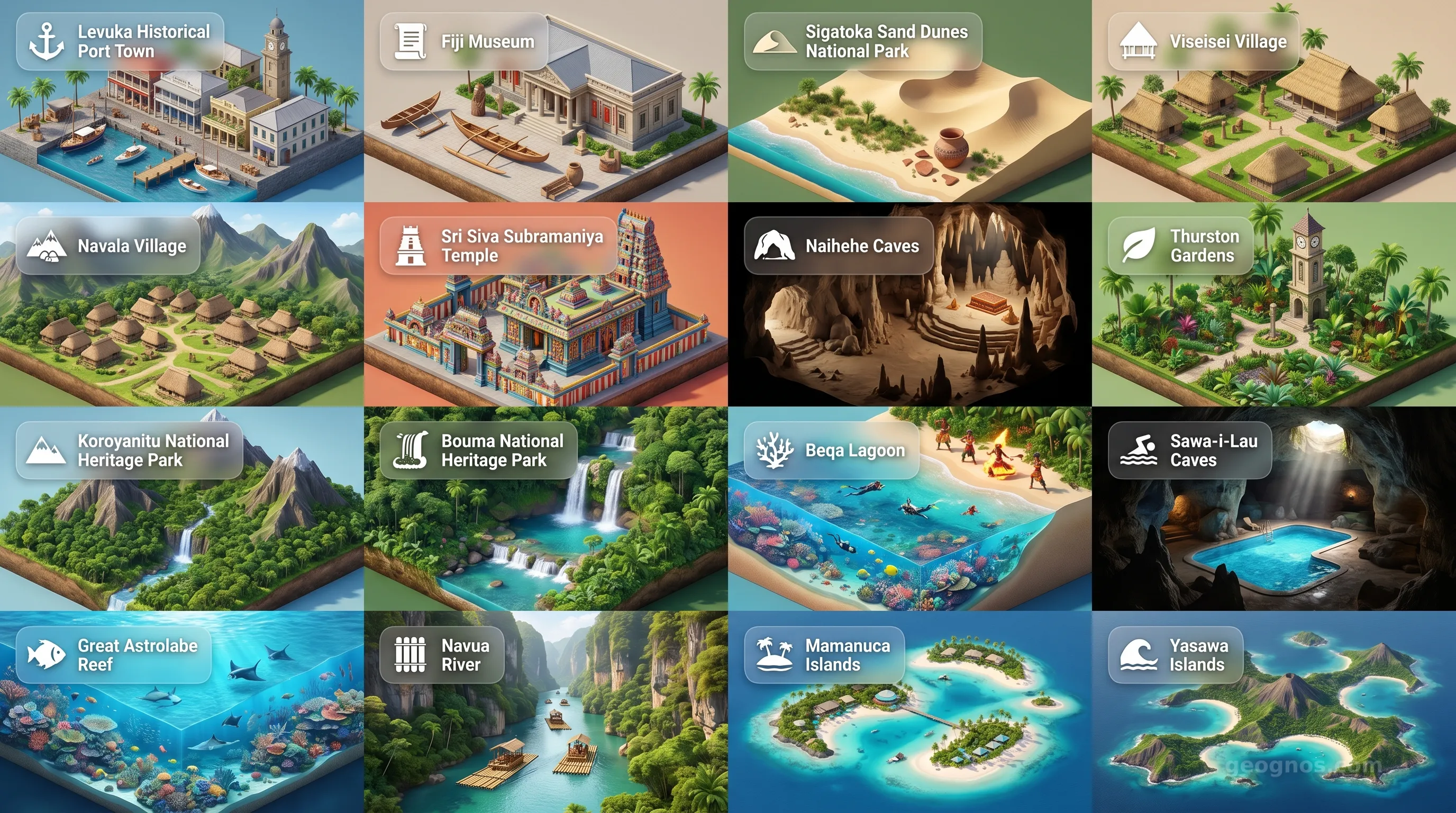
Because the physical and historical beauty of Fiji is often beyond the reach of words, we invite you to experience the sensory depth of the islands through our digital portals. To see the physical landmarks that have served as the stages for significant cultural moments, explore our POI cinematic showcase, which maps the most essential vistas from the Mamanuca Islands to the rugged interior of Vanua Levu. The visual landscape of Fiji acts as an archive, with every bay and mountain peak holding memory.
For a deeper connection to the moments that defined the nation’s independence, struggles, and ultimate unification, we have compiled a history cinematic showcase. This visual narrative takes you through the transition from the arrival of the Great Voyagers to the adoption of democratic principles, offering an immersive look at how events transpired without the need for dusty textbooks. Through this, students and visitors alike can grasp the weight of time and the importance of place.
The Future of the Archipelago
As a crossroads, Fiji now faces the defining challenges of the modern century: climate resilience, the sustainability of coral ecosystems, and the integration of digital globalism with traditional agriculture. The resilience that once allowed ancient ancestors to navigate the open Pacific in double-hulled canoes is now applied to environmental advocacy. Fiji is a nation of global importance, acting as a steward for the blue economy of the Pacific and a voice for small island developing states on the world stage.
In the pages that follow on GeoGnos, we will dissect the specific systems that allow this nation to thrive. From the technical nuances of the government branches to the energy sectors powering its remote villages, our aim is to provide a comprehensive portrait. Fiji is an ongoing study of adaptation and elegance, a place where the mountains hold the past and the sea provides the future. We encourage every visitor to treat this geography not just as a destination to visit, but as a system of life to understand and respect.