The Archipelago of a Thousand Horizons
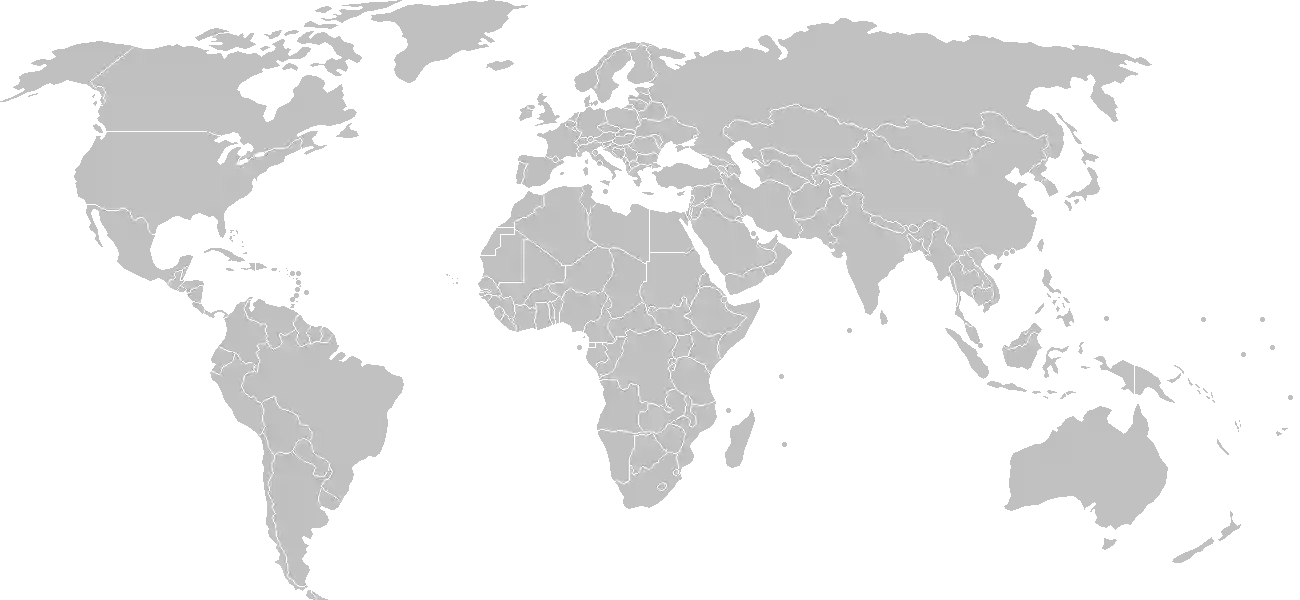
To define the Philippines is to embrace the paradox of connectivity and isolation. This is an archipelago of over 7,600 islands, a fractured, sprawling mirror of the Pacific Ocean that acts as both a gateway to East Asia and a sanctuary of distinct oceanic culture. Unlike the singular, unbroken continental landmasses that define much of the world, the Philippines is a nation of fluidity. Here, the map is not merely a record of borders but a chart of tides and trade routes. From the jagged limestone cathedrals of Palawan to the terraced emerald stairways carved into the Cordilleras by ancient hands, the country presents a geography that has necessitated a resilient, adaptable, and profoundly hospitable national soul.
The essence of the Philippine experience lies in the convergence of currents. For millennia, this region functioned as the pivot point for Austronesian maritime migrations, followed by centuries of cross-pollination between the Spanish Empire, the United States, and the diverse cultures of the Asian mainland. To understand how these disparate threads wove together into the contemporary Filipino identity, one must first look back at the crucible of time. We invite you to explore the history of Philippines, a detailed narrative journey that traces the transformation of an indigenous maritime society into a vibrant, modern democracy.
Geography as Destiny
The Philippines sits at the intersection of complex tectonic plates and marine currents, creating a topography that is as dramatic as it is fragile. It is a nation of intense verticality. You have soaring volcanoes like Mount Mayon, whose perfect symmetry demands awe, and deep, bioluminescent trenches that plunge into the abyss of the Philippine Sea. The archipelago serves as a critical biological bridge, holding a density of flora and fauna that remains one of the highest in the world. It is a classroom for students of geography, offering a study in how island ecology dictates local climate, linguistic diversity, and social patterns.
This geographic dispersion has fostered an extraordinary variety of traditions. Each island region possesses a unique dialect, a specialized cuisine based on local maritime harvest, and architectural responses to the tropical monsoons. However, despite this diversity, there is a unified national pulse. For those wishing to visualize this storied past in a more dynamic fashion, the History Cinematic Showcase offers an immersive carousel of illustrations, summarizing the pivotal turning points that unified the islands under a single flag.
The Cultural Tapestry
The "soul" of the Philippines is famously resilient and anchored in the concept of *bayanihan*, a term that describes a collective spirit of helping one’s neighbor without expectation of reward. This social cohesion is the bedrock upon which the nation navigates the complexities of the 21st century. Whether you are observing the intense preparations for town fiestas that transform quiet streets into vibrant kaleidoscopes of color, or studying the influence of colonial maritime routes on the distinct architecture of Manila, the Philippines never stops narrating its own identity.
For educators and students looking to gamify their learning experience, the History Puzzle provides an interactive chronology that turns the timeline of independence and transformation into a rewarding challenge. By mastering the sequence of these eras, students gain a better grasp of the nation’s journey toward self-determination and the complexities of its administrative development.
A Legacy of Visual Splendor
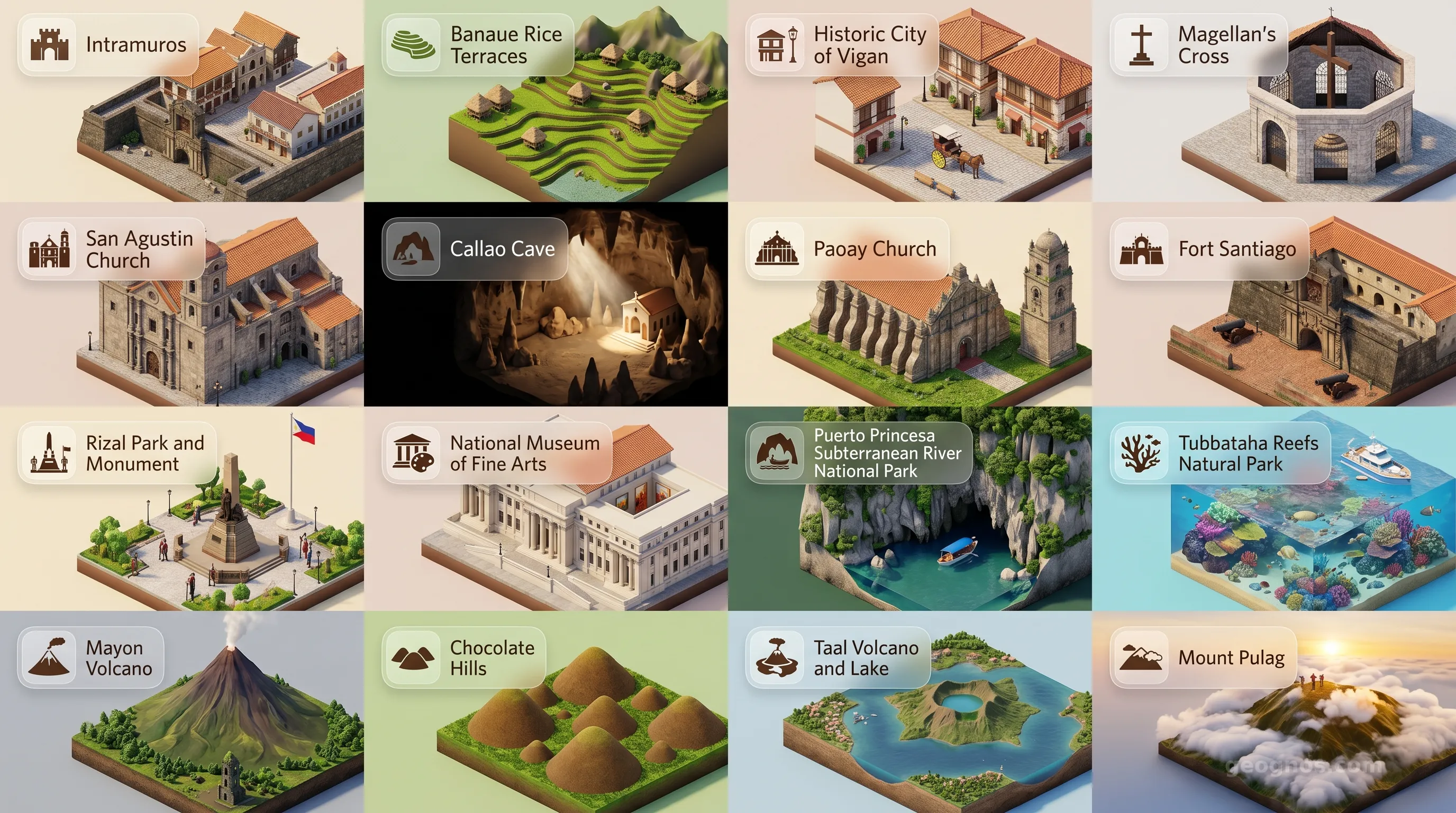
Geography in the Philippines is not just something to be read on a map. It is something to be lived. The nation is a pilgrimage site for those who wish to see the sheer power of earth and sea interacting. From the subterranean rivers of Puerto Princesa, which act as a portal to the geologic secrets beneath the islands, to the golden sands of Boracay and the bustling, historic plazas of Vigan, the aesthetic beauty of the Philippines is an essential component of its global presence.
We encourage travelers and geography enthusiasts alike to experience the breathtaking scale of these environments. By viewing the POI Cinematic Showcase, you will discover the primary cultural and natural landmarks that define the Philippine map today. These images capture the reality of the islands, serving as both a visual guide for the curious traveler and an illustrative aid for the classroom, proving that in this island nation, the landscape is always an active participant in the story of its people.
Looking Toward the Future
As an archipelagic nation, the Philippines is uniquely positioned at the forefront of environmental stewardship and ocean conservation. The country’s commitment to the sustainability of its seas and its diverse inland regions will shape its trajectory in the decades to come. Education remains the vital link between the preservation of this history and the innovation of the future. By understanding the profound connection between the Philippine land and its people, we recognize that the soul of this nation is one that is constantly evolving, perpetually reaching across the water, and forever welcoming the world to its shores.