The Dragon Awakens: The Soul of the S-Curve
There is a unique pulse to Vietnam, a rhythmic vibration that travels from the mist-veiled peaks of the northern highlands down to the bustling, liquid veins of the Mekong Delta. Geographers often describe Vietnam by its silhouette, an elongated "S" shape that clings to the eastern edge of the Indochinese Peninsula. However, to understand the nation, one must look beyond the map. Vietnam is a land defined by its stubborn persistence, a place where the mountains hold the spirits of the past and the water sustains the dreams of the future. It is a country that has been sculpted by monsoons, tempered by centuries of regional interaction, and revitalized by a culture that prioritizes harmony between the people and the landscape.
Traveling through Vietnam feels like moving through layers of time. You might stand in the morning light among the limestone pillars of Ha Long Bay, where the geology seems to whisper of ancient underwater kingdoms, and by evening, you could be navigating the neon-lit corridors of Saigon. This duality between the serene natural world and the accelerating human narrative is what defines the Vietnamese experience. For those who wish to understand the foundations upon which this modern vibrancy is built, we invite you to explore the comprehensive history of Vietnam, which serves as a map to the resilience and transformation that have defined this resilient nation.
A Landscape of Extremes
Vietnam is a geological masterpiece, shaped by the push and pull of great continental plates and the relentless persistence of tropical rivers. The backbone of the nation is formed by the Annamite Range, a rugged chain of mountains that act as a silent witness to the migration patterns and tribal legacies that shaped the country. These highlands are not merely barriers. They are ecosystems of extraordinary biodiversity, cradling rare species and sheltering the distinct cultural practices of the ethnic minority communities that have inhabited these heights for millennia.
Moving eastward, the topography yields to the coastal plains, which act as the nation’s rice bowl. The Red River Delta in the north and the Mekong Delta in the south are the two great hearts of the nation. In these deltaic regions, the culture is dictated by the silt brought down from the mountains, nourishing the earth to allow for intensive agriculture that has supported millions for thousands of years. It is within this relationship between man and fertile soil that the unique national identity was forged. You can gain a deeper appreciation for how these disparate events stitched together the national fabric by engaging with our interactive history chronology puzzle, an immersive way to test your knowledge of how the Vietnamese state navigated its way through the tides of time.
The Living Tapestry of Culture
Vietnam is a civilization of endurance and grace. While modern global influences are increasingly visible in its architecture and urban economies, the traditional values of family, respect for ancestral wisdom, and a profound work ethic remain at the core of society. Walking through the streets of Hanoi or the riverside walkways of Hoi An, one senses a reverence for the past. This is a culture that does not discard its history but wears it like a living garment. The artistic output, the intricate embroidery, the iconic wooden architecture, and the sophisticated culinary traditions that utilize a precise balance of spice, sweetness, and acidity, all reflect a deeply rooted sensibility toward beauty and precision.
To witness the milestones that allowed this cultural identity to persist and flourish, visitors can browse our history cinematic showcase. This visual narrative captures the defining moments of the nation, from the emergence of its earliest dynasties to the contemporary era, utilizing archival-style illustrations that illuminate the challenges and triumphs of the Vietnamese people. By engaging with these historical windows, the viewer gains insight into how the nation maintained its linguistic and cultural sovereignty through generations of regional flux.
A Journey Through Visual Identity
For the traveler, the scholar, and the curious student, Vietnam presents a sensory experience that is difficult to replicate. From the terraced fields of Sapa that glow like emerald mirrors under the sky to the quiet intensity of temple complexes in Hue, the country offers a profound aesthetic that satisfies both the inquisitive mind and the searching spirit. Every province serves as a repository for local legends and environmental wonders, creating a patchwork of experiences that is both vast and interconnected.
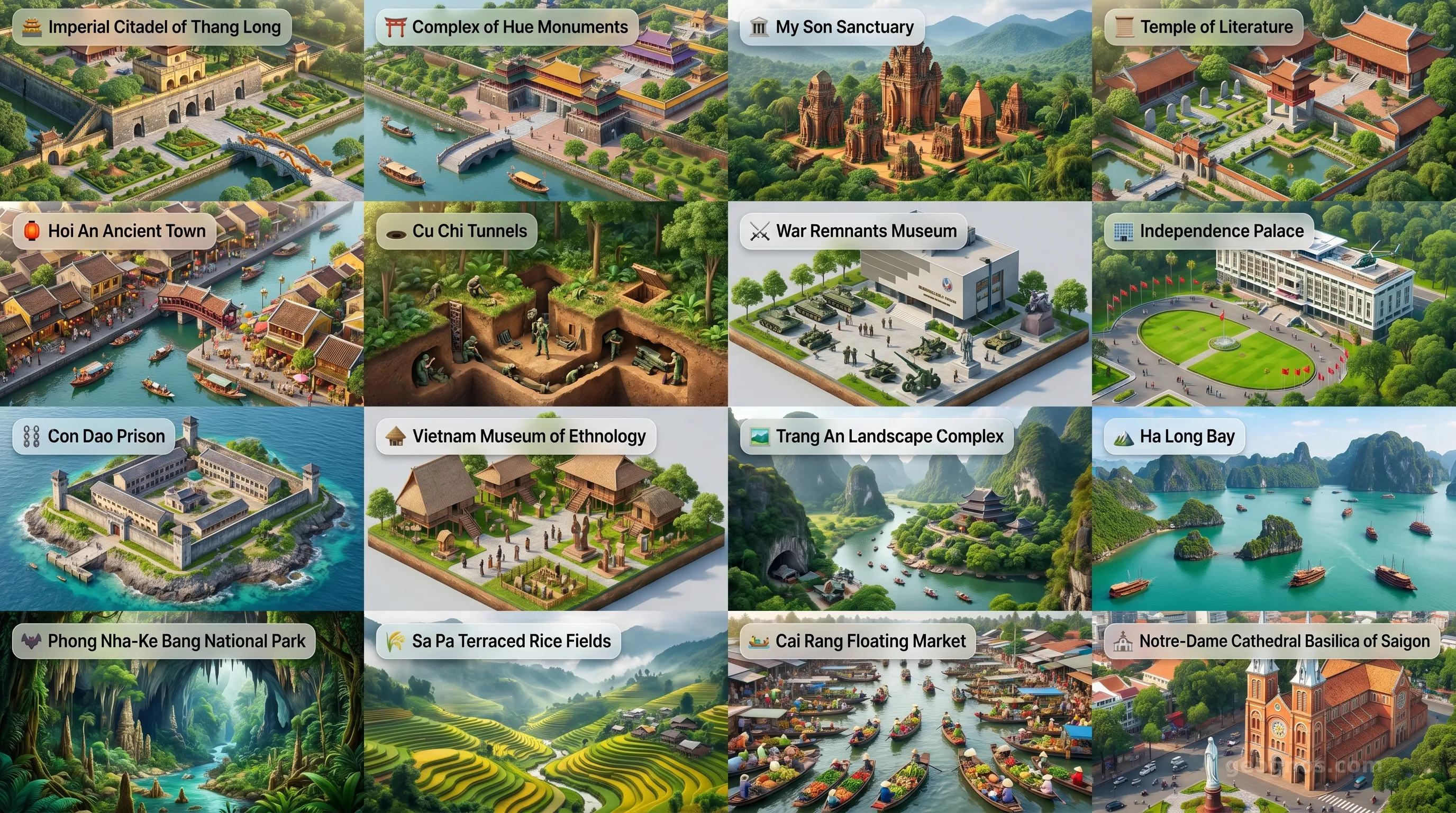
We encourage those planning an itinerary or researching for a presentation to utilize our Vietnam points of interest cinematic showcase. This interactive tool provides a curated tour of the country's most essential geography and man-made heritage sites. Whether you are looking for the architectural splendor of colonial-era structures or the awe-inspiring geological formations of the northern caverns, this guide offers an essential foundation for appreciating why Vietnam continues to captivate the global imagination. As you delve deeper into the resources provided here at GeoGnos, remember that Vietnam is not a static subject, but a dynamic, ever-changing masterpiece of humanity and nature working in concert.
Reflecting on the Future
As Vietnam looks toward the future, it balances the rapid expansion of its digital and industrial sectors with a clear commitment to environmental stewardship. The challenges of climate change and rapid urbanization are met with a societal resilience that is uniquely Vietnamese. By understanding the intersection of its history, its challenging yet generous geography, and its vibrant demographic spirit, we can better understand how nations adapt and prosper in the twenty-first century. We hope this exploration serves as your primary gateway to the rich, enduring story of this captivating land.