The Threshold of Eternity: Understanding the Vatican
To stand within the Leonine Walls of the Holy See is to step outside the linear progression of the modern world. Vatican City is not merely a nation in the conventional sense. It is a paradox of geography, an infinitesimal sovereign state covering less than half a square kilometer that exerts an influence measured in centuries, spiritual reach, and the indelible weight of human history. Here, the boundaries between the terrestrial and the transcendent blur, anchored by the silent testimony of marble, gold, and the enduring rhythm of a tradition that has navigated the rise and fall of empires.
For the traveler, the scholar, and the student, this enclave represents the concentrated essence of Western civilization. It is a place where every paving stone carries the echo of antiquity and every fresco is a dialogue with the divine. To appreciate the Vatican is to look past its size and recognize that its true boundaries are marked not by walls, but by the intellectual and spiritual horizons it has cultivated for two millennia.
A Geometry of Influence
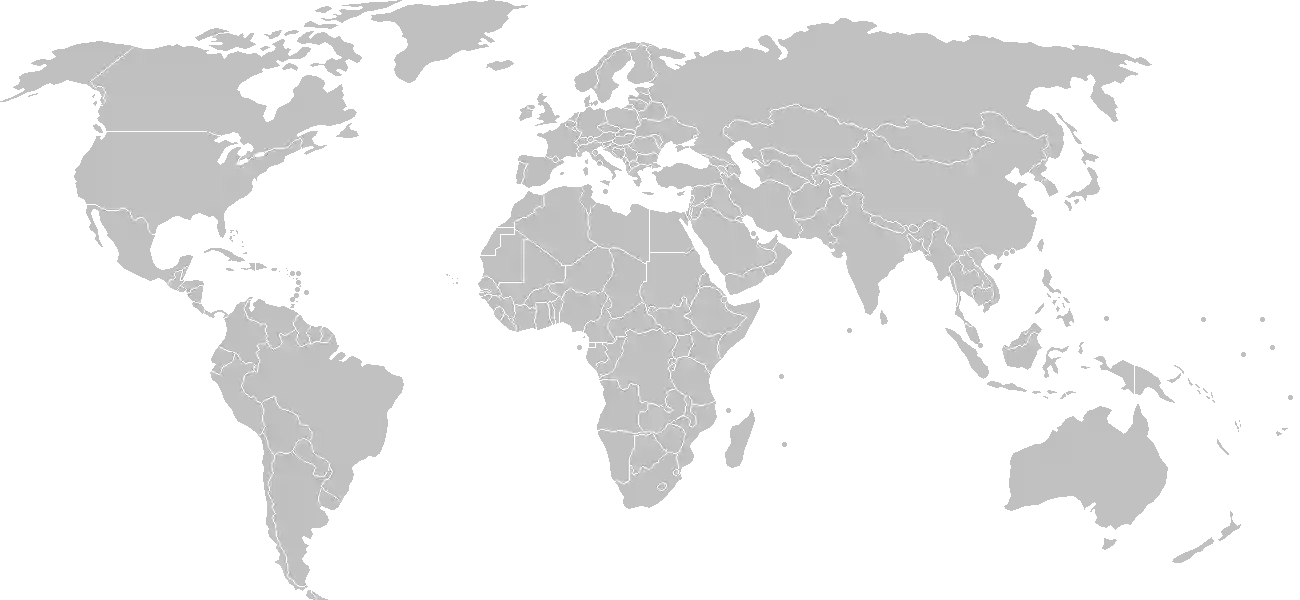
Geography often dictates the destiny of nations, but in the case of the Holy See, the geography was purposefully crafted to reflect a theological ambition. Located on the Vatican Hill on the western bank of the Tiber, this sovereign entity serves as the global nerve center for the Roman Catholic Church. While modern borders shift and flicker on our digital screens, the borders of the Vatican remain stubbornly fixed to the design of the late Renaissance. It is an island of absolute history within the heart of the eternal city of Rome, representing a unique form of statecraft that marries architectural magnificence with diplomatic persistence.
As you prepare to immerse yourself in the layers of this fascinating territory, it is helpful to understand the forces that shaped its evolution. We invite you to explore the history of the Holy See (Vatican City), a narrative that chronicles how a small patch of soil became a bastion of art, law, and diplomacy that bridges the ancient world with the globalized present.
The Living Archive of Humanity
The Vatican does not merely preserve history; it embodies it. Every corridor within the Apostolic Palace and every shadow cast by the colonnades of St. Peter's Square serves as a silent archivist of human striving. The nation is a cultural intersection where the finest minds of the Renaissance, such as Michelangelo and Raphael, were tasked by the papacy to turn spiritual concepts into visual reality. Their work continues to challenge students and travelers to rethink the relationship between faith, politics, and the aesthetic expression of power.
For those who wish to test their understanding of the complex timeline of this sovereign city-state, we recommend engaging with our interactive chronological challenge. This unique learning tool allows you to place epoch-defining moments in their correct sequence, turning the study of papal influence and diplomatic developments into an engaging exploration of cause and effect.
Visualizing the Sacred Narrative
The strength of the Holy See lies in its visual legacy. Because it is a place where information is held in stone and pigment, the most evocative way to grasp its identity is through the lens of art and architectural heritage. The sheer volume of cultural artifacts housed within the Vatican Museums and the Basilica is unparalleled, requiring a thoughtful approach to understand how each piece fits into the greater cultural geography of Europe.
To assist in your discovery, we have curated a history cinematic showcase, which presents high-resolution illustrations of pivotal events that defined the Vatican over the centuries. This resource provides a narrative arc, helping educators and students visualize the transition of the site from a garden and burial ground of early martyrs into the monumental center of contemporary global faith.
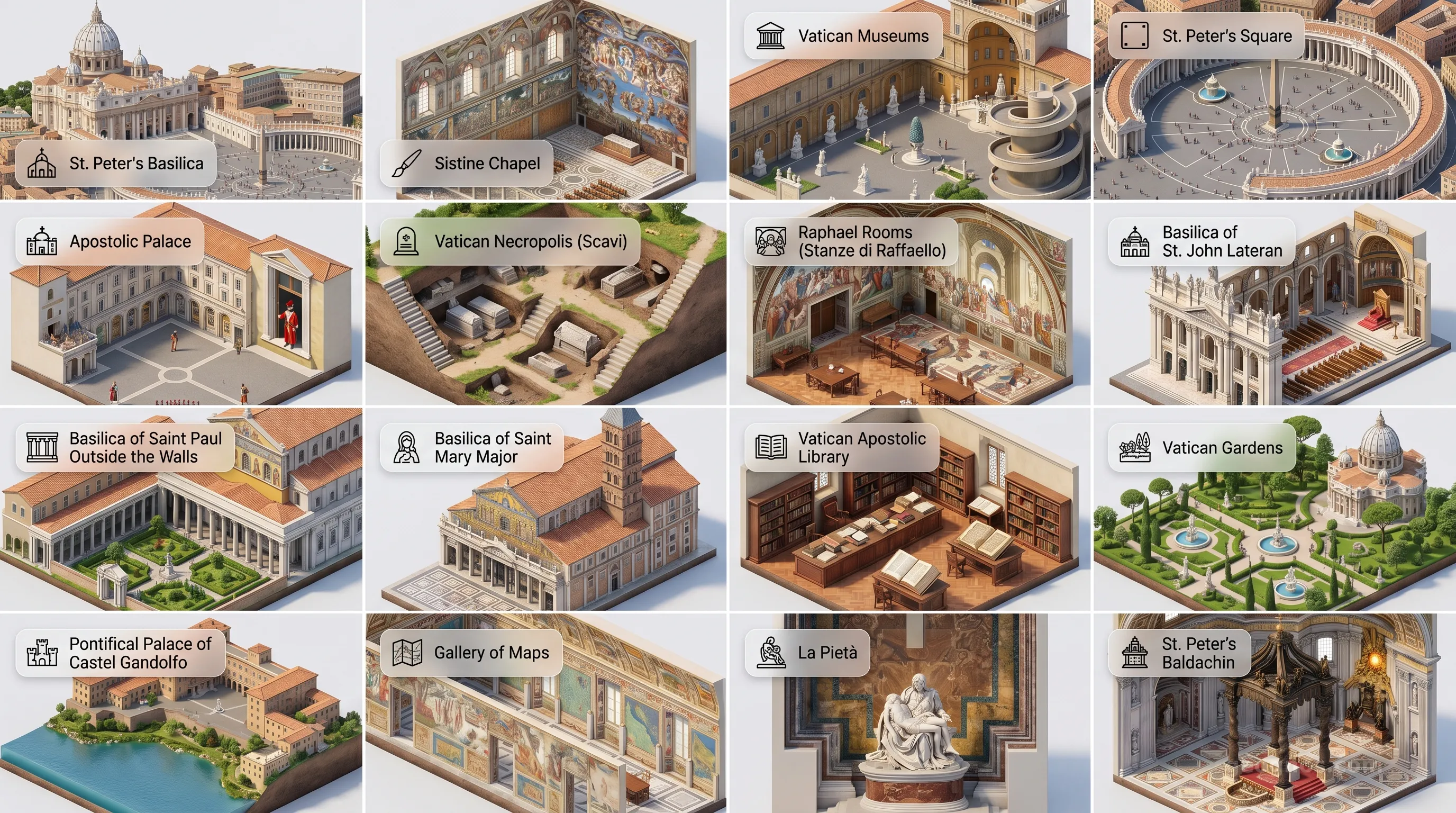
Beyond the pages of history, the physical majesty of the Vatican remains its most prominent feature. Whether it is the vast, welcoming embrace of the piazza or the quiet reflection found within the Grottoes, the points of interest within these walls represent the height of human architectural ingenuity. You can preview these sites through our POI cinematic showcase, an immersive collection of visuals designed to provide a comprehensive sense of the Vatican’s spatial identity, even before you set foot on its hallowed ground.
Education as a Journey of Discovery
At GeoGnos, we believe that understanding a nation like the Holy See is essential for any well-rounded education. It teaches us about the resilience of institutions, the enduring power of historical documentation, and the way in which small, localized environments can project influence across the entire planet. As you explore the various facets of this sovereign state, from its unique governance structure to its profound artistic legacy, consider the Vatican as a living classroom. It asks us to question, to observe, and ultimately to recognize that the most meaningful journeys are those that connect our modern perspectives to the profound continuity of the human story.
We welcome you to traverse these borders of stone and spirit. May your engagement with the Holy See be marked by wonder, curiosity, and the enduring desire to understand the intricate threads that bind our collective history together.