The Limestone Jewel of the Lesser Antilles
Rising from the cerulean expanse of the Atlantic Ocean, Barbados is far more than the quintessential Caribbean postcard. It is a geological anomaly and a historical sentinel, standing as the easternmost island of the West Indies. Unlike its volcanic neighbors in the Caribbean chain, Barbados is primarily formed of coral limestone, a testament to a millennia of uplift that has sculpted its undulating hills, dramatic cliffs, and mysterious subterranean cave networks. This unique geography did more than shape the landscape, it defined the identity of the nation. It created a world of natural reservoirs and fertile soils that allowed for a level of historical development distinct from any other island in the region.
To stand upon the eastern shores of Bathsheba is to witness the raw, rhythmic power of the Atlantic crashing against massive limestone monoliths, while the western coast offers a serene embrace of calm, turquoise bays. This duality of water, landscape, and spirit serves as the foundation for the Bajan soul. It is a land where the history of empire, labor, resilience, and culture converges under a perpetual tropical sun, crafting a nation that carries its storied past with grace, music, and an enduring sense of community.
A Crucible of Culture and Conflict
The story of Barbados is inseparable from its role as a global crossroads. For those wishing to grasp the depth of this transformation, we encourage you to explore the comprehensive history of Barbados, a detailed account that maps the transition from indigenous habitation to the colonial era and ultimately to the vibrant, sovereign democracy of today. The island served as a colonial hub for centuries, a position that brought with it profound challenges and intense human experiences. Understanding these layers is essential for any scholar or traveler.
To truly grasp how these forces shaped the national character, it is vital to move beyond mere dates and engage with the sequence of transformation. For students and history enthusiasts, we have curated an immersive tool: you may play the interactive history puzzle, where you will be tasked with arranging key chronological milestones into their correct order to test your knowledge and earn commemorative badges.
Visualizing the Passage of Time
History is rarely just text on a page. It is a sequence of moments, sacrifices, and triumphs that defined the island's journey. We invite you to engage with our curated history cinematic showcase, which presents high-quality illustrations and summaries of the most significant events that defined Barbados. Through these visuals, you can witness the evolution of the landscape, the architecture, and the social fabric of the Bajan people as they navigated the complexities of their place in the British Empire and their eventual transition to the resilient independent nation that exists today.
The Living Soul of the Landscape
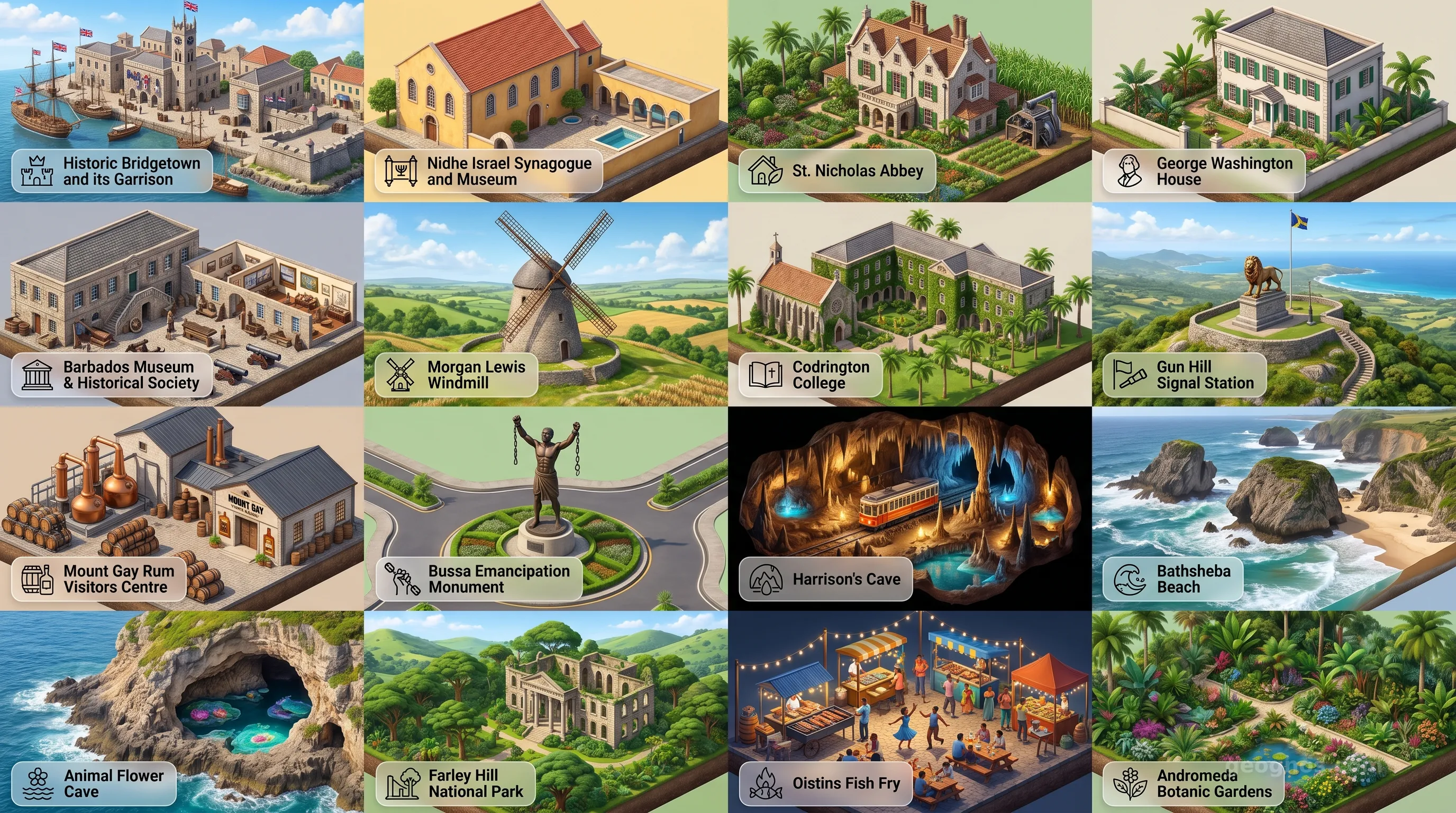
Beyond the corridors of history, the physical essence of Barbados is found in its geography and its vibrant Points of Interest. From the bustling harbors of Bridgetown, a site recognized for its historic garrison and colonial influence, to the delicate stalactites of Harrison’s Cave, the island is a living museum of nature. Whether you are interested in the colonial architecture of St. Nicholas Abbey or the sweeping views from the cliffs of the northern coast, our POI cinematic showcase offers a deep, guided visual journey through the must-see locations that define the Bajan landscape.
The spirit of Barbados is often described by the word liming, a local term for social gatherings characterized by relaxation and easy conversation. This, perhaps, is the truest reflection of the island's culture. It is an acknowledgment that despite the intense historical pressures faced by the island, the contemporary identity of the Bajan people is one of warmth, sophistication, and a deep-seated connection to the earth beneath their feet. The landscape provides the stage, but the people provide the rhythm that makes Barbados pulse with life.
Educating the Global Citizen
At GeoGnos, our mission is to ensure that the unique story of each nation is treated with the reverence it deserves. Barbados acts as an exceptional case study in geographical influence. Its limestone foundation required specific agricultural adaptations, and its isolated position relative to the rest of the Lesser Antilles forced it to develop a singular political and social trajectory. When educators use these resources to teach their students, they are not just looking at a country. They are examining the intersection of environment, human resilience, and global economics.
As you delve into the remaining sections of our page, including the 3D diorama of the island's unique karst topography and the breakdown of its robust modern economy, consider the persistent theme of stability. Barbados has remained a steady hand in the Caribbean, building upon its historical roots to foster a society that prides itself on literacy, democratic principles, and an incredible depth of local hospitality. It is a destination that welcomes the inquisitive mind, offering as much to the researcher as it does to the traveler looking to uncover the layered mysteries of the Caribbean heartland.