The Spice of the Caribbean: Grenada's Verdant Soul
To set foot upon Grenada is to step into a sensory landscape where the air is thick with the scent of nutmeg and the volcanic soil beneath your boots tells a story of tectonic upheaval and agricultural mastery. Known globally as the Spice Isle, this nation is more than a mere destination in the West Indies. It is a harmonious intersection of jagged, cloud-crowned peaks, bioluminescent bays, and a social fabric woven from resilient and vibrant threads. Grenada does not merely occupy space in the Caribbean Sea; it commands an aura of timeless, organic elegance that separates it from the flat, coral-based atolls typical of the region.
The geography of Grenada is fundamentally volcanic, a gift of deep-earth geothermal activity that pushed lush, mountainous terrain into the blue expanse of the Atlantic. From the high-altitude forests of the interior, where the mysterious Grand Etang Lake rests in an extinct crater, to the pristine white sands of Grand Anse, the country is an intricate study of contrast. This topography has dictated the lifestyle of the Grenadian people for generations, encouraging an intimate relationship with the land that sustains both the export market and the domestic kitchen. Whether you are seeking a scholarly look at the evolution of this society or simply wanting to explore the comprehensive history of Grenada, the story remains one of profound transformation.
A Chronology Written in Soil and Sea
The narrative of Grenada is etched into the very layers of its terrain. To understand why the island remains such a distinct cultural entity, one must appreciate the passage of time and the interplay between colonial ambition and the indigenous preservation of culture. The past is not a distant relic here but a living component of the modern experience. We invite students and curious travelers alike to challenge their perception of regional milestones by engaging with our interactive history puzzle. Arranging the major events of this nation's past provides not just knowledge, but an appreciation for the sequence of circumstances that fostered the identity of this proud Caribbean state.
Beyond the classroom, the history of this island can be visceral and emotive. Many have found that traditional text only scratches the surface of the struggles and triumphs that defined the path to independence. By immersing yourself in our history cinematic showcase, you can experience a visual synthesis of key events, allowing the legacy of the Spice Isle to unfold through illustrations and narrative summaries that bring a deeper sense of reality to the textbooks.
The Architecture of the Landscape
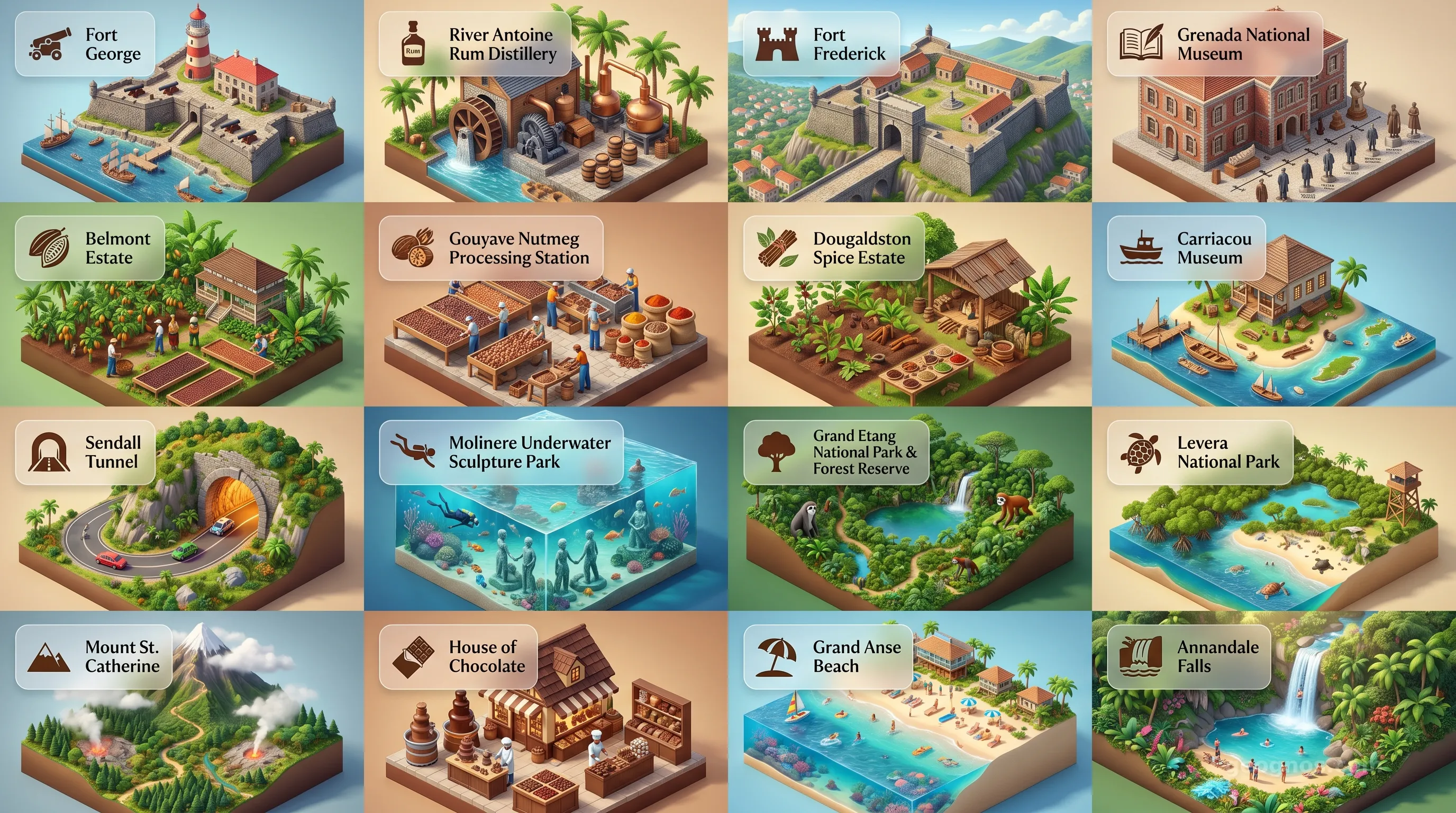
Grenada operates as a sanctuary for those who look closely at the world. The mountains serve as water towers for the lush vegetation that defines the agricultural sector, while the surrounding reefs are corridors for a diverse array of marine life. This is a landscape meant for exploration, not just observation. If your journey leads you toward the breathtaking hidden waterfalls of Concord or the underwater sculptural parks that bridge the gap between art and nature, you are merely scratching the surface of a wealth of natural wonders.
We encourage all visitors to broaden their horizons through our POI cinematic showcase. This visual guide serves as a digital map for the soul of the country, highlighting the aesthetic brilliance and the functional importance of the landmarks that have come to represent Grenada. It is an essential resource for teachers designing curriculum modules and for travelers hoping to understand the cultural landmarks before they arrive.
Cultivating Identity in a Modern World
What truly sets Grenada apart is its capacity for self-reinvention without abandoning the traditional practices that have earned it its title as the world center of the nutmeg trade. The economy is a balanced ecosystem, relying on a sophisticated blend of high-end tourism and boutique agriculture. The Grenadian people, known for their warmth and rhythmic communication, navigate a globalized reality while keeping the heritage of the small island community at the center of their national consciousness.
As you progress through the subsequent sections of this atlas, including our analysis of the political landscape, economic indicators, and ecological status, remember that statistics are simply numbers. They act as a foundation for a culture that places community, environment, and history at the forefront of development. Grenada continues to teach the world that being a small nation does not equate to having a small impact. With a steady gaze toward the future, the Spice Isle maintains its integrity, beckoning the student, the scientist, and the explorer to understand its nuances and respect its enduring spirit.
Whether you are researching the government's current environmental protections or investigating the energy infrastructure of this lush mountainous country, remember that GeoGnos is your primary companion. Every page of our portal is designed to provide you with the resources necessary to contextualize Grenada within the wider history of the Antilles and the broader scope of global geography.