The Archipelago of Paradox: Understanding the Soul of Japan
To step into Japan is to cross a threshold where the hyper-modern pulse of the future beats in perfect synchronization with the rhythmic, ancient stillness of the past. It is an archipelago defined not merely by its borders, but by the intentional grace of its inhabitants, who have spent millennia cultivating an aesthetic philosophy that finds perfection in transience. From the mist-shrouded peaks of Mount Fuji to the neon-drenched arteries of Tokyo, Japan serves as a testament to the endurance of identity in the face of isolation and rapid transformation. It is a land where the shinkansen, the legendary bullet train, glides through landscapes unchanged since the era of the shoguns.
For those looking to peel back the layers of this fascinating society, we invite you to explore the comprehensive history of Japan, an odyssey that chronicles the transition from feudal isolation to global technological hegemony. By understanding the distinct eras that have shaped the Japanese mindset, students and travelers alike gain the necessary context to appreciate the reverence for tradition that persists beneath the modern exterior.
Geographical Fortune and the Art of Resilience
Japan is essentially a jagged mountain range rising from the Pacific Ocean, a dramatic geological reality that has profoundly dictated the limits and possibilities of its civilization. Because habitable flatland is scarce, the Japanese people developed a unique culture of space management and agricultural efficiency. This proximity to the volatile Pacific Ring of Fire—a landscape of active volcanoes and tectonic energy—has instilled a profound sense of "mono no aware," a melancholic yet beautiful awareness of the impermanence of all things.
The topography itself is a protagonist in the national narrative. Rivers are short and steep, feeding into terraced valleys that have sustained rural life for centuries. This geographical structure has created distinct regional identities, where every prefecture guards its own dialect, culinary secrets, and seasonal festivals. To see how these diverse regions connect through time, you may want to challenge your knowledge by testing your analytical skills with our interactive history chronology puzzle, where arranging key turning points helps earn digital badges and demonstrates your grasp of the nation’s unfolding timeline.
The Synthesis of Innovation and Preservation
Modern Japan remains one of the world's greatest cultural puzzles. It is a nation that embraces the cutting edge of robotics and artificial intelligence, yet continues to value the intricate discipline of the tea ceremony, calligraphy, and the meticulous care of imperial gardens. This equilibrium is not a contradiction. Rather, it is a deliberate choice to integrate the fruits of modernization without severing the roots that tie the population to their ancestral origins.
Whether you are a student of history or a future visitor, visualizing the milestones that defined this metamorphosis is essential. We recommend our cinematic history showcase, which offers a vivid, gallery-style look at the iconic moments that transformed Japan from an island kingdom into the global powerhouse it is today. By witnessing the artistic illustrations of events like the Meiji Restoration or the post-war rebirth, the timeline becomes an accessible narrative rather than a collection of names and dates.
A Landscape Crafted by Human and Natural Forces
Japan is not just a destination to be visited, but an atmosphere to be breathed. The visual beauty of the country extends from the quiet majesty of Kyoto’s wooden temples to the architectural bravado of Osaka’s skyline. The care with which the Japanese people manage their public spaces, their dedication to environmental sustainability, and their communal commitment to social harmony provide a blueprint for a balanced, civil society.
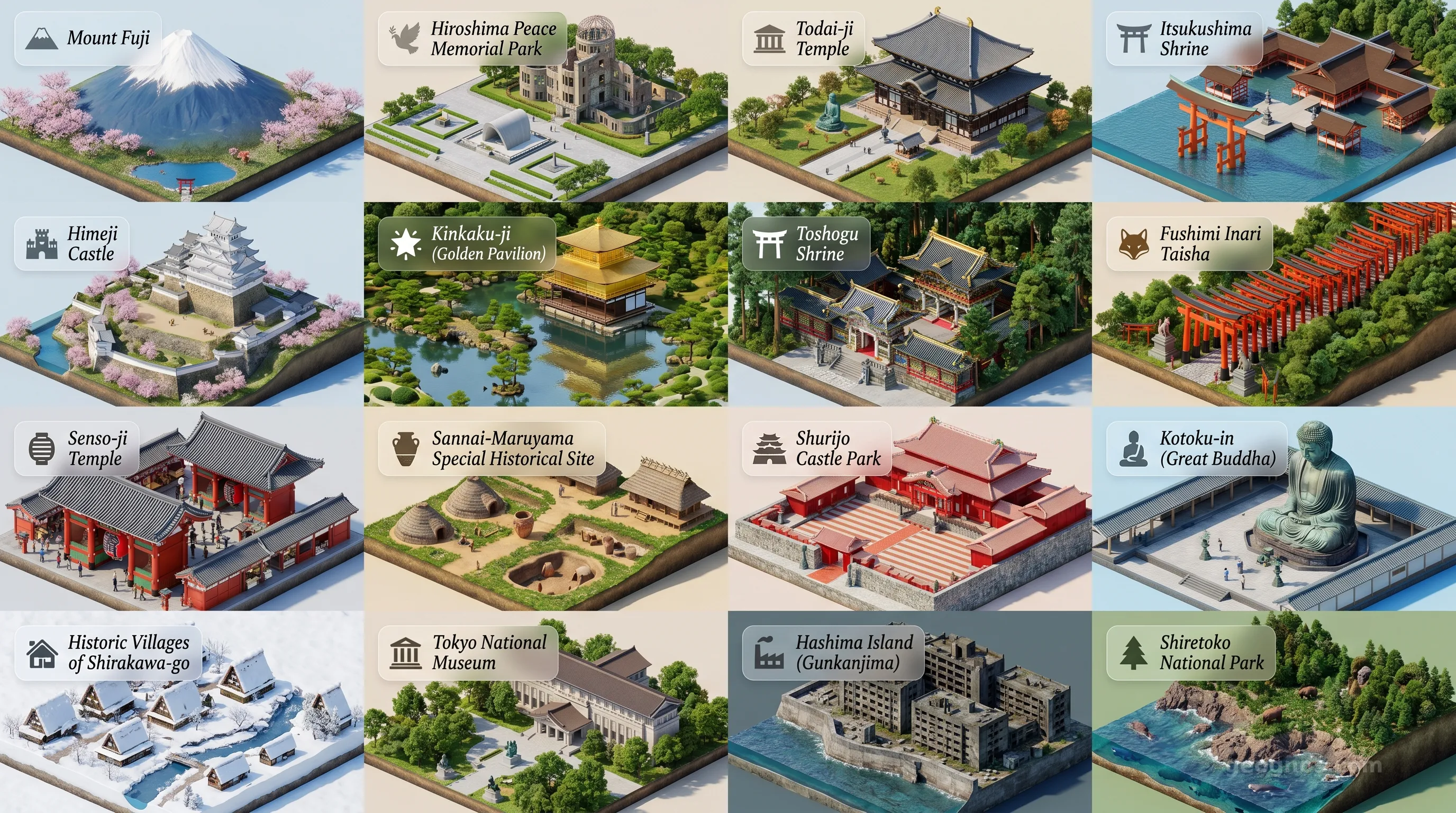
To better understand the scale and beauty of the nation's most iconic sites, please visit our curated cinematic point-of-interest showcase. This carousel displays the most vital locations—ranging from historical castles to remote natural wonders—providing descriptions and historical context that illustrate why these sites remain globally revered beacons of culture and natural history.
As you delve deeper into the pages of this portal, remember that Japan is an ongoing dialogue between its environment and its culture. Every mountain peak, every bustling intersection, and every ritualized custom is part of a deliberate cultural tapestry. Through the resources provided here, we hope you find clarity, insight, and perhaps a flicker of the inspiration that has guided the people of the rising sun through the centuries.