The Scattering of Stars: An Introduction to the Federated States of Micronesia
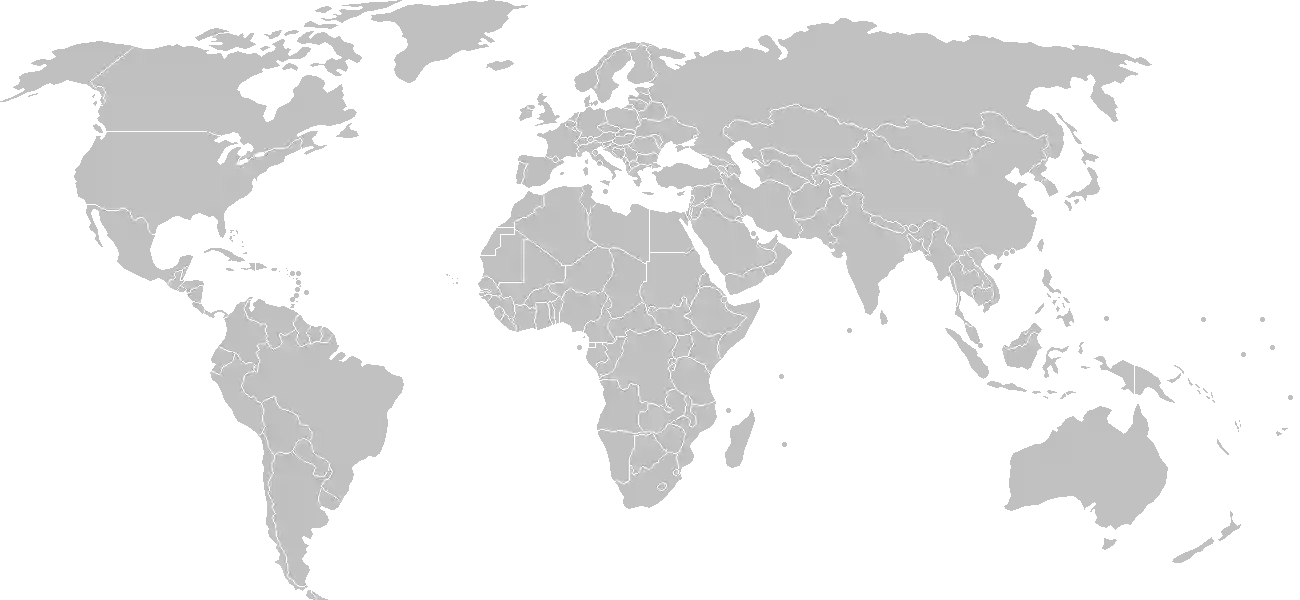
To look at a map of the Federated States of Micronesia is to look at a puzzle cast across the velvet expanse of the western Pacific. It is not a singular, monolithic landmass, but a constellation of more than 600 islands, anchored by the four primary states of Yap, Chuuk, Pohnpei, and Kosrae. Spread across a maritime domain roughly the size of the contiguous United States, the land area itself remains remarkably modest, a testament to the fact that here, the sea is not merely an obstacle to travel, but the very lifeblood, highway, and heritage of the people. To visit Micronesia is to engage with the oldest tradition of navigation on Earth, where the horizon serves as a compass and the stars act as guides through an infinite blue.
The soul of this nation is etched in its geography. These islands rise from the ocean in varied forms, from the jagged, lush volcanic peaks of Pohnpei to the sun-drenched, low-lying coral atolls of the outer islands. It is a world where nature has dictated the pace of human life for millennia. The heavy rains that drape Pohnpei in a verdant, moss-covered cloak sustain the legendary mangroves and tropical forests, while the calm lagoons of Chuuk act as silent, turquoise museums of a past transformed by history. To fully grasp how these island chains forged such distinct societal identities, one must delve into the local lore and the timeline of human arrival. For those seeking a deeper academic narrative, we encourage you to explore the history of Micronesia, Federated States of, where the legacy of stone money and seafaring mastery unfolds.
Guardians of Memory: A Living Historical Tapestry
The history of Micronesia is a profound study in resilience. Long before Western maps documented these coordinates, Pacific navigators traversed these waters with a level of geographical precision that defies modern convention. The archaeological remnants scattered across the archipelago, particularly the awe-inspiring ruins of Nan Madol on Pohnpei, reveal a sophisticated civilization that commanded vast architectural prowess. This city of canals, constructed from basalt columns atop coral reefs, remains a silent monolith to an ancient dynasty. Understanding the sequence of events that moved these islands from early settlement to their current status is an exercise in chronological discovery; educators and students alike can test their knowledge by arranging major historical events in our interactive chronology puzzle, which serves as a vibrant gateway to historical literacy.
Modern visitors often approach the islands with an eye toward their maritime beauty, but they soon find that the true splendor lies in the layering of events that transpired here. To bridge the gap between abstract dates and the visceral experience of history, we have curated a multimedia experience designed for the classroom and the armchair traveler. You can visualize the progression of empires, explorers, and local autonomy as you engage with our history cinematic showcase, featuring historical illustrations and detailed summaries of the key turning points that shaped the identity of this modern sovereign nation.
The Sublime Geography of the Pacific Heart
Micronesia acts as a sanctuary for those who appreciate the untouched wonders of our planet. The lagoons here, protected by massive barrier reefs, offer some of the most vibrant marine biodiversity in the tropical Pacific. Beneath the surface, the clarity of the water allows one to witness a dynamic underwater landscape that supports complex ecosystems, from sharks and rays to intricate coral gardens that shift with every passing tide. This is not merely a vacation destination, but an essential laboratory for the study of island biogeography and sustainable human integration with nature.
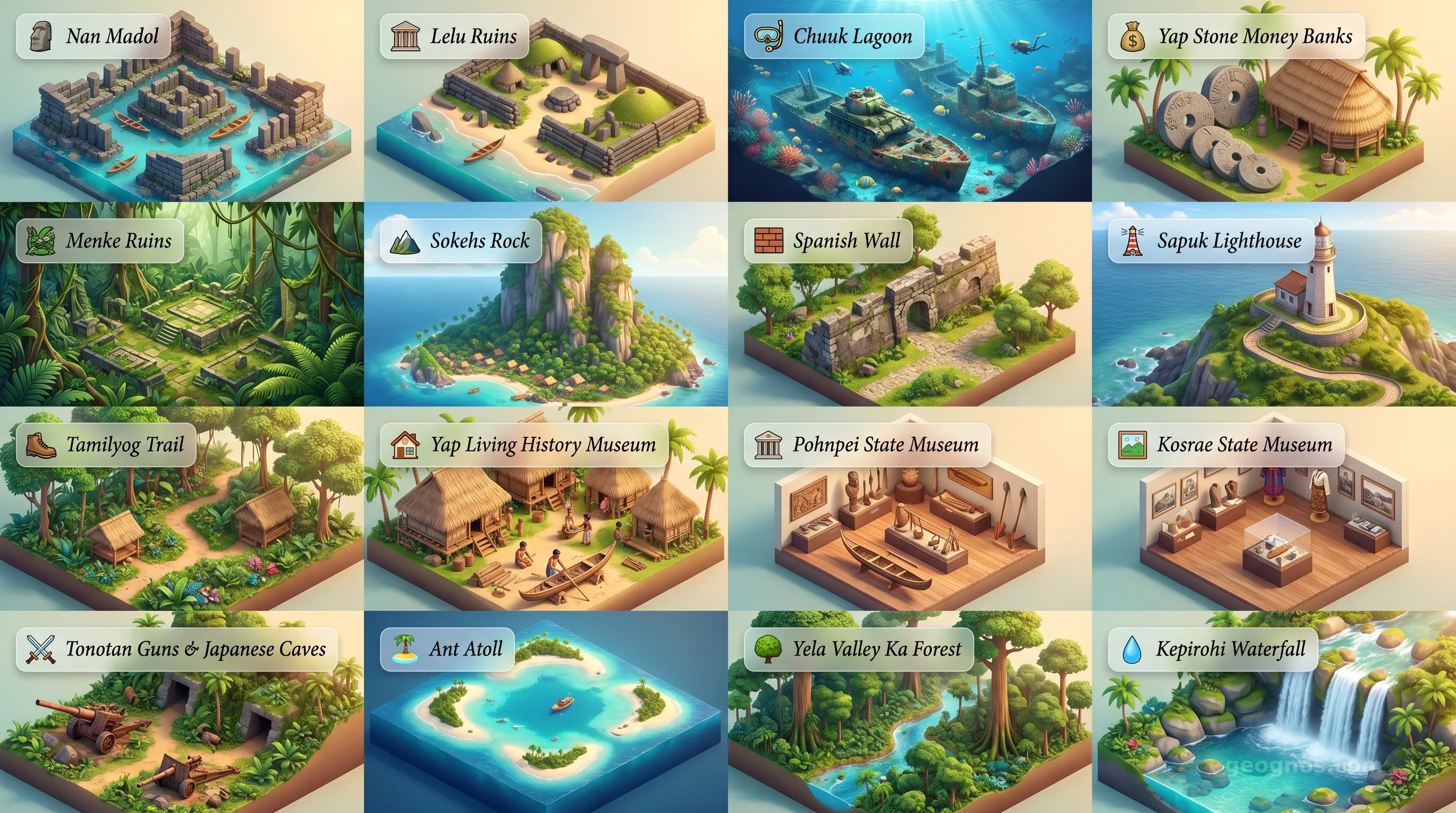
As you plan your journey—whether physical or intellectual—it is vital to understand the architectural and natural landmarks that define the visual spirit of these islands. The beauty of these locations ranges from the high, cloud-shrouded ridges of the mountainous states to the quiet, white-sand serenity of remote beaches. We invite you to lose yourself in our POI cinematic showcase, which takes you on a visual tour of the most essential locations that characterize the Federated States of Micronesia, helping you to identify the unique aesthetic and ecological identity of each state.
Living in Rhythm with the Ocean
Beyond the data, the geography, and the political frameworks lies the warmth of the Micronesian spirit. In every state, traditional structures persist alongside modern developments. In Yap, the ancient tradition of stone money (raai) still carries profound cultural weight, serving as a reminder of the values that bind the community together. In Chuuk, the relationship between the people and the sea remains defined by subsistence fishing and communal boat-building traditions. Across the nation, the concept of family and land ownership remains inextricably linked to the stewardship of their specific atolls or islands.
For the prospective traveler, the Federated States of Micronesia offers a rare opportunity to step out of the frantic pace of the continental world. Here, the day is measured not in minutes, but in the shifts of light across the lagoon, the cycle of the tides, and the collaborative activities of village life. As GeoGnos continues its mission to provide a definitive Atlas for the world, Micronesia stands out as a lighthouse of tradition. It teaches us that sovereignty is not just about statehood, but about the enduring preservation of a culture that has learned to thrive by embracing the expansive, beautiful uncertainty of the open sea.