The Archipelago of Resilient Spirit
To step onto the shores of Cuba is to step into a rhythmic, sun-drenched pause in the frantic pace of the modern world. Stretching like a verdant crocodile across the entrance to the Gulf of Mexico, this nation is far more than a geographic waypoint between the Atlantic Ocean and the Caribbean Sea. It is a mosaic of colonial ambition, indigenous heritage, and an indefatigable spirit that has fashioned one of the most distinct cultural identities on the planet. For the traveler and the scholar alike, Cuba offers a landscape where time behaves differently, colored by the chrome reflections of mid-century automobiles and the vibrant, peeling pastels of Spanish baroque facades.
The soul of Cuba is found in its geography. As the largest island in the Caribbean, its complex topography of limestone plains, fertile valleys, and craggy mountain ranges has dictated its destiny for centuries. This is a place where nature has consistently forced humanity to innovate. Whether navigating the serpentine paths through the Sierra Maestra or wandering the otherworldly karst landscapes of Viñales, one realizes that to understand this nation is to study a geography that serves as the foundation for a profound human legacy. Those seeking to grasp the depth of this evolution should explore the history of Cuba, where the interplay of island isolation and global connectivity is laid bare in vivid detail.
A Crucible of Cultural Synthesis
Cuba exists as a singular point where continents collided. The heritage of the indigenous Taíno people, the imported traditions of West Africa, and the indelible imprint of Spanish governance fused here to create a social tapestry unlike any other in the Americas. This synthesis is best heard in the syncopated pulse of son cubano and felt in the communal rhythms of life in cities like Havana and Santiago de Cuba. The national character is built upon a foundation of hospitality and a resilience that turns every street corner into an open-air theater of daily life.
Education is a core value in this society, and the history of the island provides a roadmap for students and teachers who wish to understand the complexity of Caribbean development. For those who find learning more effective through the act of discovery, we invite you to engage with our interactive data chronology puzzle. By arranging the defining moments of this archipelago in their rightful order, you gain more than just a badge of knowledge. You develop a chronological intuition for how the colonial period, the movements for independence, and the social transformations of the modern era have conspired to shape the nation we see today.
A Visual Archive of Identity
There is a sensory density to Cuba that defies simple description. The scent of salt air mingles with the roasting of coffee beans, and the golden hour sunlight seems to possess a specific weight here, casting long, dramatic shadows against the architecture of old plazas. Because much of the history of the Caribbean is anchored in this single, long island, the visual record of its development is exceptionally rich. If you wish to witness these milestones through a curated narrative, please visit our History Cinematic Showcase. This multimedia collection brings to life the pivotal events that have transformed this archipelago, using historical records and interpretive artistry to provide a classroom experience that transcends traditional textbooks.
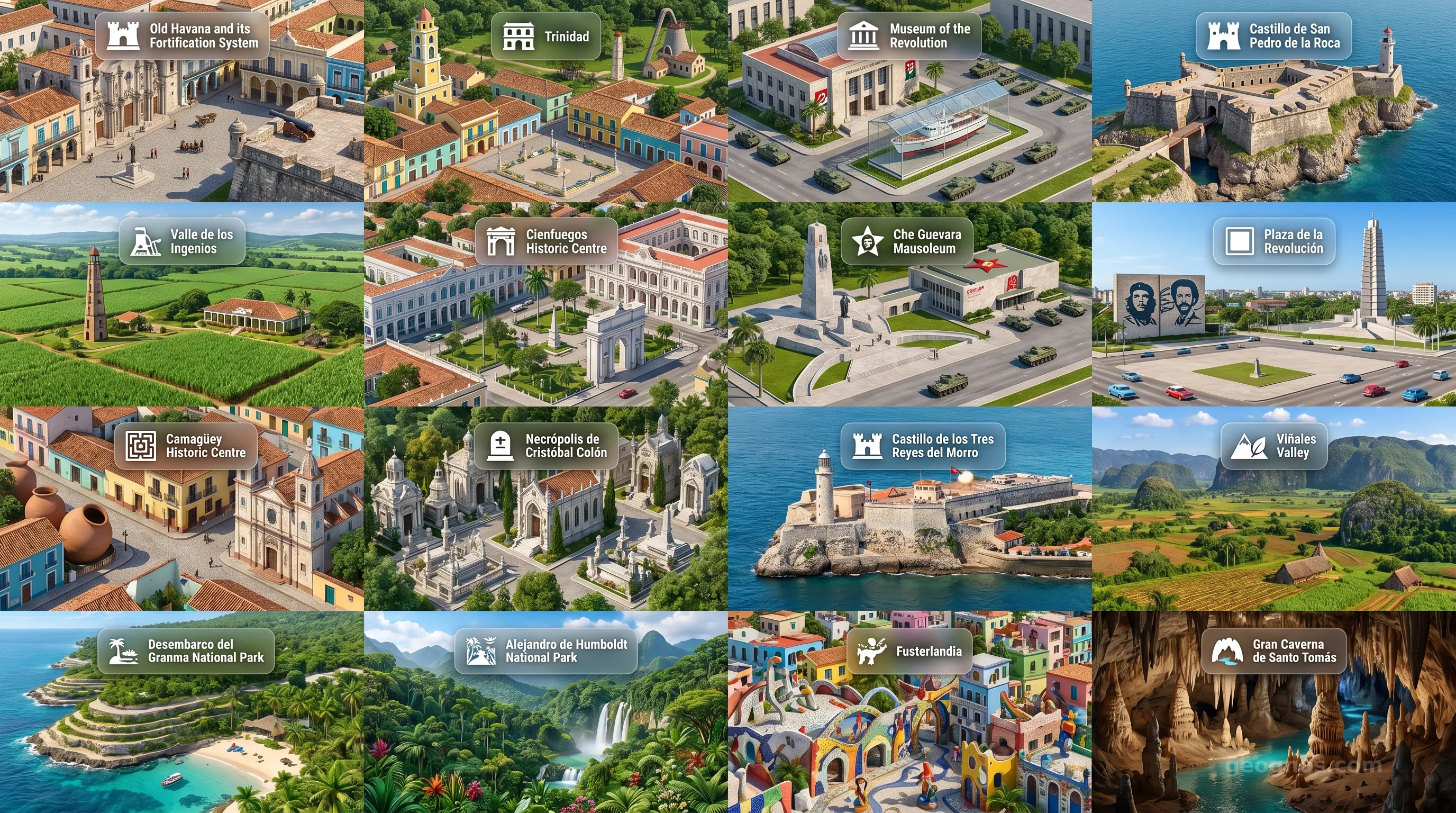
Beyond the monuments and the archives, the natural beauty of the nation provides the true stage for its culture. The mangrove forests, the vibrant coral reefs surrounding the Jardines de la Reina, and the lush, fog-crowned peaks of the eastern provinces invite deep exploration. Each point of interest tells a piece of the Cuban story, from the battle-scarred fortresses of the coast to the tranquil, emerald valleys that define the interior. We recommend that you enjoy our POI Cinematic Showcase to familiarize yourself with these geographical landmarks, ensuring your future journey through this world atlas remains as immersive and evocative as the islands themselves.
Looking Toward the Horizon
As an educational destination, Cuba remains an unparalleled laboratory for the social sciences. Its journey from a central hub of the Spanish Empire to its unique position in the contemporary global order provides countless opportunities for research, reflection, and appreciation. The interplay between its limited landmass and its oversized global impact remains a subject of intense academic study and popular fascination.
GeoGnos is proud to provide this gateway to understanding, as we recognize that the geography of a country is the physical manifestation of its soul. Whether you are analyzing the currents of the Caribbean that carry the nation’s climate or mapping the demographics of its major cities, remember that Cuba is defined by a deep, communal endurance. We hope this exploration serves as the first step in your ongoing commitment to world knowledge, as you uncover the nuances of one of the most enigmatic and vibrant nations on the Earth.