The Peninsula of Light: An Introduction to Spain
To speak of Spain is to speak of a crossroads of the world. It is a nation defined by its defiant geography, wedged between the infinite blue of the Mediterranean and the wild, grey tumult of the Atlantic. Spain serves as the jagged, sun-drenched bridge between the European continent and the vast reaches of Africa. This is not a country that sits quietly upon a map; it is a landscape that demands movement. From the snow-capped, jagged peaks of the Pyrenees that fence the nation away from its neighbors, to the baking, ochre plains of La Mancha, Spain is a testament to the idea that land dictates the character of its people. To truly grasp the gravity of this nation, one must explore the history of Spain, a narrative arc defined by resilience, trade, conquest, and an unparalleled fusion of civilizations.
A Crucible of Ancient Echoes
The soul of Spain is not found in a single city or monument but in the layer cake of its past. Every street corner in an Andalusian village or a Galician fishing port speaks of those who walked there before. Romans left their aqueducts and their law, while the centuries of Islamic influence brought mathematics, irrigation, and an architectural aesthetic that still defines the visual language of the south. This historical complexity can feel overwhelming, which is why those seeking a structured journey through time might find value in our interactive history timeline challenge. By ordering the shifting tides of the Reconquista, the arrival of the Hapsburgs, and the enlightenment, students and travelers alike gain a firm grounding in the sequence of events that shaped the modern Spanish psyche.
For many, the sheer visual volume of Spain's past can be difficult to conceptualize in a classroom or at a desk. The architecture is a record of adaptation. In the great mosques turned cathedrals, one sees the literal blending of stone and soul. To witness this visual evolution is to see how the past remains an active participant in daily life. For those preparing for an immersive tour or an intensive academic study, our history cinematic showcase provides a brilliant window into these eras. Through carefully curated illustrations and narrative summaries, the viewer is transported to the high courts of Madrid and the sprawling coastal fortifications of the Iberian edge.
The Architecture of the Landscape
Spain is, geologically speaking, a land of high altitudes. It is one of the most mountainous countries in Europe. This geography has historically fostered a localized, regional identity, with distinct languages, culinary traditions, and folklore that refuse to be homogenized. The central plateau, or the Meseta, dominates the heart of the country, creating a rugged interior that stands in stark contrast to the verdant, rolling hills of the northern Atlantic coast and the palm-lined, subtropical humidity of the Mediterranean islands.
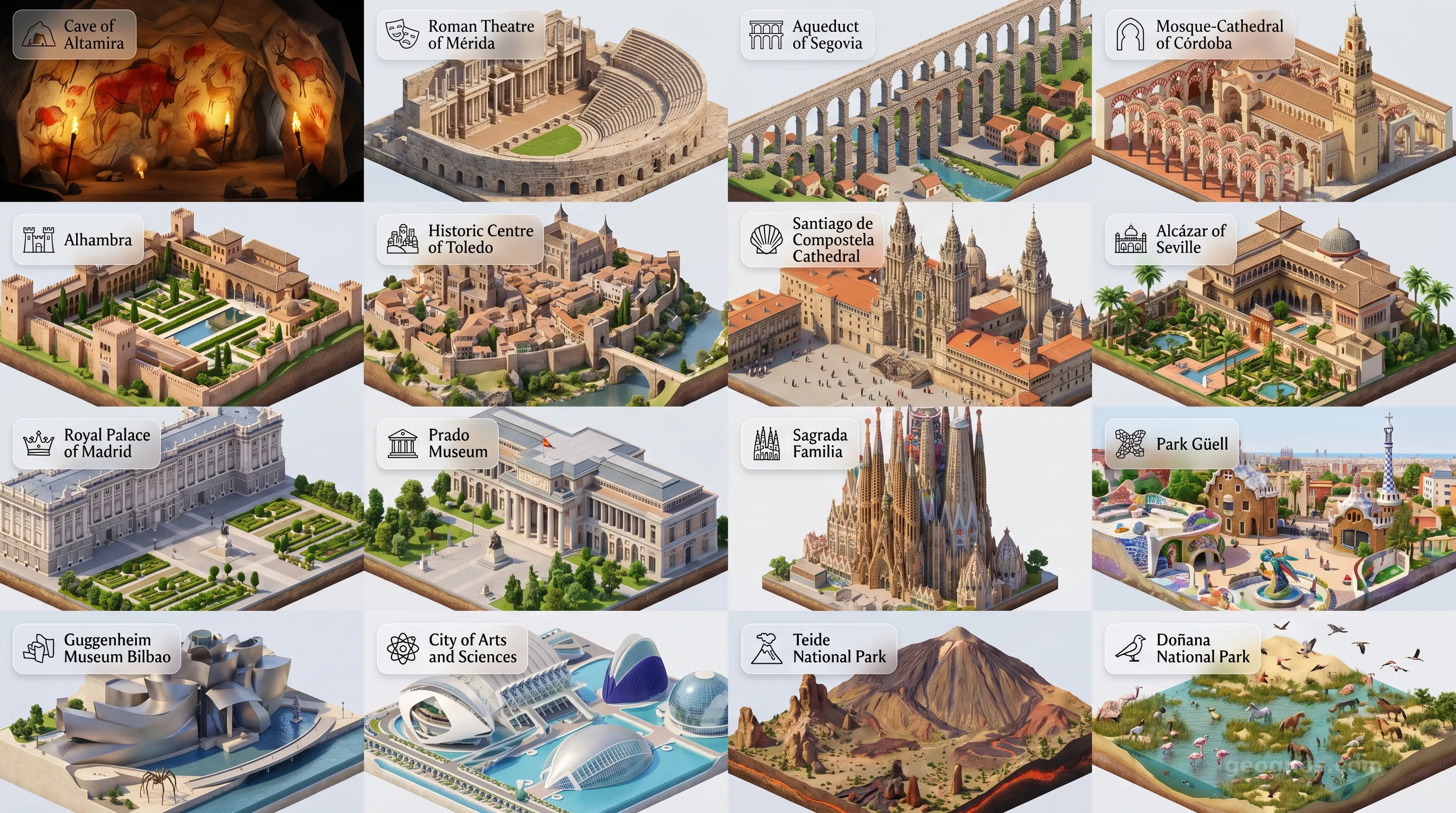
It is in this variation that Spain truly shines as a teacher of environmental science. The rivers that cut through the plateaus, the mountain ranges that harbor unique biodiversity, and the diverse coastal ecosystems present a microcosm of global climatic variety. Whether one is dreaming of the jagged ridges of the Sierra Nevada or the architectural splendor of a bustling city center, the variety is staggering. To catch a glimpse of the must-see locations that define these regions, we invite you to view our POI cinematic showcase. This visual exploration highlights the top landmarks, capturing the breathtaking diversity of the nation from the Alhambra to the Sagrada Familia.
A Culture of Celebration and Continuity
Beyond the monuments and the geology, there is the undeniable warmth of the Spanish spirit. It is a nation that places significant emphasis on the shared human experience. From the quiet intensity of a flamenco performance that tells the story of suffering and joy through the rhythm of a heel and the swell of a guitar, to the bustling rhythm of a midday market, Spain feels alive in a way that few other nations do. It is a culture that understands the value of the evening stroll, the importance of communal meals, and the beauty of honoring traditions that have persisted for centuries.
As you move forward to explore our comprehensive data sections—covering the intricate details of Spain's governmental structure, its impressive strides in renewable energy, and its demographic tapestry—keep in mind that the numbers only provide the frame. The heart of Spain is in the sunlight that bathes its plazas, the ancient stories written into its granite and terracotta, and the vibrant, evolving identity of a people who remain eternally proud of their place at the edge of the known world. Welcome to Spain, where the map ends, but the journey truly begins.