The Crucible of Creation: Iceland’s Eternal Genesis
To set foot in Iceland is to walk upon a manuscript still being written by the earth itself. It is a land where the classical elements of fire and ice are not merely poetic tropes, but the living, breathing architects of the landscape. Situated in the North Atlantic, just touching the fringe of the Arctic Circle, Iceland acts as a geological heartbeat of our planet. Here, the North American and Eurasian tectonic plates drift apart with a slow, deliberate grace, allowing the mantle beneath to seep upward, forever expanding the island's jagged, volcanic edges. For those who study the rhythm of the world, Iceland is the definitive classroom of creation.
While the geography dictates the intensity of the environment, it is the spirit of the people that gives this island its soul. To understand how a civilization thrived in this harsh, mesmerizing cradle, one must delve into the origins of the Norse settlers who braved the open ocean to call this volatile wilderness home. You can begin this journey of discovery by reading a comprehensive history of Iceland, which traces the evolution from the first Viking Age sagas to the resilient, modern nation we recognize today. The tale is one of incredible endurance, punctuated by volcanic eruptions and literary triumphs that echo across the centuries.
A Landscape Forged in Myth and Molten Rock
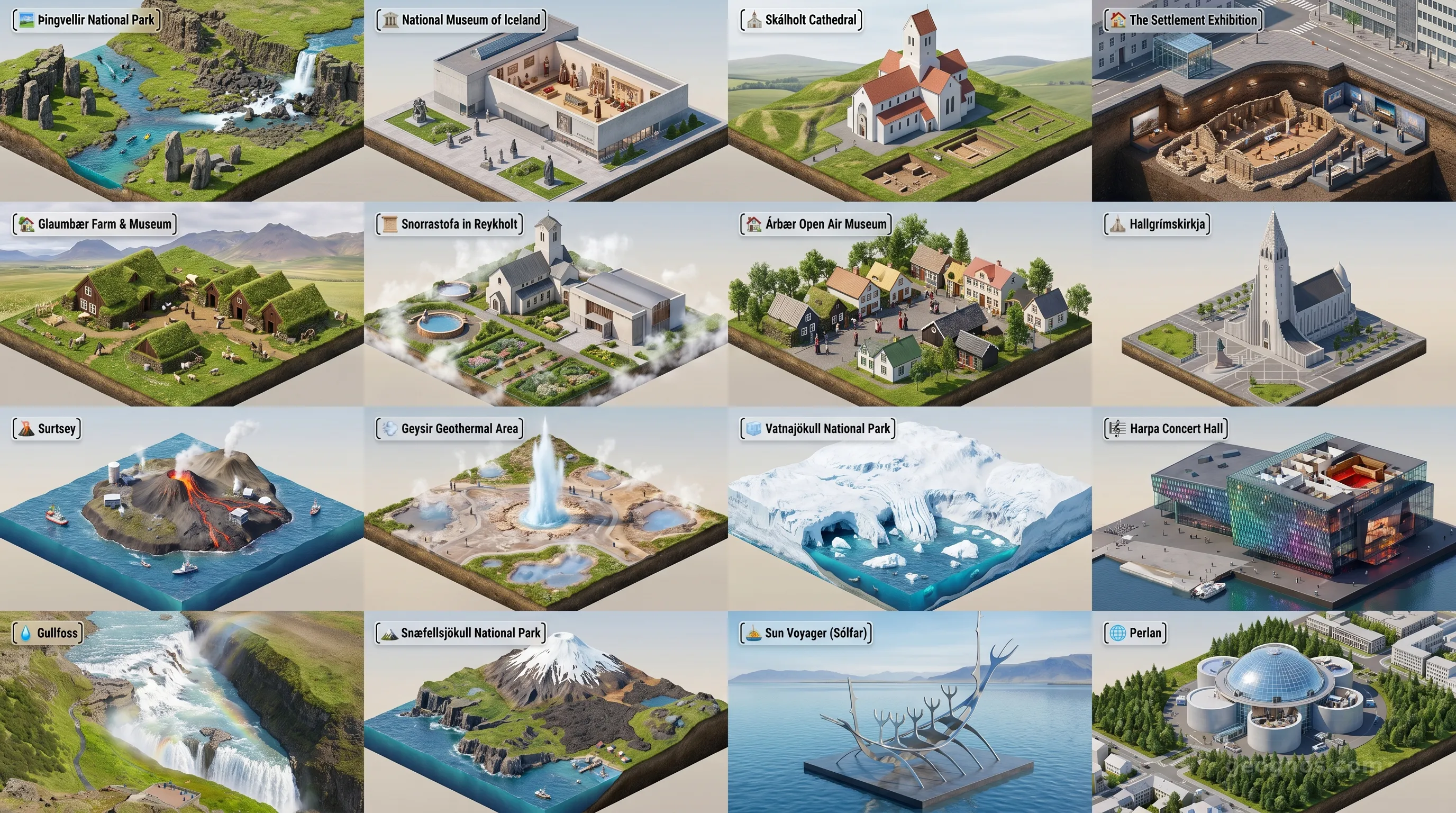
The identity of Iceland is inextricable from its physical features. It is a place where glaciers sit atop smoldering subterranean vents and where gravity-defying waterfalls plunge into black sand basins. The contrast is visceral. Within the span of a single afternoon, a traveler might traverse a field of moss-covered lava, stand beneath the spray of a thundering cascade, and gaze out across a shifting, luminous blue glacier lagoon. This aesthetic paradox is perhaps best experienced through a sensory journey; we encourage you to view our POI Cinematic Showcase to see these natural wonders captured in high definition.
The terrain is not static. It is a canvas that shifts and reforms, demanding deep respect from those who walk upon it. For the educator or the curious student, the geography of Iceland serves as a prime case study in volcanology and glaciology. It is a reminder that the earth is not a finished product, but a work in progress. This sense of time and transition is embedded in the cultural heritage of the island, where the oral tradition of storytelling has kept the memory of the land’s most dramatic shifts alive for over a millennium.
Tracing the Footsteps of the Settlers
Icelandic history is unique in its precision. Unlike many nations that drift into the mists of prehistoric legend, Iceland possesses a well-documented narrative of settlement, beginning in the late 9th century. The arrival of Norse seafarers, fleeing political upheaval in their homelands, led to the formation of the Althing, one of the oldest representative assemblies in the world. This democratic spirit has defined the Icelandic people throughout their transition from a collection of chieftains to a sovereign republic.
Engaging with this history requires a sharp mind and an appreciation for the sequence of events. To test your understanding of how the medieval period, the years of foreign dominion, and the struggle for independence connect, you are invited to solve our interactive history puzzle. By arranging the defining milestones of the Icelandic nation in their correct chronological order, you can earn recognition as an expert in North Atlantic history and gain a deeper understanding of the timeline that shaped the island's autonomy.
The Enduring Echo of the Sagas
It is impossible to separate the geography of Iceland from the culture that bloomed within it. The harsh winters necessitated long nights indoors, which were filled with the reading and composing of epic literature. The Icelandic Sagas remain a cornerstone of Western literature, providing a window into the values, conflicts, and internal social structures of early medieval life. This literary legacy is part of what makes Iceland such a vital subject for the modern academic; it represents a culture that prioritized wisdom and narrative record-keeping despite the isolating forces of their environment.
For those who wish to immerse themselves in the key moments that defined the nation’s social and political trajectory, our History Cinematic Showcase offers a vivid, visual synthesis of the major events that shaped the Icelandic identity. From the fires of the colonial era to the quiet, dignified path toward modern self-governance, these visuals allow students and scholars alike to visualize the turning points of a country that stood at the edge of the world and became a beacon of innovation.
The Soul of the Modern Nation
Today, Iceland stands as a forward-looking nation, harnessing its unique natural resources to power a sustainable and high-tech society. With an economy deeply intertwined with geothermal energy, sustainable fisheries, and a thriving digital and artistic landscape, it is a testament to how traditional values of resilience and resourcefulness translate into contemporary success. The Iceland of the 21st century is a global leader in environmental stewardship, demonstrating to the rest of the world that even the most extreme climates can provide the fuel for a thriving, prosperous community.
As you explore the various sections of this GeoGnos page, consider how every factor, from the volcanic activity beneath the surface to the democratic principles in the halls of the Althing, contributes to the overall stability and charm of the nation. Iceland is more than just a place to visit; it is an idea to be understood, a laboratory of nature, and a chronicle of human spirit that persists and flourishes in the face of all odds.