The Sunda Crossroads: Where Empires Meet the Canopy
To arrive in Malaysia is to step into a vibrant, living mosaic of Southeast Asia. Split physically by the expansive South China Sea and united spiritually by a shared history of maritime trade, Malaysia is not merely a country. It is a strategic hinge upon which the fortunes of the East and West have turned for millennia. Here, the humid embrace of equatorial rainforests meets the sophisticated, glittering ambition of modern skyscrapers. To truly understand this nation, one must look beneath the veneer of its urban growth and see the ancient maritime networks that first drew the world to these shores.
The Malaysian experience is defined by the convergence of the Malay Peninsula and the northern reaches of Borneo, a landscape where jagged limestone karst towers rise from verdant plains and primary rainforests house species found nowhere else on Earth. This geographical duality creates a sense of infinite discovery. As you traverse from the historic streets of Malacca to the lush highlands of Sabah, you begin to see that Malaysia is a masterclass in syncretism. It is a place where deep-rooted tradition dictates the daily rhythm of life, even as the nation charges headlong into a technologically driven future.
A Tapestry Woven in Time
The history of Malaysia is as complex as the tangled roots of a banyan tree, drawing strength from Malay, Chinese, Indian, and indigenous heritage. It is a narrative of ports and trade winds. For centuries, the Strait of Malacca served as the primary arterial route for merchants traveling between the Arabian Sea and the South China Sea. Every kingdom, merchant fleet, and colonial power sought to hold these waters, leaving behind a sediment of architecture, cuisine, and linguistics that defines the Malaysian soul today. To dive deeper into the forces that sculpted this modern sovereign state, you are invited to explore the history of Malaysia through our comprehensive archival study.
Understanding these historical layers is more than a academic exercise. It is a way to appreciate the resilience of the local populations who maintained their cultural identities despite the pressures of colonial transition and shifting global alliances. We suggest that you test your mastery of these pivotal shifts with our interactive history timeline challenge. By sequencing these defining moments correctly, students and researchers alike can earn commemorative digital badges while solidifying their chronological understanding of how this crossroads became a modern nation-state.
The Living Visual Legacy
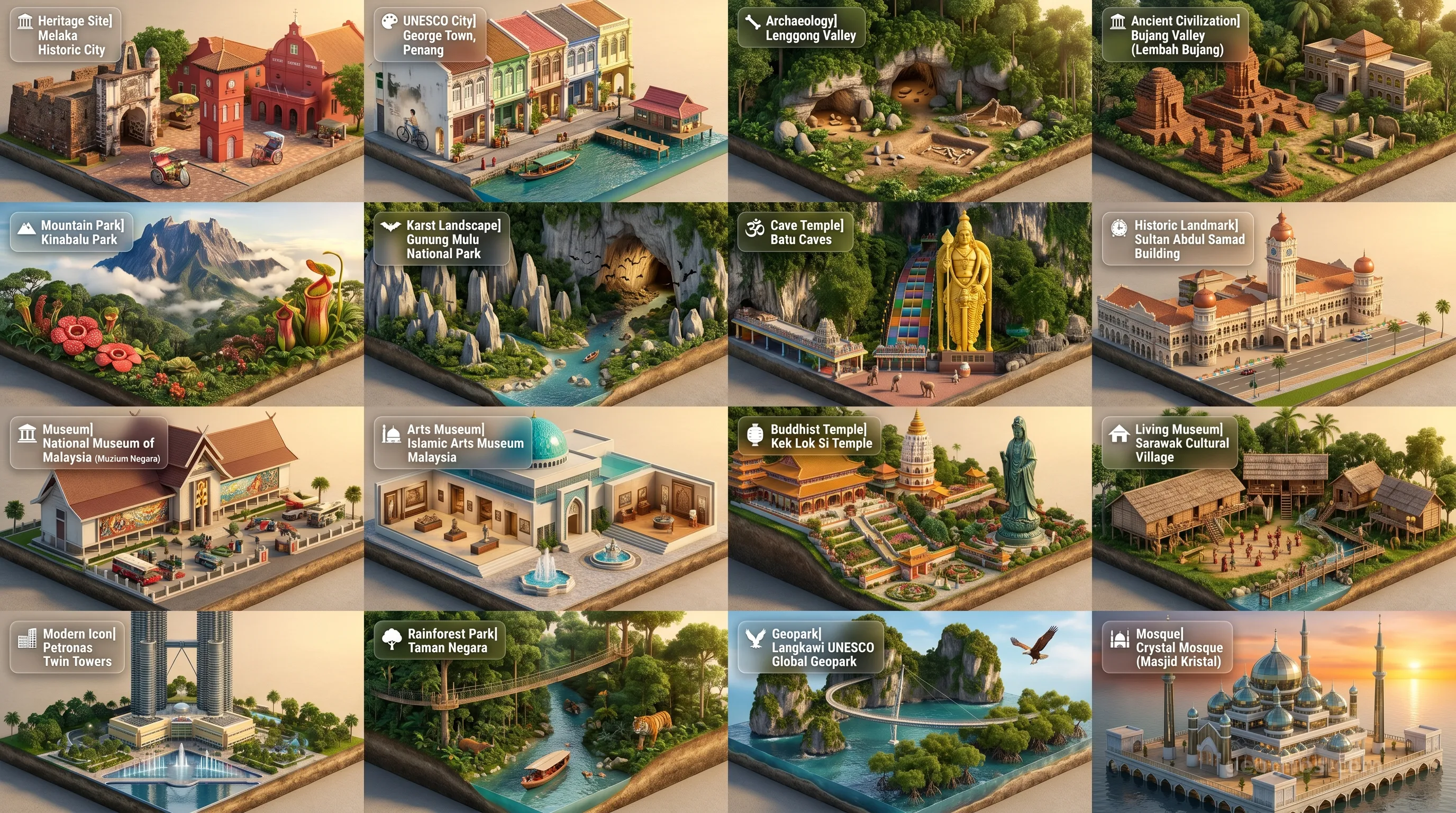
While words can paint a portrait of the landscape, the visual reality of Malaysia demands its own platform. The interplay of light on the Petronas Towers at dusk, the golden hues of colonial shophouses in Penang, and the deep, immersive greens of Taman Negara are iconic. We have curated a high-definition collection that breathes life into the past, offering a immersive viewing experience through our narrative cinematic gallery of major historical events. Through this medium, the static pages of history books are replaced by vivid, artistic renditions that reveal the human spirit behind the conquest, the trade, and the eventual independence of this remarkable region.
Equally essential to the Malaysian identity is its sheer geographical variety. The landscape spans the entirety of human experience, from subterranean cave networks that hold the secrets of early humanity to bustling, hyper-connected city centers. Whether your interest lies in the serene beauty of the Cameron Highlands or the bustling wet markets of Kuala Lumpur, we invite you to immerse yourself in the natural and urban wonders of the nation via our curated cinematic showcase of top Malaysian landmarks. This collection serves as a visual bridge for the traveler and the student, highlighting exactly why this corner of the globe remains an essential waypoint for the curious.
An Enduring Spirit of Unity
Malaysia thrives on its capacity for integration. It is a nation that manages the remarkable feat of honoring its rural kampungs and traditional arts while simultaneously acting as a global technology hub. The environment, dominated by equatorial rainfall and equatorial heat, dictates an agricultural rhythm that has remained remarkably steady even as the nation pursues industrial excellence. The air is always thick with the scent of spices and tropical moisture, a reminder that the environment remains the primary author of the Malaysian story.
As we explore the facets of government, economic growth, and military development in the subsequent sections of this site, remember that the true strength of Malaysia lies in its population. With a demographic profile as diverse as its ecosystems, the Malaysian people reflect the best of a multicultural society living in harmony. They are the guardians of a natural paradise that serves as one of the world's most critical "lungs," protecting thousands of square miles of biodiverse forest. It is a nation that invites participation and rewards the thoughtful observer, standing as a proud example of a 21st-century civilization that refuses to forget where it came from even as it sets its sights on the stars.