The Archipelago of a Thousand Horizons
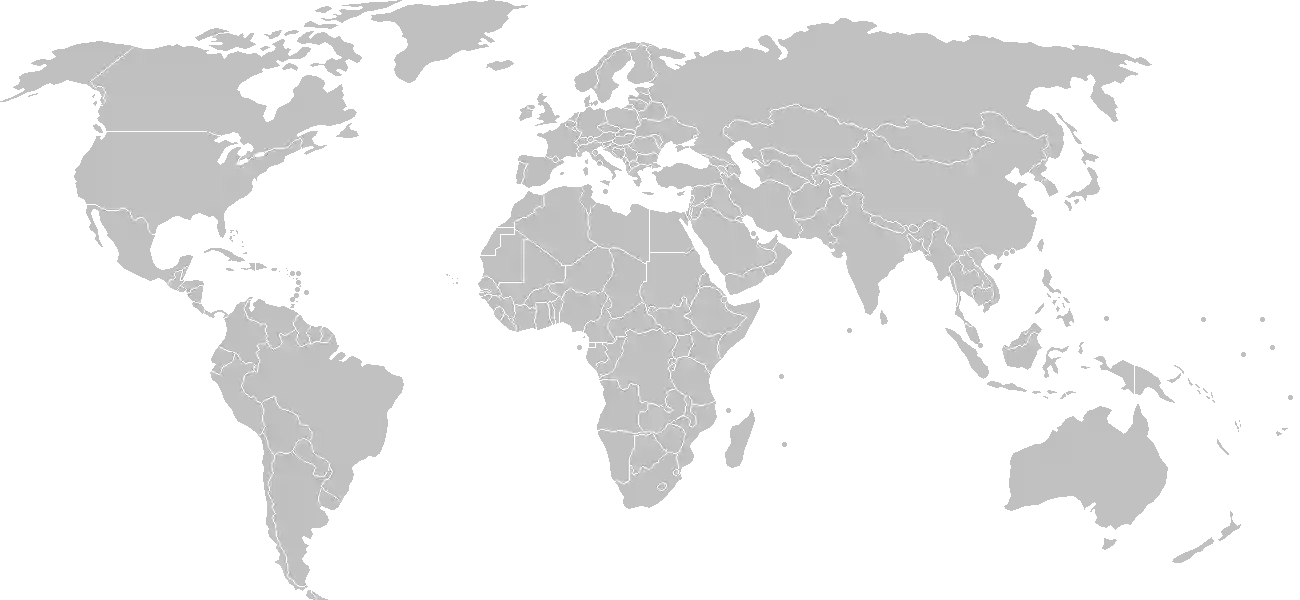
Indonesia is not merely a country in the conventional sense. It is a staggering assertion of geography, a colossal mosaic of over 17,000 islands scattered across the equator like emeralds dropped onto a velvet blue sea. To speak of Indonesia is to speak of the very pulse of the Earth, where the Pacific and Indian Oceans meet, and where the tectonic instability of the Ring of Fire creates a landscape of sublime volatility and fertility. It is a nation defined by its liquid boundaries, a place where identity is shaped by the monsoon winds, the rhythm of the tides, and the volcanic soil that has fed its people for millennia. Here, the concept of a border is fluid, replaced by the profound interconnectedness of maritime corridors that have hosted the exchange of ideas, faiths, spices, and philosophies since the dawn of recorded time.
For the traveler, the scholar, and the dreamer, Indonesia offers a complexity that invites perpetual discovery. It is home to the world's largest Muslim population, yet its spiritual foundation is deeply woven with threads of Hinduism, Buddhism, Christianity, and ancient indigenous beliefs. To understand how such diversity persists in harmonious contradiction, one must begin with the land itself. You are encouraged to explore the comprehensive history of Indonesia, where you can study the evolution of its maritime kingdoms and the resilience of its cultural heritage, supported by curated historical imagery, primary source citations, and educational teacher guides designed to map the nation's journey through time.
The Great Crucible of the East
The Indonesian identity was forged in the heat of trade. Positioned as the pivot point of the legendary Spice Route, these islands acted as the magnetic pole for explorers from India, China, the Arab world, and eventually Europe. This unique position as a global cultural crossroads turned port cities into cosmopolitan hubs long before the term existed. It was a place where Sanskrit inscriptions melded with Javanese philosophy and where trade dialects gave rise to the common language, Bahasa Indonesia, which today serves as the unified voice of a nation comprised of hundreds of distinct ethnic groups.
If you wish to test your understanding of how this complex past has aligned over the centuries, consider participating in the interactive Indonesia history puzzle. This activity challenges you to arrange major milestones into their proper chronological order. It is an excellent resource for students to sharpen their analytical skills while earning digital badges, transforming historical study into an engaging narrative quest.
Volcanoes, Biodiversity, and the Rhythm of the Equator
Beyond its human tapestry, Indonesia represents one of the final frontiers of biological majesty. The archipelago is anchored by some of the most ecologically significant regions on the planet. From the dense, cloud-draped rainforests of Sumatra and Borneo to the subterranean wonders of the Coral Triangle, the biodiversity here is unparalleled. Volcanoes, such as the legendary Merapi and the transformative Krakatoa, remain the silent custodians of the land. They dictate the cycle of death and renewal, creating the nutrient-rich soils that sustain the terraced rice paddies—landscapes that function as both essential agricultural infrastructure and works of living art.
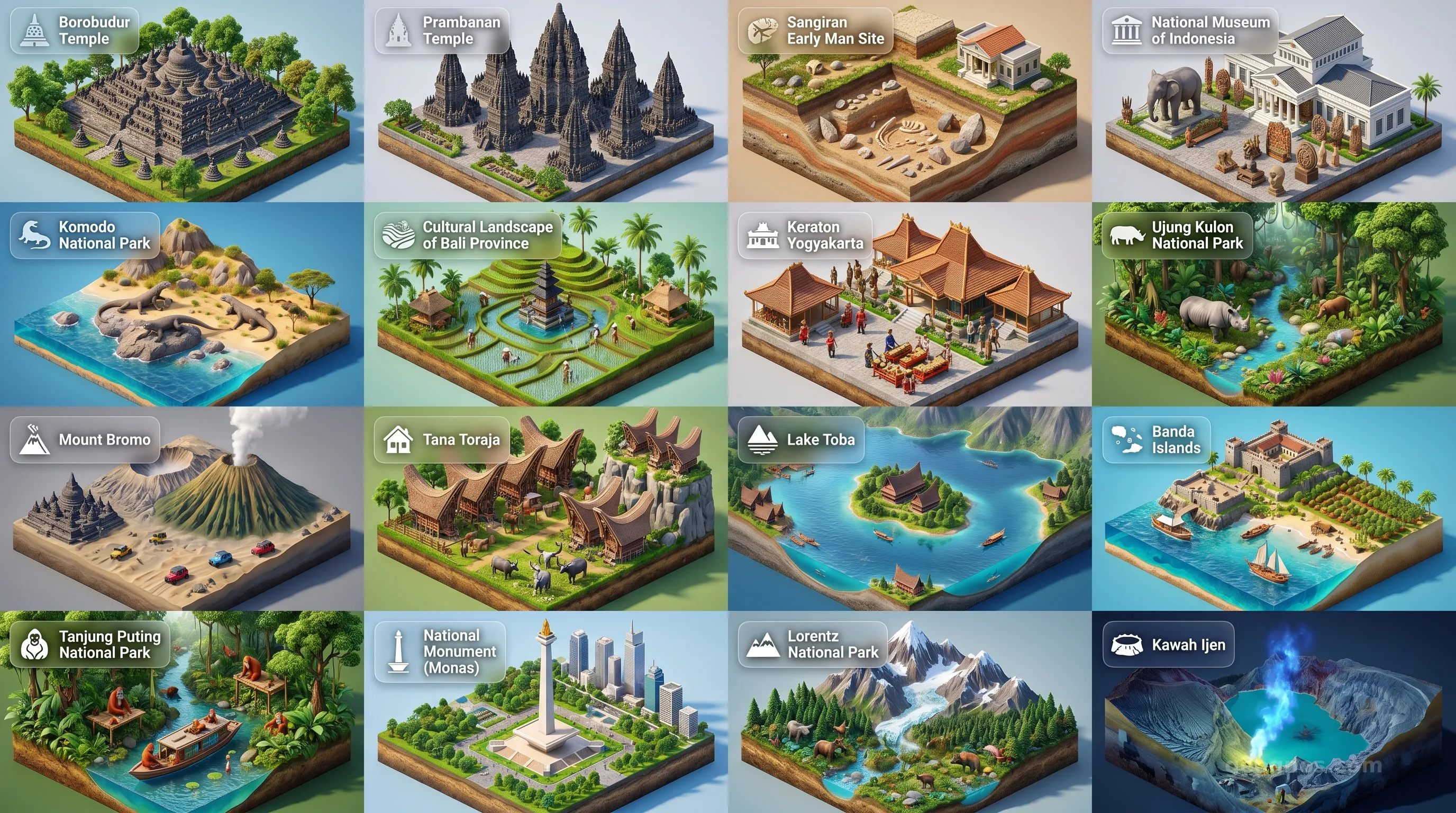
To grasp the sheer scale and aesthetic variety of these geographical marvels, you can view the Indonesia points of interest cinematic showcase. This carousel of visuals brings the misty temples of Borobudur, the majestic craters of East Java, and the azure isolation of Raja Ampat into vivid focus, allowing you to appreciate the visual geography that shapes daily life for the Indonesian people.
A Heritage in Motion
The Indonesian spirit is arguably best captured in the phrase "Bhinneka Tunggal Ika," meaning unity in diversity. It is a society that respects the sanctity of its regional origins while committing to a collective future. This balance is not static. It requires constant engagement with the lessons of the past. To witness the narrative of the Indonesian people as it has evolved from ancient maritime empires to the modern democratic state, we recommend visiting the Indonesia history cinematic showcase. This collection offers a compelling visual tour, utilizing historical illustrations to narrate the high points of the Indonesian experience, ensuring a clear understanding of the moments that defined a nation.
Indonesia invites the curious to look beyond the beaches. It is a nation that asks its visitors to contemplate the depth of a civilization that has existed in tandem with the sea and the volcano for generations. Whether you are navigating the labyrinthine waterways of the Kalimantan rivers or wandering the bustling urban centers of Jakarta and Surabaya, you are walking through a living document of human adaptability. As GeoGnos continues its journey across the atlas, Indonesia stands as a primary pillar of study—a reminder that when people, land, and time intersect in such unique ways, they create something truly extraordinary in the human experience.