The Island of the Rising Sun: Timor-Leste’s Indomitable Spirit
To understand Timor-Leste is to understand the geography of resilience. Occupying the eastern half of the island of Timor at the very edge of the Indonesian archipelago, this nation sits at a rare biological and cultural fault line. Here, the deep-blue trenches of the Timor Sea meet rugged, cloud-crowned mountains that rise sharply from the shoreline. It is a land where ancient animist traditions, the profound influence of centuries of Portuguese maritime exploration, and a deep-seated local identity have braided together to form one of the world's youngest, yet most storied, sovereign nations.
Unlike its neighbors, which often emphasize vast tropical plains, Timor-Leste is defined by its verticality. The central spine of the Ramelau mountain range bisects the territory, dictating the rhythm of life, agriculture, and communication. This geography has historically served as a fortress for the people, shaping a culture that prizes community, storytelling, and an unbreakable connection to the ancestral landscape. To grasp how this rugged terrain has forged such a distinct character, it is essential to explore the history of Timor-Leste, which offers a comprehensive view of the events that have defined the nation's path toward independence.
A Mosaic of History and Memory
The layers of Timor-Leste are best appreciated not as a linear march of time, but as a living tapestry. Throughout the villages and the coastal capital of Dili, one finds remnants of a colonial past fused with a forward-looking, vibrant modern culture. For those seeking to engage with the nation's past through a unique pedagogical lens, we encourage you to challenge your perception of these timeline complexities by engaging with our interactive history puzzle. It is a tool designed to help students and enthusiasts alike grasp the sequence of epochal shifts that transformed this island nation into a beacon of self-determination.
The historical weight of this island is rarely static; it feels present in the architecture, the Tetum language, and the intricate Tais textiles produced by women in the highlands. Whether you are a student exploring the broader regional dynamics of Southeast Asia or a traveler interested in the personal stories behind the independence movement, our curated media offerings bridge the gap between abstract history and human reality. You can experience these powerful stories in motion when you browse the history cinematic showcase, which illustrates the major chapters of the nation’s growth through archival storytelling.
Beyond the Narrative: The Landscape of Wonder
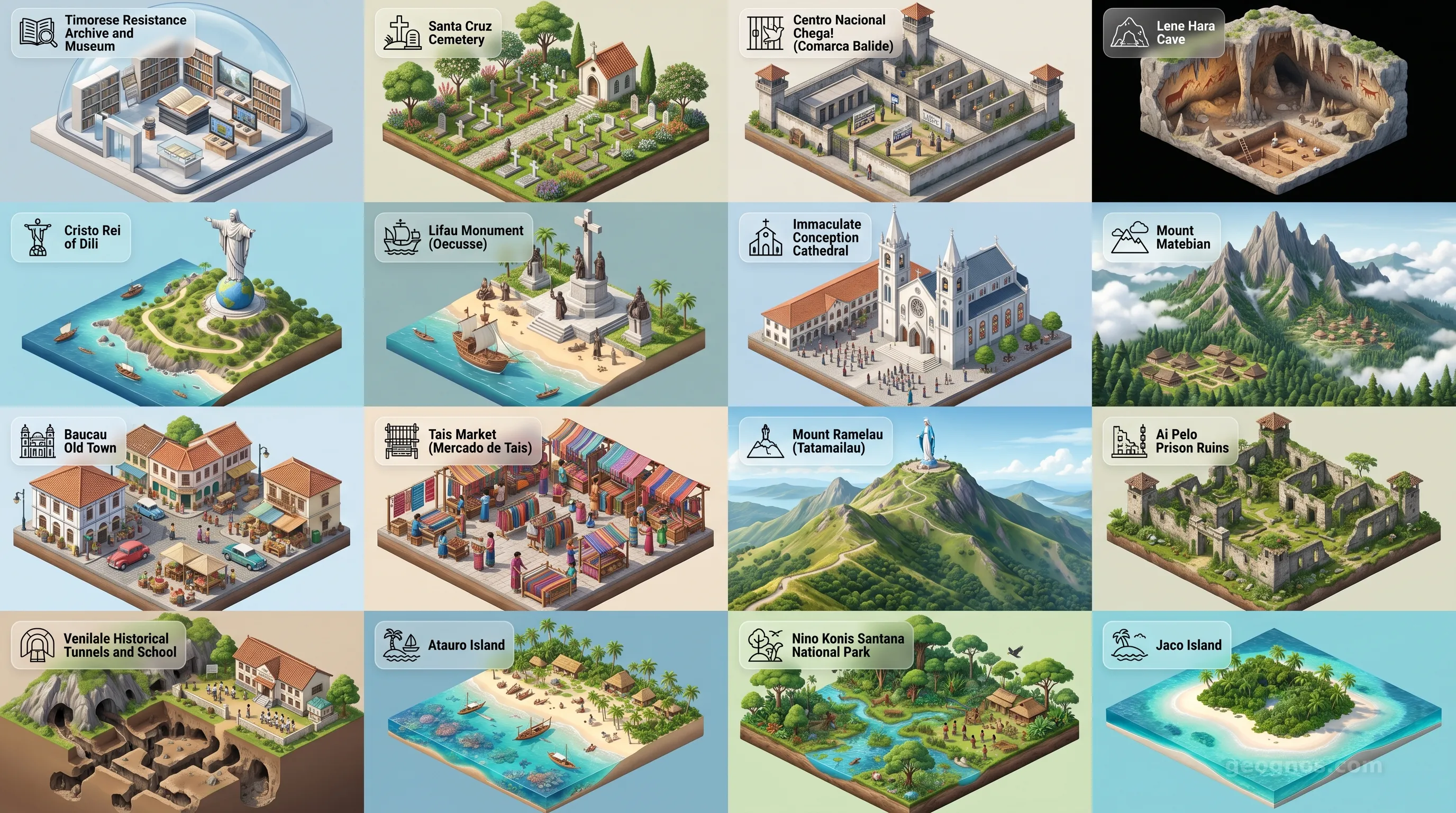
Timor-Leste is not merely a subject for the historian; it is a profound sensory experience for the traveler. As you journey from the bustling, sun-drenched markets of Dili toward the quiet, mist-heavy peaks of Mount Ramelau, the diversity of the landscape becomes clear. The northern coast offers dramatic snorkeling opportunities where pristine coral reefs meet steep volcanic slopes, while the eastern tip of the country—at Jaco Island—remains an undisturbed sanctuary of white sand and crystal-clear turquoise waters.
Every corner of this nation reflects a commitment to preservation and community integrity. From the colonial-era architecture that provides a backdrop to contemporary art installations in the capital, to the hidden waterfalls and coffee plantations that define the interior, the geographic assets of Timor-Leste are both numerous and breathtaking. If you wish to witness the raw majesty of this nation before you embark on your own expedition, we highly recommend viewing the POI cinematic showcase. This visual journey captures the geographical soul of the country, from the sea-faring traditions of the coast to the highland shrines that watch over the valley floors.
The Soul of a New Nation
The contemporary identity of Timor-Leste is deeply rooted in the concept of Maubere, a term that speaks to the strength and dignity of the local people in the face of immense change. It is a nation that defines itself through hospitality, openness, and a youthful demographic eager to engage with the global community. Education in Timor-Leste is a core national pillar, with students increasingly looking to link their ancestral history to the environmental and economic challenges of the twenty-first century.
As GeoGnos continues to map the world, Timor-Leste serves as a vital case study in resilience. The nation’s move toward economic sustainability through sustainable agriculture and eco-tourism mirrors its larger efforts to assert its role as a regional leader in human rights and cultural diplomacy. By weaving together the threads of geology, history, and social progress, Timor-Leste proves that a nation's strength is not measured merely by the size of its landmass, but by the intensity of its spirit and the clarity of its vision for a shared future.
In the pages that follow on this site, we invite you to look closely at the maps, study the demographic shifts, and ponder the economic indicators. Each piece of data provided by our community contributors serves to demystify this beautiful corner of the world. Whether you are here for an academic paper, a travel itinerary, or simply to satisfy your curiosity about a distant land, Timor-Leste is sure to offer you a story of depth, hope, and unparalleled natural beauty.