The Pulse of the Volcanic Corridor
To stand upon the soil of El Salvador is to feel the restless, creative energy of the Earth beneath your boots. Known as the Land of Volcanoes, this small but mighty nation in the heart of Central America is a living laboratory of geology and human resilience. Unlike its neighbors, which sprawl across expansive plains or vast mountain ranges, El Salvador is concentrated, intimate, and profoundly vertical. It is a country that has been shaped by the molten rhythms of tectonic activity, resulting in a landscape where verdant coffee plantations drape over the obsidian slopes of dormant giants, and deep, shimmering caldera lakes serve as sapphire mirrors to the sky.
El Salvador invites the traveler to look closer. Because of its compact geography, the soul of the country is not tucked away in remote corners but woven into the very fabric of its daily life. From the Pacific surf that crashes against its southern volcanic fringes to the misty pine-forested highlands of the north, the nation pulses with an intensity that is rare in such a limited territorial space. It is a place where history is not merely studied in dusty archives but written into the stone walls of colonial towns and the quiet, excavated secrets of ancestral civilizations.
Echoes of the Ancestors
The history of El Salvador is a layered tapestry, reflecting the rise and fall of regional powers long before the first Spanish ships appeared on the horizon. The Pipil people, descendants of the Nahua, established a sophisticated culture that deeply understood the volcanic earth. Their legacy persists today in the rhythmic lilt of the language, the enduring traditional culinary staples like the pupusa, and the deep respect for the agrarian cycles that sustain the nation. To understand how these ancient foundations continue to influence the modern state, one must explore the history of El Salvador, a comprehensive overview that delves into the origins, conflicts, and eventual transformation of a nation forged in the shadow of giants.
Education is a pillar of the GeoGnos mission, and we believe that history should be as interactive as it is informative. For students and lifelong learners looking to sharpen their understanding of the timeline that defined the nation, we invite you to participate in the History Puzzle. By arranging the pivotal turning points of the nation's evolution, you gain not only a badge of achievement but a fundamental grasp of how this unique sovereign state maneuvered through centuries of transformation. For those who prefer a more sensory engagement, the History Cinematic Showcase offers an evocative journey through time, animating the legends and the grit of the Salvadorean experience through imagery that brings the past into sharp focus.
A Landscape of Extremes and Beauty
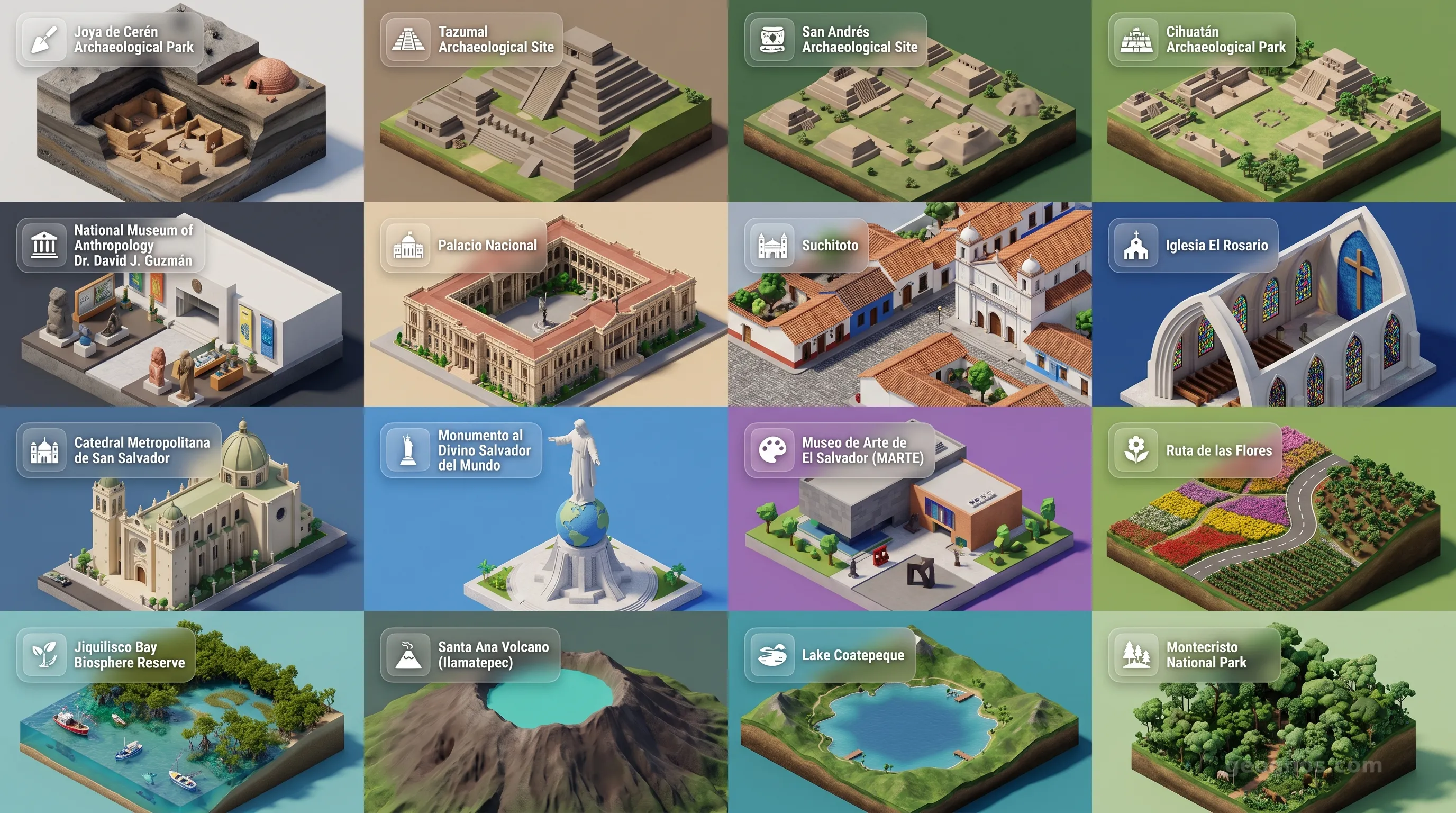
The geography of El Salvador is dominated by the Central American Volcanic Arc. This geographic corridor has historically acted as a double-edged sword. While volcanic eruptions and seismic shifts have presented challenges throughout the centuries, the byproduct of this activity is incredibly fertile soil that has made El Salvador a global powerhouse in the production of high-altitude, shade-grown coffee. The mountains, such as the Santa Ana Volcano and the majestic Izalco, often referred to in historical texts as the Lighthouse of the Pacific, provide not only dramatic silhouettes against the horizon but also act as distinct climatic regulators for the fertile valleys below.
Beyond the mountain peaks lies a coastline of profound contrast. El Salvador’s Pacific shoreline is rugged, adventurous, and famously inviting to surfers from across the globe. Yet, it is the transition between the coast and the interior that captures the imagination. Imagine standing on a plateau, looking down upon the shimmering expanse of Lake Coatepeque, a caldera formed by a massive prehistoric eruption, and feeling the sheer scale of the Earth's formative processes. To see these iconic landscapes as they truly are, one should explore the POI Cinematic Showcase, which guides you through the serene beauty of the Ruta de las Flores, the dark-sand beaches of La Libertad, and the ancient Mayan ceremonial sites.
The Soul of the Salvadorean People
Ultimately, a nation is more than its terrain. It is defined by its people—the resilient, hardworking, and hospitable inhabitants who have built a vibrant society in the most densely populated nation in Central America. The identity of El Salvador is characterized by a strong sense of community and a pride that permeates every street festival, market day, and family meal. Whether in the bustling capital of San Salvador, where modern architecture competes for space with colonial churches, or in the quiet mountain hamlets where the morning fog clings to the coffee trees, there is a consistent warmth and vitality.
The spirit of El Salvador is one of perpetual motion. It is a nation that looks forward, embracing the challenges of the modern age while maintaining a deep reverence for the land that has supported its inhabitants for millennia. As you navigate the resources on GeoGnos.com, we encourage you to look beyond the maps and the statistics. Focus instead on the narratives of a people who have built a complex, multifaceted culture upon the slopes of volcanoes. In every cup of local coffee, in every step through a Mayan ruin, and in every panoramic view of the Pacific horizon, the essence of El Salvador waits to be discovered.