The Pulse of the Tropics: Understanding the Soul of Costa Rica
In the narrow neck of the Central American isthmus, between the heaving restlessness of the Pacific and the crystalline whispers of the Caribbean, lies a nation that defies the conventional gravity of its geography. Costa Rica is not merely a country defined by latitude and longitude. It is a biological cathedral, a living experiment in peace, and a sanctuary where the modern world bows before the majesty of the ancient earth. To stand in a Costa Rican cloud forest is to feel the heartbeat of the planet, where mist clings to mossy oaks and the air itself seems thick with the concentrated essence of chlorophyll and time.
The soul of Costa Rica is anchored in a paradox. Despite being a small territory, it hosts approximately five percent of the world’s biodiversity. This is a land where volcanic peaks pierce the heavens, creating a vertical landscape that allows for dozens of distinct microclimates within a day’s journey. For the traveler or the student of history, the experience of this nation is a lesson in harmony. It is a place where the concepts of wealth and development have been fundamentally redefined to favor the preservation of the living canopy over the relentless pace of industry. Here, the Pura Vida is not merely a greeting or a cliché for tourists, but a guiding philosophy that shapes every aspect of the Costa Rican experience.
The Roots of a Peaceful Republic
The history of Costa Rica is a fascinating departure from the turbulent narratives of many of its neighbors. It was never the glittering center of colonial empires, but rather a frontier that rewarded the humble and the diligent. Through years of agrarian struggle and social evolution, the nation crafted a path characterized by egalitarianism and civic pride. Those interested in the formative events that defined the modern Tico spirit are invited to explore the comprehensive history of Costa Rica. By studying the progression of this democracy, one discovers why it is often regarded as a beacon of stability in the region.
For those who wish to test their understanding of the timeline that transformed this land into a premier ecotourism destination, we encourage you to engage with our interactive history puzzle. Arranging the defining milestones of the nineteenth and twentieth centuries in their proper order offers a unique perspective on how decisions made by leaders and citizens alike have created a peaceful nation with no standing army. To supplement your learning with the grandeur of visual storytelling, we suggest visiting our history cinematic showcase, where the saga of the country is brought to life through curated illustrations and insightful commentary.
A Landscape Sculpted by Volcanic Fire
The geography of Costa Rica is a dramatic tapestry of tectonic intensity. The country is part of the Pacific Ring of Fire, a position that gifts it with a range of majestic volcanoes such as Arenal, Irazú, and Turrialba. These geological giants serve as the lungs of the country, enriching the soil for the world-renowned coffee industry and acting as the headwaters for powerful rivers that rush toward the lowlands. Beneath the towering canopies of these volcanic foothills lies an ecosystem so complex that even today, researchers uncover new species of insects and orchids with remarkable frequency.
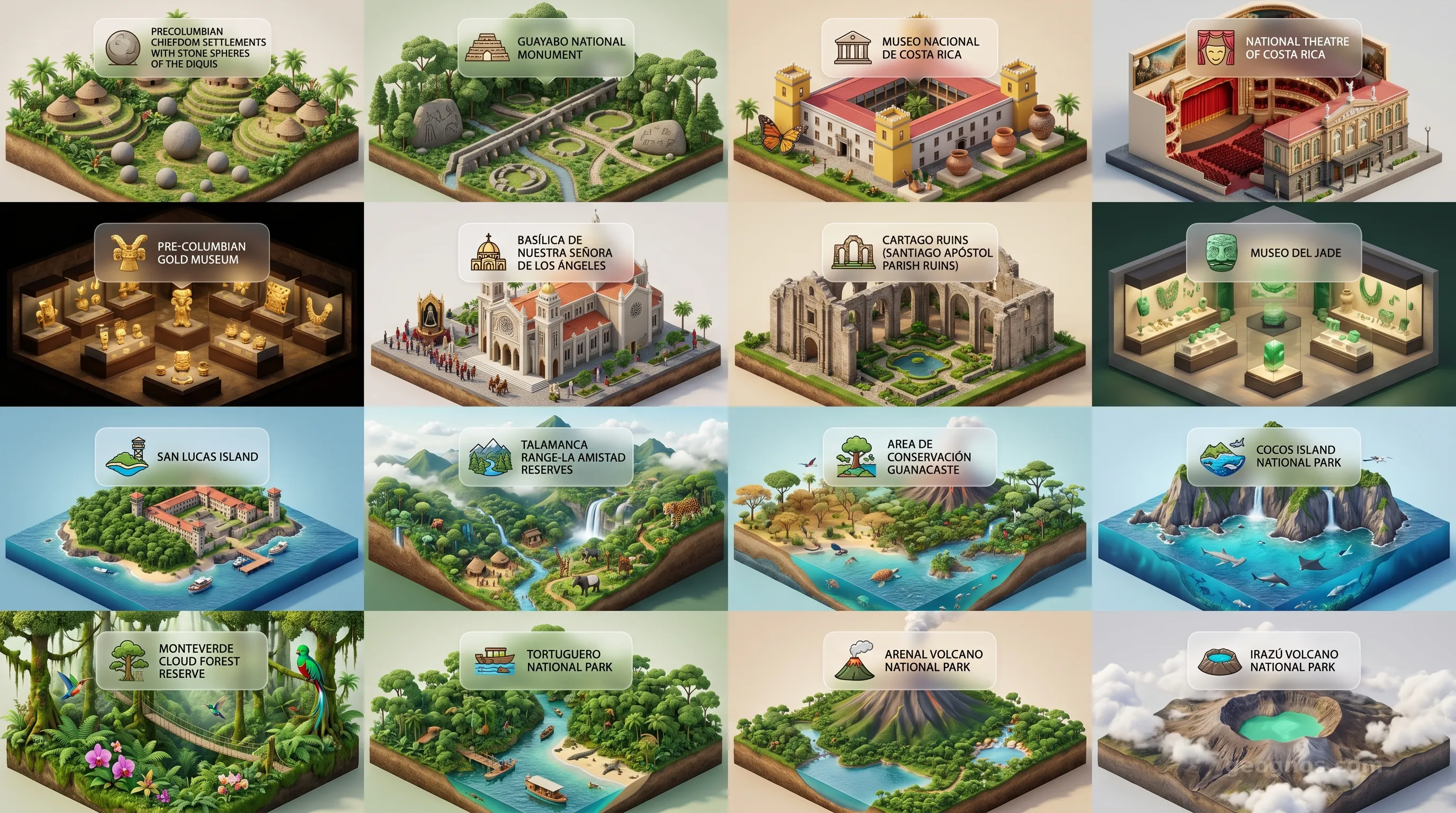
Between these peaks and the pristine coastal plains, one finds a dazzling array of points of interest that span from the golden beaches of the Guanacaste Peninsula to the intricate canal systems of Tortuguero. To fully visualize the topographical diversity and the natural wonders of the nation, take a moment to immerse yourself in our POI cinematic showcase. This visual journey captures the majesty of cascading waterfalls, dense mangrove forests, and the vibrant avian life that define the Costa Rican wilderness.
Guardians of the Green Future
In a world currently grappling with the realities of climate change and environmental degradation, Costa Rica acts as a global laboratory for conservation. It has become a world leader in renewable energy, drawing the vast majority of its power from geothermal, wind, and hydroelectric sources. This commitment to the environment is not an accident of geography, but a deliberate cultural choice. Educators often cite Costa Rica as the primary case study for sustainability, teaching students that economic prosperity and environmental guardianship are not enemies, but rather inseparable allies.
As you delve into the remaining chapters of this atlas page, including the detailed breakdowns of the economy, governance, and demographics, keep this context in mind. Whether you are observing the data on the current census or reading about the unique legislative framework that mandates reforestation, you are observing a nation that values its legacy for the next generation. The Costa Rican story is one of enduring hope and the quiet, persistent power of nature, inviting every visitor to witness how a people can bloom in harmony with the wild earth.