The Baltic Soul: Where Ancient Forests Meet Modern Resilience
To walk through Lithuania is to tread upon a landscape where the boundary between myth and history is as thin as the morning mist rising off the Curonian Spit. Tucked away on the eastern shores of the Baltic Sea, this nation is often defined by what it has survived rather than merely what it possesses. It is a land of profound silence, found in the depth of its sprawling pine forests and the soft, peat-filtered waters of its thousands of lakes. Lithuania does not shout its presence. Instead, it invites the curious traveler to peel back the layers of its Baltic identity, a culture deeply rooted in the worship of nature, the endurance of its ancestral language, and a restless spirit of independence that has defined its existence for a millennium.
For the student of geography and the lover of cultural heritage alike, Lithuania offers a study in quiet transformation. It is the southernmost of the three Baltic states, yet it functions as a northern heart, beating with a pulse that resonates from the Teutonic era through the grand aspirations of the Grand Duchy, all the way to its status as a vibrant modern democracy. This is a country that understands the value of memory. Whether you wish to explore the comprehensive history of Lithuania, with its curated chronicles of grand dukes and spiritual resistance, you will find a narrative that centers on the resilience of a people who never lost their connection to the land.
The Echoes of Time: A Chronicle of Spirit
Lithuanian identity is inextricably linked to its unique linguistic legacy. As one of the oldest Indo-European languages still in existence, the Lithuanian tongue acts as a living bridge to the ancient past, preserving linguistic patterns that have vanished from the rest of the continent. This preservation is not a passive act. It is a testament to the nation’s survival. If you are intrigued by the rhythmic patterns of historical events that led to this linguistic perseverance, you might challenge yourself with the interactive history puzzle to arrange these defining moments in the correct chronological order and earn your place among our scholars.
Beyond the spoken word, the history of this land is best viewed as a grand tapestry of shifting borders and unwavering ideals. From the legendary rise of Mindaugas, the only crowned king of Lithuania, to the medieval expansion that once made the Grand Duchy the largest state in Europe, the story is both vast and personal. We encourage you to engage with the visual archives of this narrative through our history cinematic showcase, where illustrations of turning points come to life, allowing the viewer to grasp the gravity of the events that sculpted the modern borders of the state.
A Landscape of Living Myths
Geographically, Lithuania is a masterpiece of glacial artistry. The terrain is largely characterized by lowlands, characterized by rolling morainic hills that gently break the horizon. The Baltic Sea defines the western boundary, home to the Curonian Spit, a UNESCO World Heritage site that stands as a delicate finger of sand reaching into the sea, holding back the shifting dunes with the grip of pine roots. It is a place of profound melancholy and beauty, where the Baltic winds carry stories from eras long forgotten.
In the east, the Aukštaitija National Park guards the nation's "thousand lakes," a labyrinth of interconnected waterways that served as ancient trade routes for merchants, knights, and farmers. The environment here is more than just a resource; it is a sacred element of the national identity. Lithuanians possess a deep, near-religious affinity for the forest, viewing the wooded lands as both a provider and a sanctuary. This bond with nature informs the architecture, the folk arts, and the very way citizens relate to their geography.
Curating the Experience: The Beauty of the Built Environment
The urban centers of Lithuania are just as enchanting as its natural wilderness. Vilnius, the capital, is a city where Baroque architecture dances with modern urban flair, featuring a labyrinth of cobblestone streets in its Old Town that feel untouched by the frantic pace of the twenty-first century. Meanwhile, the coastal city of Klaipėda retains the stoic, timber-framed character of a Hanseatic port town. Every street corner, monument, and cathedral offers a glimpse into a layered history, inviting travelers to uncover the secrets held within these walls.
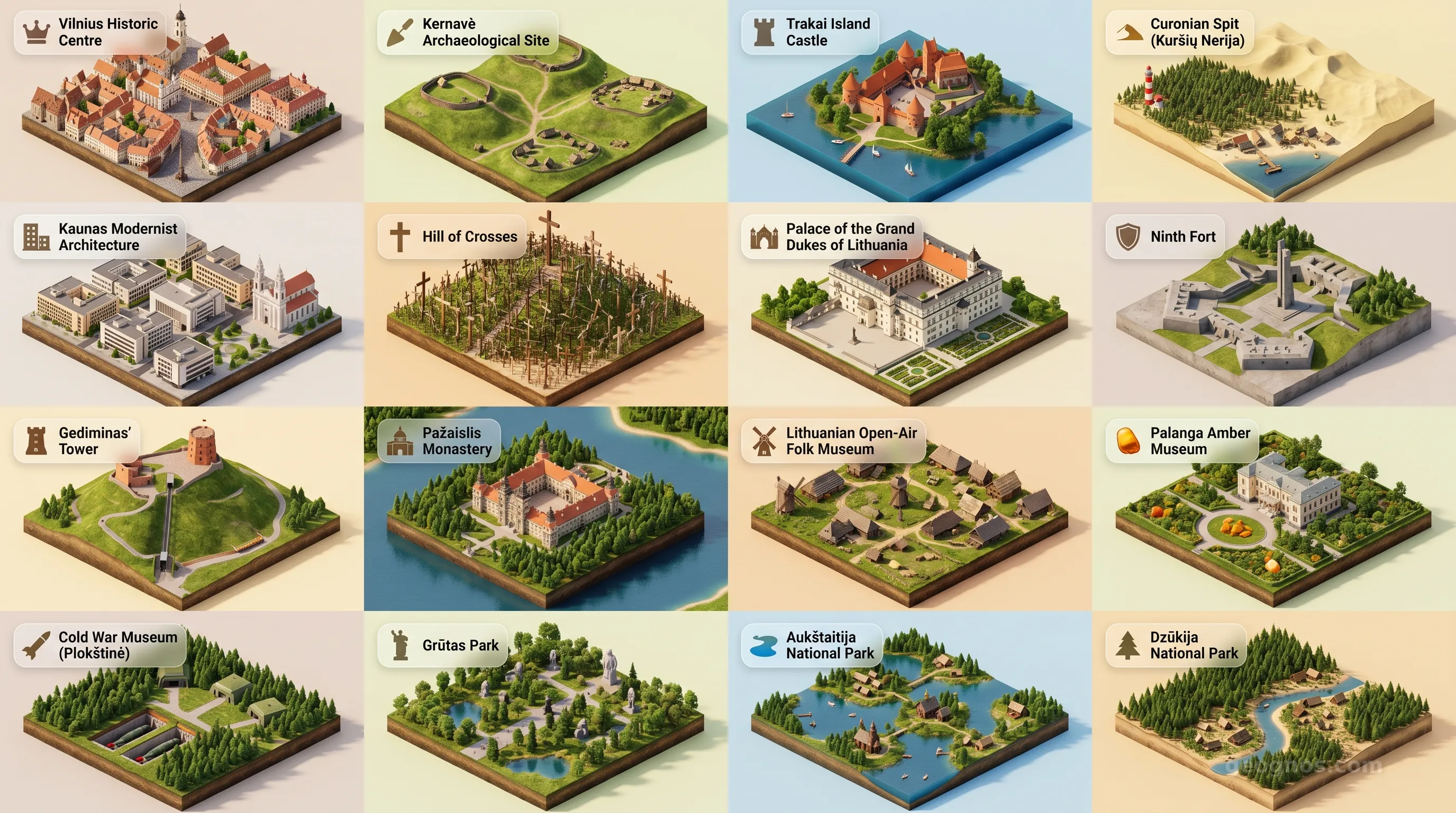
To prepare for a journey through these towns or to appreciate the aesthetic achievements of the nation from afar, we invite you to view our POI cinematic showcase. This visual journey traverses the medieval fortresses, the modernist art hubs, and the silent, serene beaches that constitute the very soul of Lithuania’s tourist landscape. Whether you are looking for the architectural symmetry of the Vilnius Cathedral or the natural isolation of the Nemunas Delta, these vistas serve as an essential introduction to the geography of wonder.
Building a Future on Baltic Foundations
As you delve deeper into the resources provided here on GeoGnos, remember that Lithuania is a nation in the midst of a productive and peaceful evolution. The demographic story of the country is one of a modern workforce meeting ancient heritage, where technology companies thrive alongside traditional linen weavers and amber carvers. It is a nation of artists and engineers, dreamers and diplomats.
By exploring the sections regarding the country's government, economy, and educational system, students and professors will find a robust framework that supports high levels of innovation and civic engagement. The energy sectors are currently transitioning toward greener horizons, reflecting the same protective love for the land that historically led to the conservation of the national parks. We hope that this introductory portrait inspires you to look closer at this northern jewel. Lithuania waits, not with the fanfare of a tourist trap, but with the quiet, steady welcome of an ancient home, eager to share its stories with those willing to listen.