The Heart of the European Plain: Defining Poland
To understand Poland is to understand the persistence of the human spirit amidst the shifting tides of geography. Situated at the very crossroads of the European continent, Poland acts as a vast, transitional bridge between the temperate plains of the west and the rugged expanses of the east. It is a nation that defines itself not by boundaries drawn in ink, but by a cultural resonance that has echoed through the centuries, regardless of what the map makers suggested at any given time. Poland sits at a unique intersection where the Latin-rite traditions of the Mediterranean meet the expansive influence of the North and the intricate, soulful depths of the East. It is a land where ancient forests still breathe with a primal memory and where cities, rebuilt from the ashes of history, pulse with a contemporary energy that is unmistakably Polish.
For the traveler, the scholar, or the student of history, Poland offers a narrative of profound resilience. It is a country that understands the value of identity perhaps better than any other, having spent centuries defending its language, its customs, and its soul. To fully grasp this enduring legacy, one must engage with the national narrative, which you can uncover as you explore the comprehensive history of Poland. Within these archives, you will find a tapestry of royal dynasties, scientific breakthroughs, and a testament to the iron will of a people who refuse to be defined by anything other than their own aspirations.
A Geography of Transitions
Poland’s landscape is a masterclass in glacial sculpting. From the southern mountains, which pierce the sky with granite teeth, to the northern coastline that cradles the Baltic Sea in a warm embrace of shifting dunes, the nation’s topography dictates its rhythms. The Carpathian and Sudetes mountains provide a natural barricade, guarding the southern frontier, while the expansive North European Plain acts as an open artery that has allowed ideas, trade, and sometimes conflict to flow across the nation. This geography is not merely scenery. It is the canvas upon which the Polish character has been painted.
As you traverse from the historic harbors of Gdansk to the whispering pines of the Bialowieza Forest, you are witnessing the diversity of a country that remains largely pastoral at its core. This environmental mosaic provides the backdrop for a story that is as educational as it is beautiful. For those seeking to gamify their learning experience or challenge their understanding of the timeline of these lands, we invite you to engage with the Poland history puzzle. It is a rewarding way to see how the rise and fall of political powers influenced the borders we see on maps today.
The Living Museum of the City and the Soil
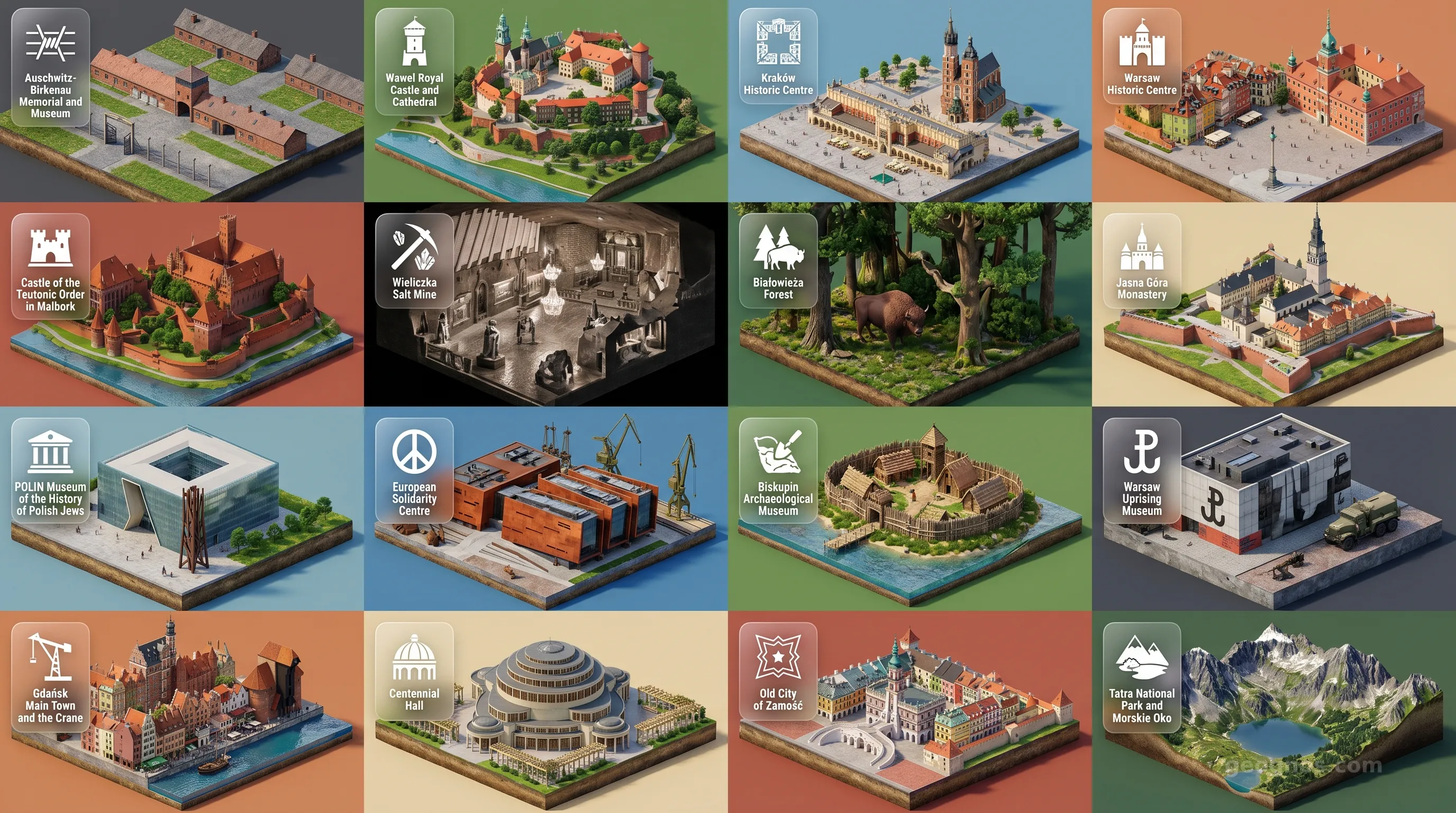
Poland’s cities are living archives. Warsaw, the phoenix city, tells a story of modern reconstruction, while Krakow stands as a pristine guardian of medieval intellectual tradition. It is here that one realizes that Polish identity is woven from a combination of the grand and the humble. The wooden architecture of the countryside, the brick-laden castles that haunt the countryside, and the sophisticated skyline of modern metropolitan centers are all pieces of the same puzzle. To truly appreciate the breadth of this architectural evolution and the cultural significance of the nation's landmarks, spend some time with the Poland points of interest cinematic showcase, which offers a vivid journey through the locations that define the nation’s aesthetic soul.
The Echoes of Time
Education is a core value in Poland, reflecting a heritage that spans from the brilliance of Nicolaus Copernicus to the resilience of those who fought to keep the national spirit alive during times of struggle. Because the nation's identity is tied so intrinsically to its timeline, we encourage our readers to look deeper into the seminal moments that shifted the course of regional, and indeed global, development. The Poland history cinematic showcase provides a gallery of those monumental turning points. It brings the chronicles of the Jagiellonian era, the movements of the enlightenment, and the courage of the modern era into a format that honors the weight of these events.
An Enduring Legacy
What makes Poland exceptional today is its ability to honor the weight of its history while running full speed toward the future. It is a modern European powerhouse with a deep appreciation for the artisan, the poet, and the scholar. In Poland, you will find a nation that treasures its local traditions with a ferocious pride, yet opens its doors to the global community with a hospitality that is warm and inclusive. As you continue to explore GeoGnos.com, remember that Poland is not a place you visit only to see; it is a place you visit to listen, to feel, and to understand the complexity of the European heart.
The chapters that follow on this page will provide you with the data-driven specifics of the nation, from its economic contributions to the intricacies of its natural environment. As you process these statistics, keep in mind that every number and every policy is supported by the foundations we have touched upon here: a fierce, historic commitment to freedom, culture, and a love for the land that has sustained the Polish people through the centuries.