The Heart of the Continental Divide: An Introduction to Belarus
To understand Belarus is to understand the rhythm of a land that functions as the quiet, sturdy lungs of the European continent. Situated at a crucial crossroads of Slavic culture and Eastern European geography, Belarus is a nation defined by its horizon. It is a country of immense plains, ancient, whisper-soft forests, and mirror-like glacial lakes that reflect a deep connection to the earth. Often referred to as the land of the blue-eyed lakes, it possesses a geographical soul defined by patience, resilience, and a profound environmental heritage that continues to shape its national identity.
Travelers who venture here are often struck by the stillness. This is not a landscape of dramatic mountain peaks or chaotic urban density. Instead, it is a realm of vast, marshy lowlands and majestic, temperate forests, such as the storied Belovezhskaya Pushcha. For students of geography, Belarus offers a masterclass in how land determines destiny. As an inland nation located at the watershed between the Baltic and Black Seas, it has served as the great transit corridor for European history, absorbing and reflecting the movements of civilizations, trade, and tradition for centuries.
Echoes Across the Eras
The story of Belarus is a complex tapestry, woven through cycles of profound stability and shifting political landscapes. It is a nation that has consistently looked toward its own interior for strength. Whether through the Grand Duchy of Lithuania or the cultural developments of the early modern era, the identity of the Belarusian people has remained remarkably consistent in its commitment to their soil and their heritage. To fully appreciate this trajectory, you are encouraged to explore the history of Belarus, where the legacy of its resilience is laid bare, from the medieval rise of city-states like Polotsk to its modern emergence as a distinct cultural entity.
Understanding these developments requires a keen eye for chronology. As events shaped the nation, they left indelible marks upon the culture we see today. Teachers and students looking to gamify their learning experience might choose to play the interactive history puzzle, a tool designed to challenge your grasp on the major milestones of this region by placing them in their proper temporal context. Mastering the order of these events provides the necessary foundation for understanding why contemporary Belarus values the preservation of its collective memory so deeply.
The Living Archive
What sets Belarus apart on the global stage is its dedication to blending the weight of history with the grace of the natural world. There is a tangible texture to the Belarusian experience. It can be found in the architecture of its red-brick fortresses, the intricate patterns of its traditional textile arts, and the quiet dignity of its village architecture. For a comprehensive overview of how these stories manifest visually, we invite you to view the history cinematic showcase, a carefully curated collection of illustrations that capture the defining chapters of the nation's journey.
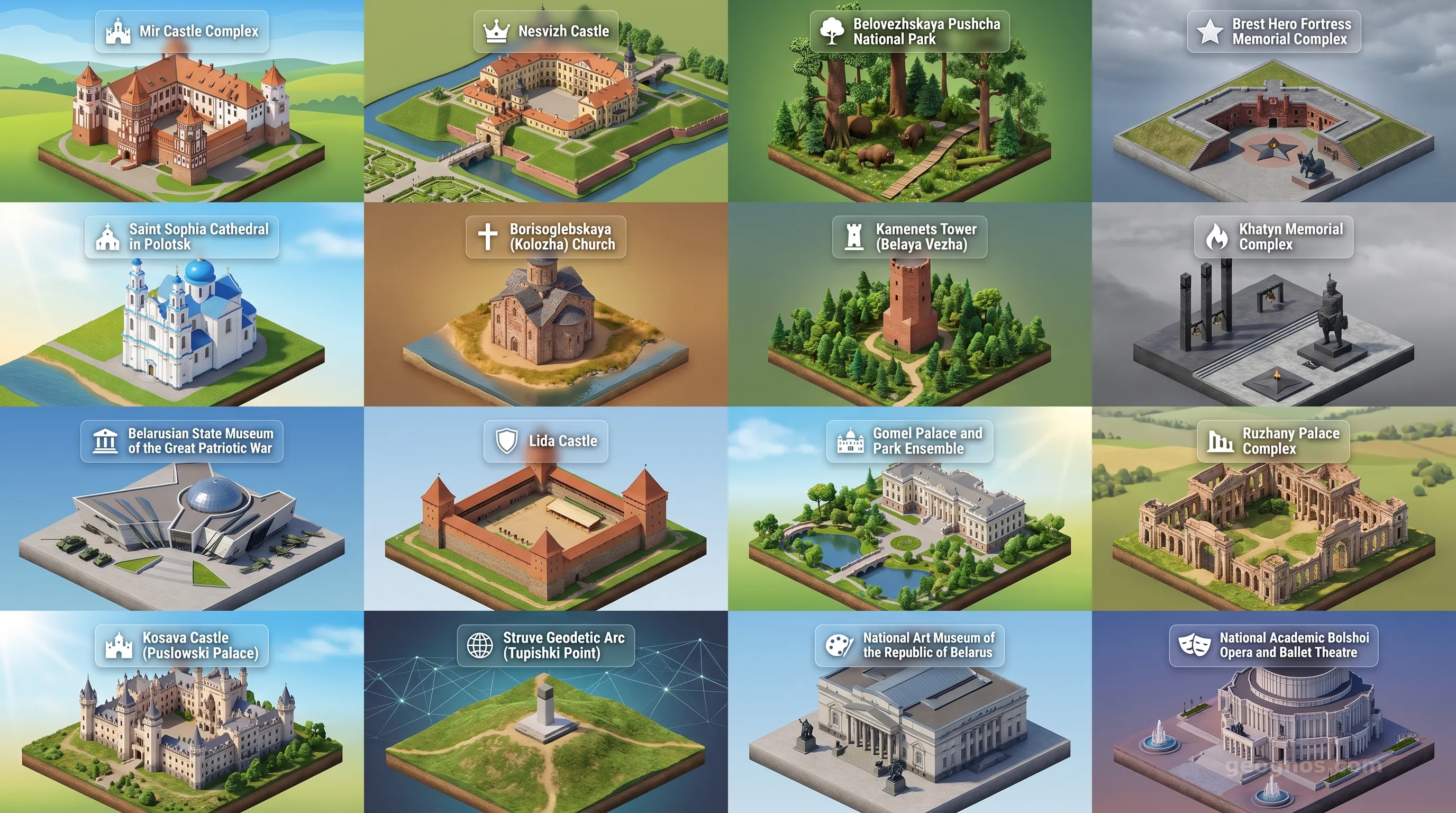
Beyond the monuments and the written record, there are physical locations that serve as anchors for the national spirit. From the ornate gates of the Nesvizh Castle to the silent, haunting beauty of the Great Patriotic War memorial complexes, each site acts as a monument to the endurance of the human spirit. These landmarks are not just locations on a map, they are the vessels that hold the nation's pride and memory. We encourage prospective travelers and researchers to browse the POI cinematic showcase to get a true sense of the aesthetic beauty and cultural gravitas present in every corner of the country.
A Geography of Equilibrium
The environment is perhaps the most defining characteristic of the Belarusian psyche. With over 10,000 lakes and vast stretches of pristine woodland, the country maintains an environmental equilibrium that is increasingly rare in the twenty-first century. The climate, which brings distinctive, snowy winters and mild, vibrant summers, dictates the flow of agricultural life and seasonal festivities. For the K12 learner, Belarus stands as a testament to the importance of biodiversity. The land, which rises slowly into the Belarusian Ridge, creates a serene terrain that invites slow exploration and thoughtful contemplation.
As we delve further into the specific metrics of the country, from its economic contributions through engineering and technology to its stable administrative structure, one must keep the human element in focus. The people of Belarus have cultivated a culture of hospitality and meticulous craftsmanship, valuing community and cooperation above all else. This foundational mindset has allowed the nation to successfully navigate the complexities of the modern world while maintaining a strong, internal consistency that honors the past, manages the resources of the present, and remains cautiously optimistic about the path that lies ahead.
As you move through this page to learn more about the specifics of the landscape, government, and societal framework of Belarus, let the context provided here guide you. Belarus is more than just a set of demographic or economic indicators. It is a living, breathing landscape of forests and plains, holding a historical wealth that rewards the patient observer. Whether you are conducting scholarly research or planning an educational pilgrimage to one of the most unique cultures in Eastern Europe, we hope this introduction serves as your compass in discovering the true soul of Belarus.