The Great Red Island: A Laboratory of Evolution
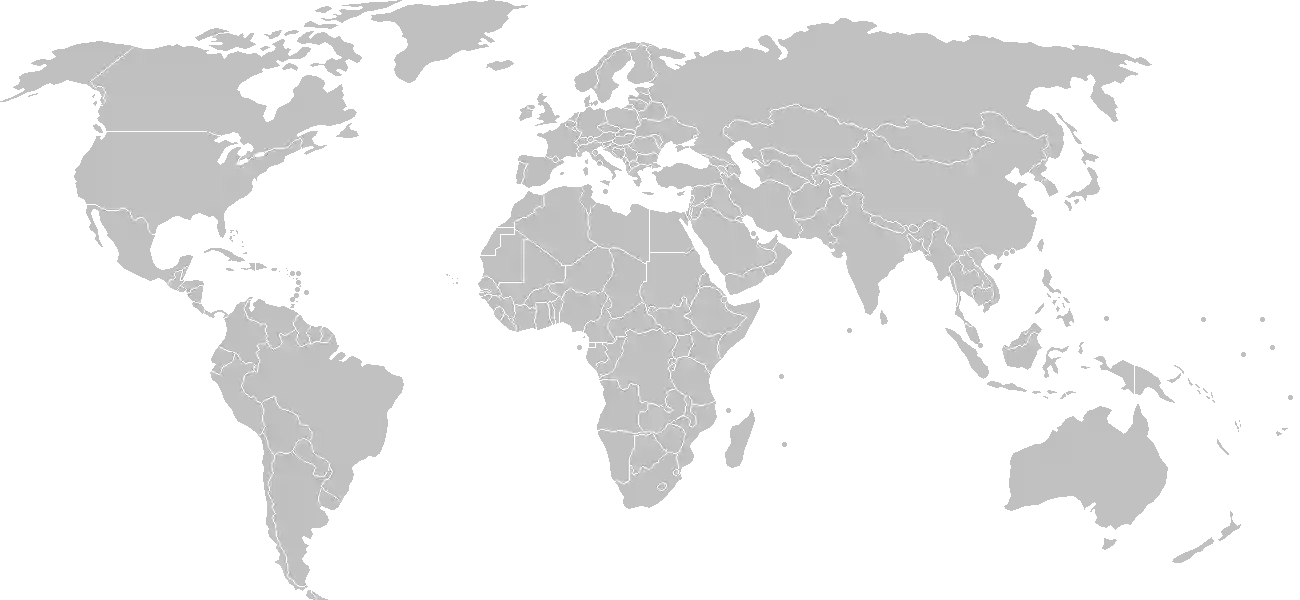
To set foot upon Madagascar is to enter a world that exists in defiance of the conventional map. Floating in the turquoise embrace of the Indian Ocean, separated from the African mainland by the deep, currents-rich Mozambique Channel, this island nation is not merely a landmass. It is a biological time capsule, a splinter of the ancient supercontinent Gondwana that drifted away some 88 million years ago to carve its own solitary destiny. Because of this long isolation, Madagascar has become the Earth’s most significant laboratory for evolution. Here, nature has had the time and space to experiment with forms, colors, and sounds found nowhere else on the globe. To understand the soul of Madagascar, one must first accept that here, the ordinary is the exception, and the extraordinary is the bedrock of existence.
The geography of the island is a testament to dramatic transformation. Known by many as the Great Red Island, or L’Île Rouge, its landscape is defined by the rich, lateritic iron-oxide soils that paint the rolling central highlands in vibrant shades of copper, ochre, and deep crimson. This high plateau is buttressed by steep escarpments that tumble down toward the eastern tropical rainforests and the arid, spiny forests of the south. This geographical mosaic has necessitated a history that is as complex and layered as the geology itself, and those wishing to truly grasp the timeline of these tectonic and human shifts can explore the history of Madagascar, where the arrival of distant ancestors by outrigger canoe thousands of years ago began a saga that remains deeply intertwined with the landscape today.
A Convergence of Winds and Traditions
While the flora and fauna are famously endemic, the human narrative of Madagascar is an exquisite tapestry woven from diverse threads. Austronesian navigators from the Indonesian archipelago arrived here millennia ago, followed by Bantu settlers from the African mainland, and later Arab, Indian, and European maritime traders. This meeting of horizons resulted in a culture that defies neat categorization. The Malagasy people possess a profound, spiritual connection to their ancestors, known as the "razana," whose influence is seen in the architecture, the vibrant weaving traditions, and the complex agricultural terracing that turns the mountainous terrain into a green, sculpted masterpiece.
Engaging with this history is an educational journey that challenges our perception of linear progress. For students and history enthusiasts looking to test their knowledge, you are invited to solve our History Puzzle, where you can arrange the milestones of Malagasy civilization, from the rise of the great Merina Kingdom to the colonial period, to unlock unique badges that celebrate your growing expertise in this island's remarkable heritage.
Visualizing the Evolution of Time and Space
The beauty of Madagascar is not easily captured by words alone, for the colors of the island seem to hum with a kinetic energy. Whether it is the alien silhouette of an ancient Baobab tree framed against a bruised, purple-gold sunset, or the playful, ghost-like leap of a Sifaka lemur through the canopy, the island provides a visual feast for the senses. Because these scenes are often elusive in the wild, we provide a way to witness them in curated detail. Through our History Cinematic Showcase, you can watch a chronological sequence of the island’s most pivotal moments, rendered in rich illustration to bring the past to life.
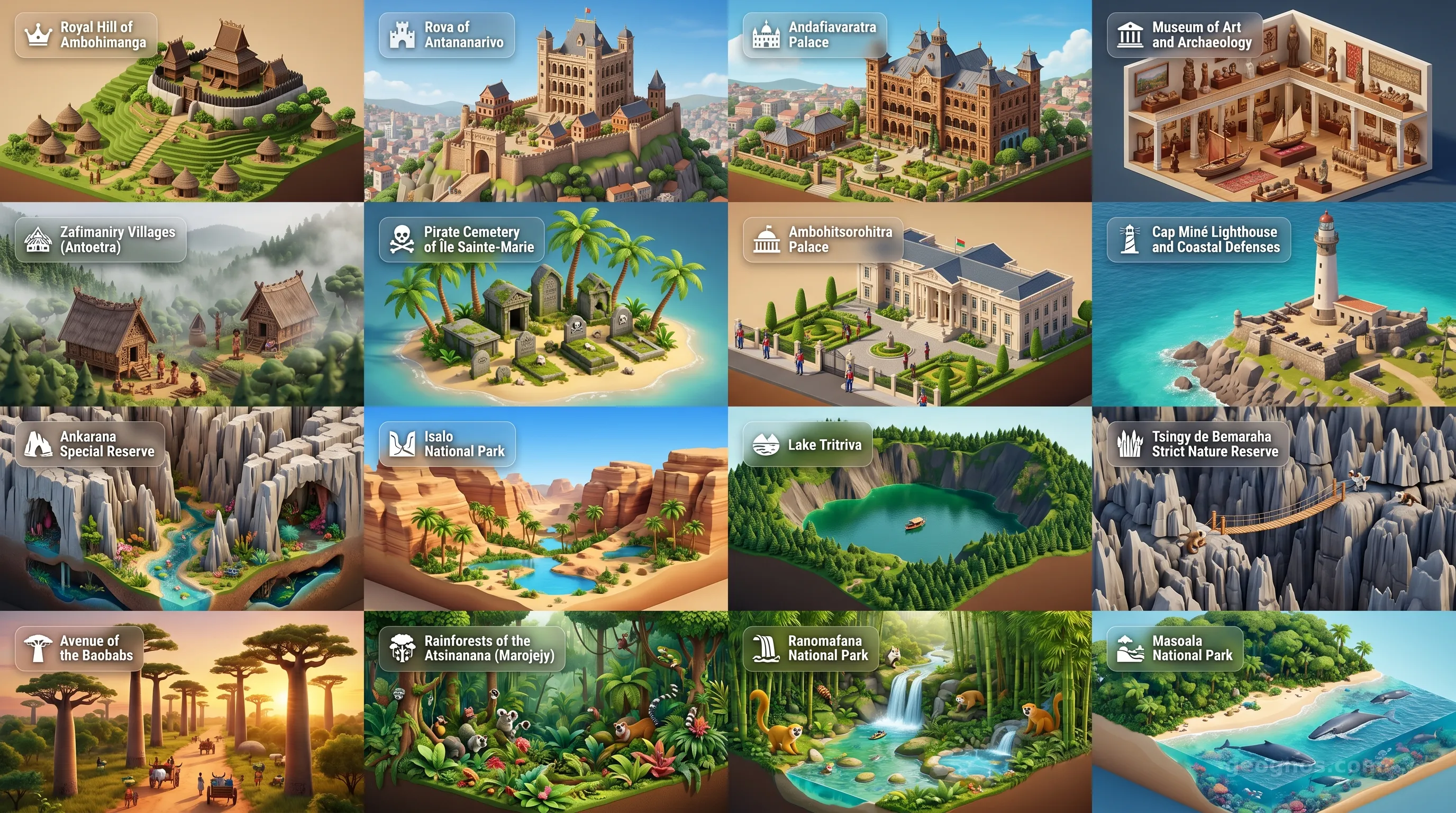
Beyond the pages of history, the physical geography remains the primary attraction for explorers and scientists alike. Madagascar is home to iconic landmarks that anchor the imagination, such as the surreal Tsingy de Bemaraha with its sharp limestone needles, and the lush, fog-laden canopy of Ranomafana National Park. We encourage travelers and geography enthusiasts to view the full array of the island's natural splendor through our POI Cinematic Showcase. This collection offers a high-definition tour of the island’s most important geographic features, serving as a gateway to the physical wonders that continue to surprise biologists and geologists every year.
A Nation Defined by its Differences
Today, Madagascar stands as a beacon of global biodiversity. The island's government and local communities are increasingly recognized for their roles as stewards of a fragile heritage that the rest of the world has lost. From the bustling, aromatic markets of Antananarivo, where spices like vanilla and clove perfumed the air, to the tranquil coastal villages where traditional pirogues fish in the sunrise, the country presents a balance between the old world and the modern day. It is a place that asks the visitor to slow down, to observe, and to recognize that some of the greatest treasures of our world are found on the islands that have spent millions of years charting their own unique path through the silence of the sea.
As you navigate this site, you will find that the story of Madagascar is never finished. It is a living, breathing testament to adaptation and persistence. Whether you are a scholar researching its unique ecological niche or a traveler dreaming of the red-earth pathways, the Great Red Island remains one of the final frontiers of natural and human discovery. We invite you to delve into the specific sections below, which provide the foundational knowledge required to fully appreciate the intricacies of this extraordinary nation.