The Vertical Kingdom: Where the Earth Meets the Heavens
To stand upon the soil of Nepal is to occupy a vertical bridge between the mundane world and the celestial sphere. While most nations are measured by the sprawl of their plains or the length of their coastlines, Nepal is defined by its sheer upward ambition. It is a country that insists on looking toward the sky. Here, the landscape is not merely a setting for human events, but the primary architect of the culture itself. Locked between the massive, tectonic-shaping tectonic ambitions of the Indian Plate and the vastness of the Tibetan Plateau, Nepal serves as the planetary theater where the greatest geological forces on Earth reach their zenith.
The identity of Nepal is found in the whisper of prayer flags snapping in high-altitude winds, the labyrinthine architecture of medieval Kathmandu, and the deep, silent reverence held by those who live in the shadow of giants. It is a land of profound contrasts, where the tropical humidity of the southern Terai plains yields, in the span of just a few hundred miles, to the crystalline, oxygen-starved heights of the Himalayas. To understand this nation, one must appreciate the complexity of its survival, its long-standing role as a sanctuary for ancient traditions, and its graceful evolution into a modern democracy.
A Tapestry Woven by Time
The story of Nepal is far deeper than the modern perception of mountain trekking. It is a chronicle of empires, trade routes that bridged the Silk Road, and the steady infusion of Hindu and Buddhist traditions that fused to create a distinct, harmonious worldview. The valley of Kathmandu has, for millennia, been a cradle of urban civilization, where artisanal skill and architectural ingenuity flourished in isolation from the ravages of empires further to the south. To truly grasp the scope of how this mountain kingdom preserved its soul through ages of change, you are invited to explore the history of Nepal, where the narratives of kings, sages, and shifting dynasties are meticulously documented for the scholar and the curious student alike.
History in this corner of the world is not merely dates on a ledger. It is a living, breathing continuity. The ancient rhythms of the festivals in the Durbar Squares echo the same rituals practiced in the medieval period. For those who enjoy testing their grasp of these transformative eras, we provide an interactive history puzzle, an engaging challenge that requires you to arrange pivotal historical turning points in their proper chronological order to test your expertise and earn digital recognition.
The Architecture of Memory
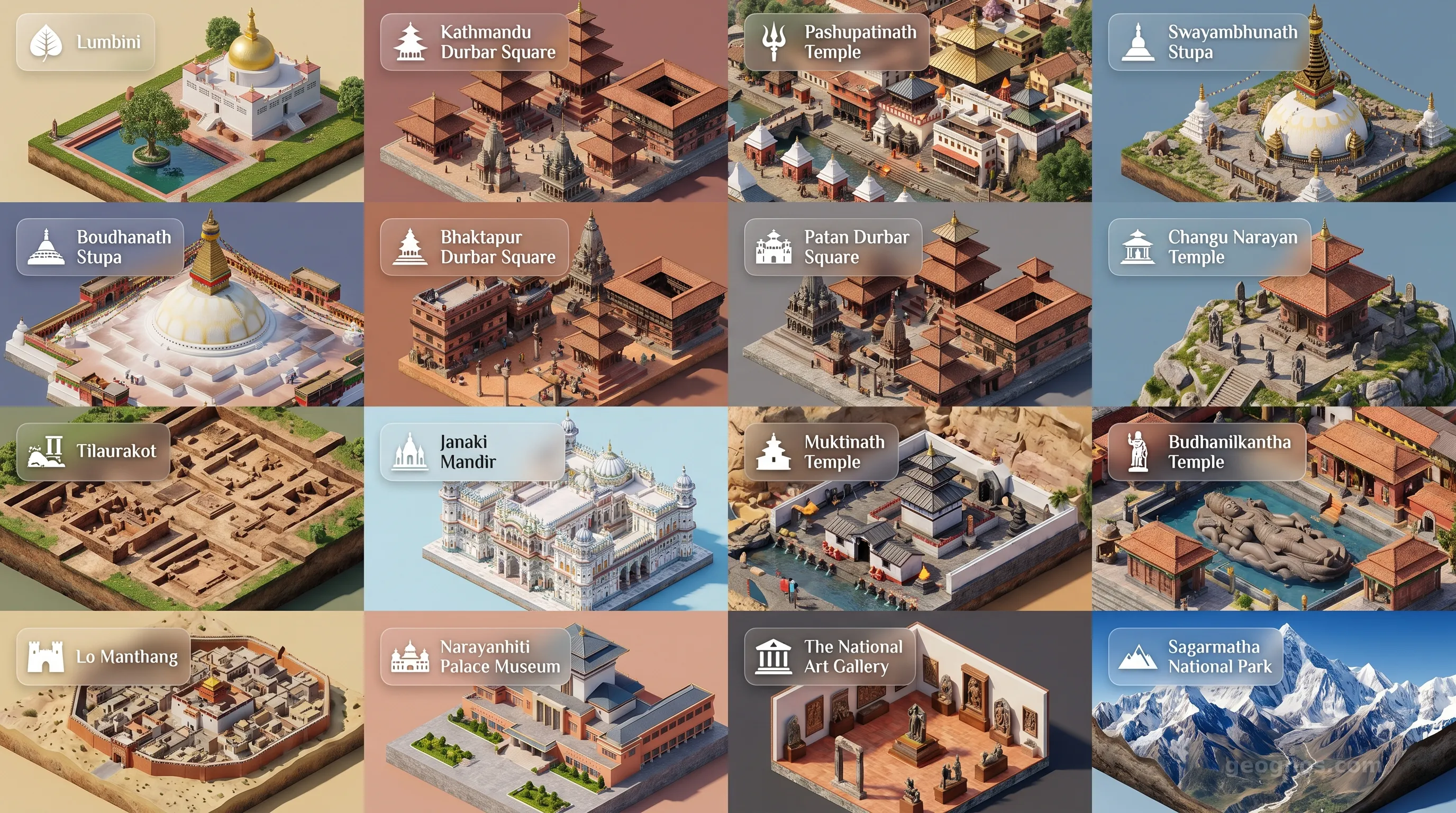
Nepal’s past is preserved not just in texts, but in the visual richness of its monuments. The pagoda-style temples, with their intricate wood carvings and gilded roofs, tell the stories of kingdoms that rose and fell amidst these misty foothills. Because the essence of these sites often transcends the written word, we have curated a history cinematic showcase. This interactive experience allows you to immerse yourself in high-definition illustrations and summaries that bring the most important milestones of Nepal's formation into your living room or classroom.
A Geographical Sanctuary of Biodiversity
While the high peaks capture the world’s imagination, the true strength of Nepal lies in its ecological diversity. The country functions as a staircase of biomes. In the south, the protected jungles of Chitwan remain home to the elusive Bengal tiger and the one-horned rhinoceros, existing in a subtropical belt that thrives under the heavy influence of the monsoons. As one travels north, the landscape transforms through temperate oak and rhododendron forests, climbing steadily toward the alpine meadows where the snow leopard reigns, and finally, into the arctic conditions of the high-mountain peaks.
This verticality has fostered a unique population that adapted to specific niches in the environment. From the Newar merchants of the Kathmandu Valley to the Sherpa communities of the Khumbu region, the people of Nepal are reflections of the landscapes they inhabit. Their adaptability and hospitality remain the country's greatest assets, creating a culture of resilience that has faced natural disasters and historical trials with unwavering grace.
An Enduring Legacy
Modern Nepal continues to balance the weight of its traditions with the necessary innovations of the twenty-first century. As it engages more deeply with the global community, it does so as a guardian of one of the world's most significant cultural and natural heritage sites. Whether one arrives to find peace in a remote monastery, to challenge the limit of physical human capability upon the summits, or to study the intersection of traditional faith and modern statecraft, the impact of the nation remains profound.
To conclude your initial orientation to this extraordinary nation, we invite you to view the POI cinematic showcase. Through this carousel, you will discover the hidden temples of Patan, the tranquil waters of Phewa Lake in Pokhara, and the sweeping vistas of the Annapurna range. Each landmark serves as a testament to the idea that Nepal is more than just a destination on a map. It is an invitation to witness the earth, quite literally, at its most elevated point.