The Cradle of Polynesia: Samoa’s Enduring Soul
To set foot in Samoa is to step into a rhythm that is dictated not by the relentless tick of a mechanical clock, but by the pulse of the tides and the patient growth of the rainforest. Located in the heart of the South Pacific, this archipelago is far more than a collection of tropical islands. It is the spiritual epicenter of the Polynesian people, a place where the concept of 'Fa’a Samoa'—the Samoan way of life—remains a vibrant, living constitution that guides social interaction, village governance, and personal identity. While the world outside navigates the complexities of the modern digital age, Samoa anchors itself in deep-rooted traditions of hospitality, community responsibility, and an ancient connection to the vast blue wilderness of the ocean.
The geography of the islands, characterized by rugged volcanic peaks and fringing coral reefs, has historically served as both a shield and a cradle. These islands were settled over three millennia ago by master navigators who traversed the immense expanse of the Pacific, using the stars and the currents as their only compass. As you begin your journey into this culture, you may want to explore the history of Samoa, a narrative defined by resilience, profound encounters with the outside world, and the unyielding strength of an indigenous culture that managed to retain its character while standing at the crossroads of colonial history.
A Culture Written in the Landscape
In Samoa, the environment and the people are woven together in a seamless tapestry. The steep, verdant slopes of Upolu and Savai'i are home to waterfalls that cascade like silk ribbons into pristine swimming holes, while the coastal plains hold the ancestral village sites where family heritage is guarded by the village matai, or chiefs. Understanding how these people organized their society around the concept of communal living provides the key to unlocking the true soul of the nation. It is a social structure that predates modern statehood, relying on consensus and deep respect for elders.
If you find yourself intrigued by the timeline of how this society evolved from the era of legendary voyagers to the dawn of the sovereign state, you can test your knowledge and learn about major cultural shifts by interacting with our Samoa history interactive puzzle. Arranging the events in their rightful sequence provides a fascinating look at the internal and external forces that shaped the nation we see today. For those who prefer a more visual narrative, our Samoa history cinematic showcase provides an immersive way to see the turning points of the archipelago’s development brought to life through art and scholarly synthesis.
The Living Connection to the Blue Pacific
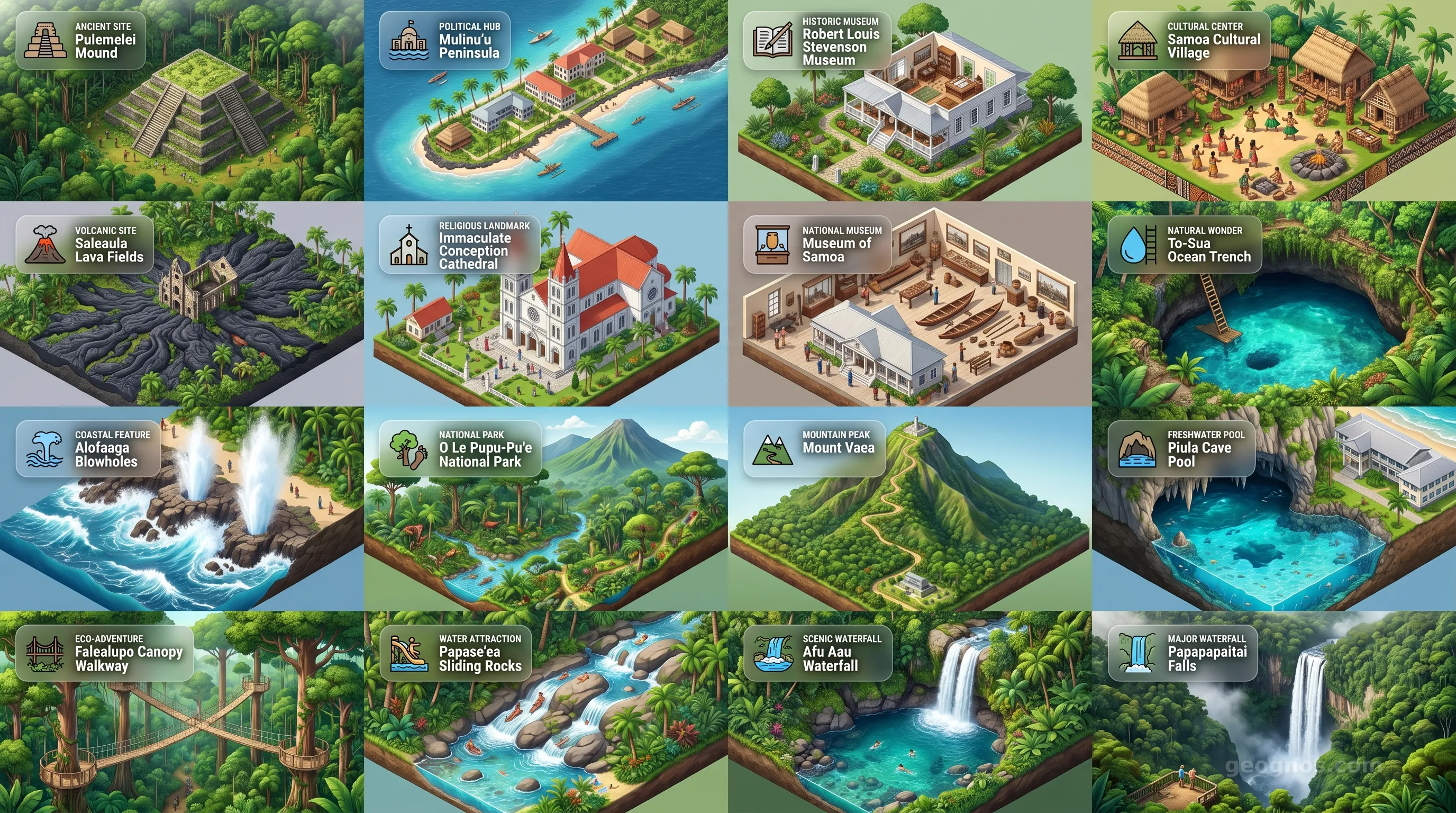
The landscape of Samoa is a visual feast that demands to be explored with intention. From the blowholes of Alofaaga on the island of Savai'i, where the ocean forces geysers of saltwater hundreds of feet into the air, to the quiet solitude of the Piula Cave Pool on Upolu, the physical beauty of the country is both raw and transformative. For prospective travelers and scholars alike, these locations represent the intersection of geological history and ecological preservation. You are encouraged to view these natural wonders and key cultural heritage sites through our Samoa points of interest cinematic showcase, which highlights the most iconic destinations and their historical significance.
Modern Samoa serves as a vital beacon in the Pacific, teaching the rest of the world about the importance of living in balance with our surroundings. The commitment of the Samoan people to environmental stewardship ensures that these islands remain a sanctuary for biodiversity. Whether you are interested in the intricacies of how an island nation sustains its own traditions in a globalized era, or you are simply a traveler looking to connect with a culture that values human connection over material pursuit, Samoa offers a unique lens through which to view the world.
Looking Forward from the Roots
As we examine Samoa as a global entity, it becomes clear that its strength lies in its balance. The nation participates actively in the modern geopolitical landscape while ensuring that its local customs are never overshadowed. For students and researchers looking at this nation as a model of cultural persistence, the story of Samoa provides an essential chapter in the broader story of humanity. By preserving its language, its complex system of oratory, and its reverence for the land, Samoa serves as a vital testament to the endurance of ancestral wisdom in the 21st century.
At GeoGnos, we strive to capture this intersection of earth and knowledge. By synthesizing history, geography, and cultural inquiry, we hope to provide a deep understanding of why Samoa is cherished not just by those who call it home, but by those of us who observe from afar. As you proceed to explore the detailed sections of our site regarding geography, government, and economy, carry with you the knowledge that behind every map coordinate and every economic statistic lies the beating heart of a resilient and proud Pacific civilization.