The Quiet Heart of the Continent: Unveiling Slovakia
Slovakia is a nation that asks to be discovered slowly. It does not shout its presence in the manner of grand imperial powers, yet it sits firmly at the center of Europe, acting as a bridge between the Slavic East, the Germanic West, and the Mediterranean influences of the South. To stand in Slovakia is to feel the tectonic pull of continents and the layered sediment of human experience. It is a land defined not merely by borders, but by the jagged, limestone backbone of the Carpathian Mountains that shelter its valleys and determine the rhythmic, traditional pace of its regional cultures.
For those who seek the authentic pulse of Europe, Slovakia is a masterclass in resilience and subtlety. The landscape is a paradoxical mix of fierce verticality and gentle agrarian harmony. Here, the High Tatras provide an alpine theater that rivals the great ranges of Switzerland, yet the lowland plains in the south tell a story of ancient volcanic soil and the life-giving flow of the Danube. It is this geographical dichotomy that has, for millennia, invited settlers, miners, kings, and common folk to build a tapestry of history so rich it warrants a deep dive into the complete, illustrated history of Slovakia to truly grasp its depth.
A Landscape Shaped by Peaks and Plains
The geographical soul of Slovakia is essentially a tilted shelf. If you were to travel from the north to the south, you would find yourself descending from the rugged, cloud-piercing summits of the Tatra mountains, through the dense, sprawling deciduous forests of the midlands, and finally down into the golden grain-heavy basins of the Pannonian Plain. This altitude variance is not just a geological detail; it is the fundamental reason why Slovakia developed such distinct local identities.
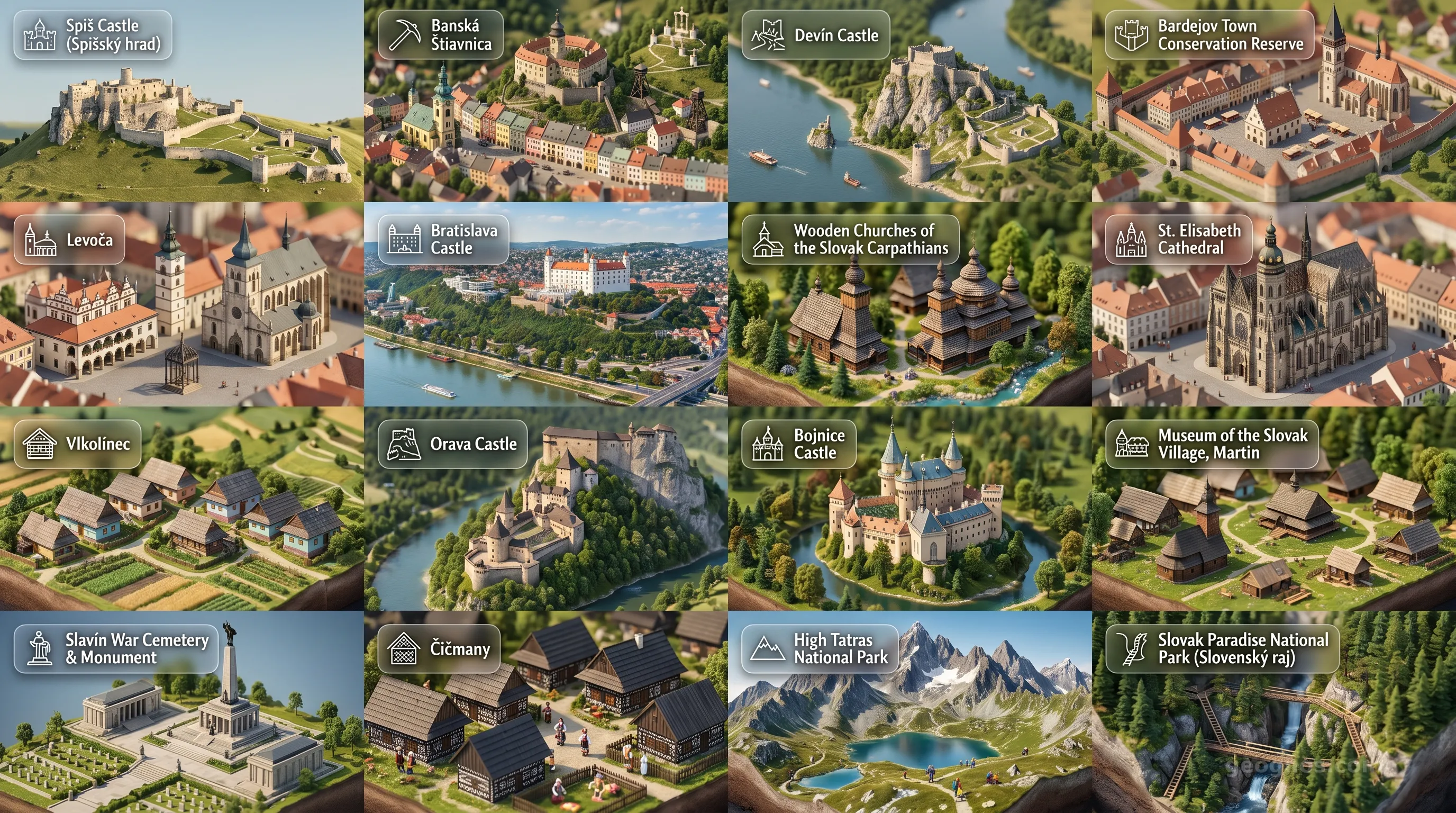
The mountain passes dictated the routes of trade, the placement of fortifications, and the isolation necessary for the preservation of folklore and musical traditions. As you explore the various sites across the country, you will see how these physical barriers helped the nation maintain a unique cultural independence despite the various empires that ebbed and flowed across its territory. You can see how these natural wonders have shaped the nation by watching our comprehensive POI Cinematic Showcase, which brings the interplay of nature and architecture to life.
The Living Archive: Understanding the Slovak Narrative
Slovakia’s story is often misunderstood as merely a segment of a larger regional narrative, yet it is a distinct, defiant, and vibrant tale of survival. From the proto-Slovak tribes of the Great Moravian Empire to the rise of the Hungarian nobility and the long era under the Habsburgs, Slovakia served as the workshop and the treasury of Central Europe. It was in these lands that Gothic cathedrals reached toward the heavens and Renaissance influence transformed remote trading towns into jewels of art and architecture.
Because the history is so dense with shifting power structures and social movements, it is often best understood through the act of synthesis. Educators and students who visit this site are encouraged to challenge their own perception of the past by using our interactive history puzzle. By arranging the events that forged this nation, one gains a clearer view of the catalysts for Slovak identity. This is not just an exercise in dates, but an invitation to understand how the Slovak people navigated centuries of change to emerge as a modern, sovereign, and deeply culturally proud European nation.
A Cross-Section of European Identity
Beyond the peaks and the pages of historical text lies a living, breathing nation. Slovakia possesses the highest density of castles and chateaux per capita in the world. Each one is a stone monument to the strategic importance of the landscape, a reminder of the time when these valleys were the primary conduits of European civilization. When you witness these structures through our engaging history cinematic showcase, you begin to appreciate how architecture functioned not just as defense, but as a bold statement of cultural longevity.
The modern identity of Slovakia is defined by a spirit of community. It is a place where industrial ambition meets deep reverence for the land. As a prospective traveler or a student of world history, looking at Slovakia means looking at a reflection of the European project itself, a country that honors its traditional roots while participating in the global future. The mountains stand as eternal sentinels over a country that, despite its relatively small size, has contributed immense depth to the collective heritage of the continent.
We invite you to treat this atlas as your companion in exploration. As we progress through the following sections—from the scientific nuance of its environmental climate to the complexity of its economic engines—keep in mind that the soul of Slovakia is found in the connection between its soaring natural peaks and its anchored historical heritage. This is a land of steady growth, profound natural beauty, and a spirit that has endured, adapted, and flourished across the passage of centuries.