The Heart of the Continent: Unveiling the Bohemian Soul
To stand in the center of Czechia is to stand at the very beating heart of Europe. It is a land where geography has acted as both a shield and a bridge. Surrounded by a natural fortress of mountain ranges that serve as rugged guardians to the Bohemian Basin, the nation has nurtured a spirit that is distinctively central, intellectually rigorous, and profoundly resilient. The rolling landscapes, stretching from the verdant foothills of the Sudetes to the fertile valleys of Moravia, have provided the backdrop for a story defined not merely by the passing of centuries, but by an unwavering commitment to the preservation of culture, architecture, and humanism.
For those seeking to truly understand this crossroads of the continent, it is essential to delve into the narrative that forged its identity. We invite you to explore the comprehensive history of Czechia, where the legacy of empires, thinkers, and reformers converges. This land is not just a collection of borders; it is a tapestry of resilience, a place where the architecture of the past continues to dictate the pace of modern life.
A Symphony of Stone and Spirit
There is an inherent musicality to the Czech landscape. Whether you are wandering the narrow, cobblestone arteries of Prague, known to many as the City of a Hundred Spires, or traversing the silent, snow-dusted forests of the Šumava National Park, you feel a presence that is deeply rooted in antiquity. The country possesses a unique architectural language, a synthesis of Gothic drama, Baroque exuberance, and Art Nouveau elegance. These buildings are more than stone and mortar; they are the witnesses to a nation that has balanced on the tectonic plates of European power struggles and emerged with its identity remarkably intact.
To grasp the weight of these centuries, one must engage with the events that define the Czech timeline. For the student or curious traveler, our interactive tools bring this timeline to life. You can test your understanding and hone your chronological expertise through our engaging history puzzle, a curated experience that invites you to arrange major historical milestones to earn digital commendations and deeper insights into the Czech trajectory.
From Silent Stone to Vivid Imagery
The beauty of Czechia lies in its contradictions. It is a nation of industrial prowess, yet it remains a haven for those who worship the quiet majesty of nature. It is a country that prizes its historical continuity, yet it remains one of the most innovative corners of the modern continent. How does a visitor begin to process such a vast heritage? We believe the answer lies in sight. The visual narrative of the Czech spirit is best captured through those moments when time seems to stand still, whether during the unfolding of a major turning point in national politics or the quiet transition of light over a Renaissance castle.
If you wish to visualize these moments in motion, we have developed a resource that honors the scale and significance of this nation. Please enjoy our immersive history cinematic showcase, where top historical events are curated into a vivid display that provides both context and character, perfect for classroom discussions or personal exploration.
The Landscape as a Living Heritage
The geography of Czechia is a masterwork of natural borders. To the west and north, the mountain ranges create a geological barrier that kept the nation somewhat sequestered, allowing it to cultivate its own linguistic and cultural traditions far from the influence of surrounding powers. To the east, the plains of Moravia invite a softer interaction with the land, fostering a spirit of tradition, viticulture, and rural tranquility. This diversity in topography directly informs the diverse character of its people and its regions.
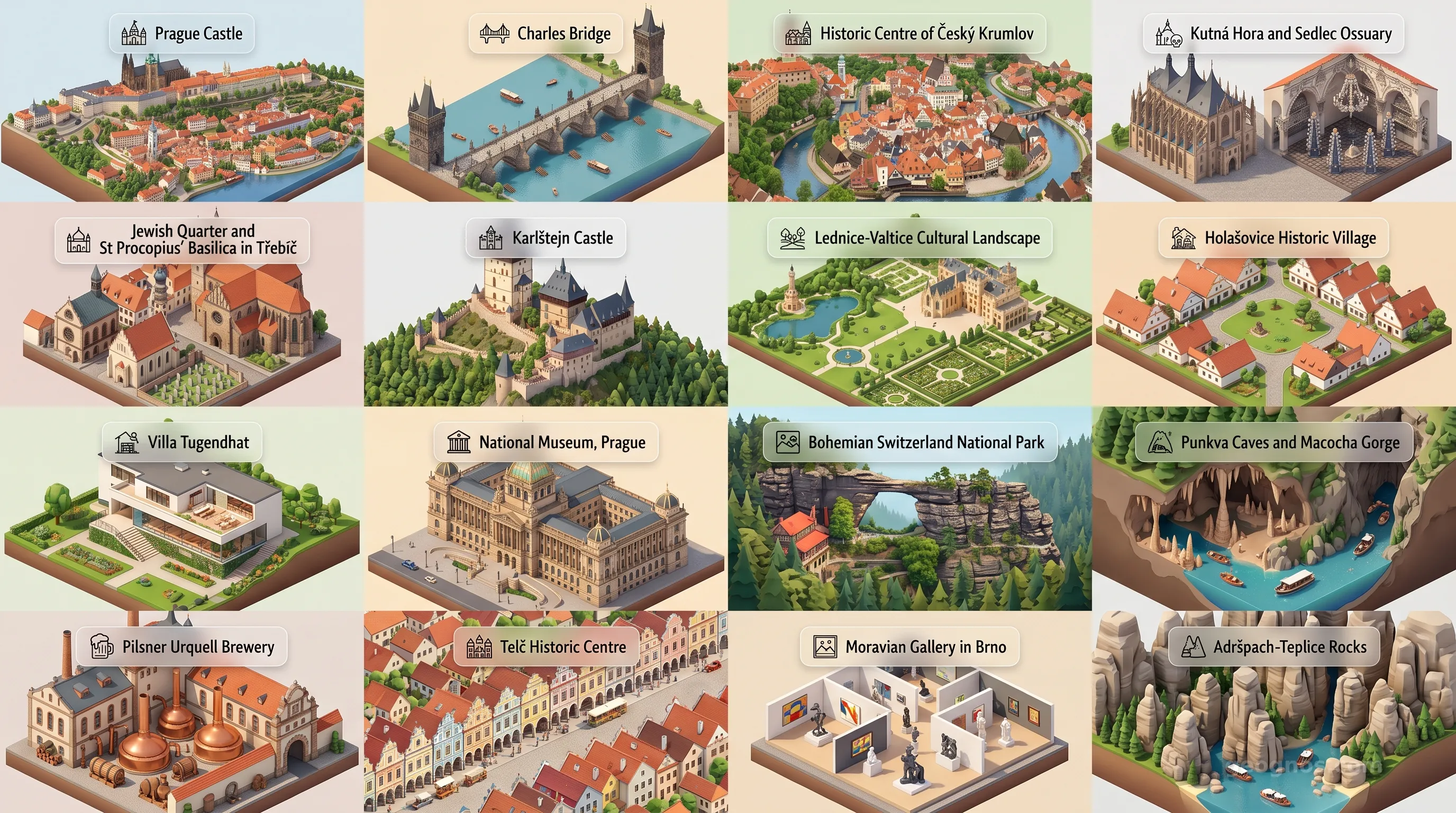
A true journey into the heart of this country is not complete without visiting its iconic locations. Whether it is the storied gates of the Charles Bridge, the sprawling medieval grandeur of Český Krumlov, or the haunting, ethereal sandstone formations of Bohemian Switzerland, these sites offer a glimpse into the physical soul of the nation. To appreciate the visual grandeur of these national treasures, we welcome you to view our curated POI cinematic showcase. These visuals serve as a digital atlas for the traveler and a pedagogical tool for the educator, mapping out the geography of Czech beauty in high definition.
Why Czechia Matters to the World
In the twenty-first century, Czechia stands as a testament to the power of transformation. It has managed the difficult task of modernizing its economy and infrastructure while painstakingly maintaining the integrity of its ancient towns and cities. The result is a nation that serves as a mirror for European history, showing the peaks of artistic achievement and the valleys of societal challenge. Its contribution to the world is not limited to its exports of glass, automobiles, or technology; it is found in the Czech mindset itself—an ethos of pragmatism paired with a deep-seated appreciation for aesthetics and philosophy.
For educators and students alike, Czechia offers a dense field of study that rewards curiosity. Every valley, every castle ruin, and every modern capital boulevard contains a lesson about geography, civic development, and human creativity. As you move through the chapters of this Atlas, keep the Bohemian spirit of inquiry at the center of your learning. Welcome to the study of a land where the history is tangible, the geography is grand, and the soul is timeless.