The Pearl of the Arabian Gulf: A Narrative of Persistence
To view Bahrain from the sky is to witness a masterpiece of human defiance against the limitations of the sea. It is a cluster of islands that sits low upon the sapphire waters of the Arabian Gulf, acting as a historical bridge between the vast, parched expanse of the Arabian Peninsula and the ancient civilizations of Mesopotamia. While the modern world often views this nation through the lens of gleaming skylines and bustling trade routes, the true essence of Bahrain lies in its enduring capacity for reinvention. For five thousand years, these shores have served as a vital sanctuary for those who look toward the horizon, transforming from the storied center of the Dilmun civilization into the modern nexus of culture and commerce that we witness today.
Bahrain is a land where the identity of the islander—tempered by the salt air and the rhythm of the tides—has shaped a society defined by a remarkable tradition of cosmopolitan hospitality. It is a place that feels simultaneously ancient and hyper-modern, where the whisper of shifting dunes seems to echo alongside the pulse of a global financial hub. To truly grasp the character of this nation, one must journey through its layered past, where the prosperity brought by the sea has been as significant as the prosperity brought by the oil beneath its sands.
An Archipelagic Heritage: Rooted in the Sea
The geography of Bahrain has always dictated its destiny. Unlike its massive neighbors, Bahrain is defined by its intimacy with the ocean. It was here, in the shallow, nutrient-rich beds surrounding the archipelago, that the finest pearls in the world were cultivated by nature. These iridescent spheres once drew merchants from India, Persia, and Europe, establishing the islands as the premier pearling hub of the world. This industry was more than an economy; it was a way of life that influenced the social fabric, the music, and the very architecture of the coastal villages.
The sea provided more than riches; it provided a conduit for ideas. As a crossroad for maritime silk roads, Bahrain served as a sanctuary for scholars, traders, and adventurers who integrated diverse cultural threads into the local tapestry. If you wish to understand how these nomadic and maritime forces coalesced into a modern sovereign state, I encourage you to explore the history of Bahrain, where you will find a curated collection of chronicles detailing the pivotal moments that defined the nation. Through our history puzzle, you can test your knowledge and see if you can correctly place these defining events along the timeline of the centuries.
The Architecture of Memory
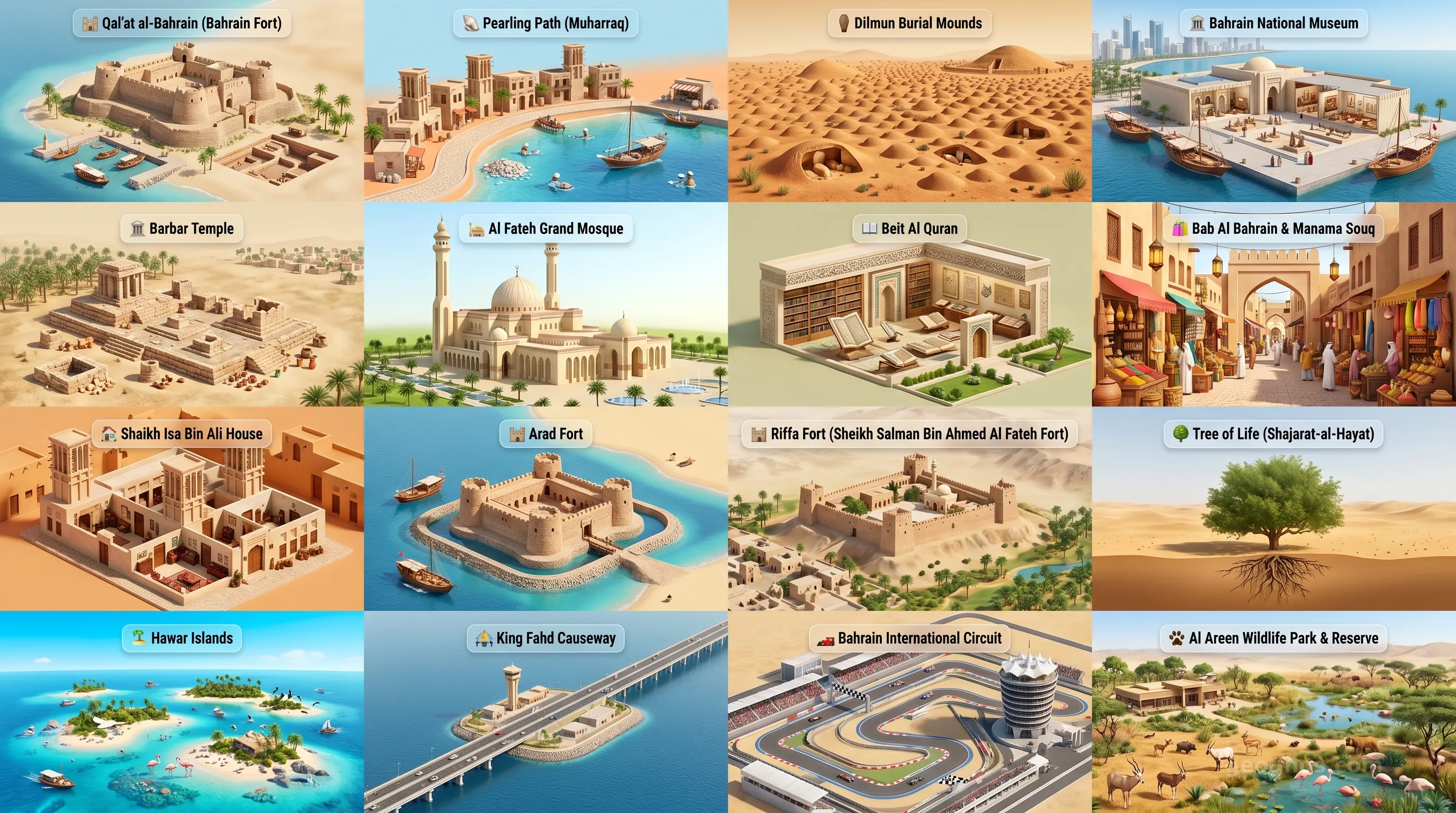
Bahrain is a nation that remembers. From the burial mounds of Aali to the grand arch of the Bab Al Bahrain, the physical landscape acts as a gallery of eras. The preservation of the Dilmun legacy—with its intricate seals and advanced trade networks—demonstrates a commitment to cultural continuity that is rare in a region undergoing rapid modernization. Teachers and students looking for a deeper dive into these narrative threads can view our history cinematic showcase, which utilizes digital artistry to bring the legendary events of the past to life.
The geography of the islands is not just limited to history; it is a living, breathing landscape of modern transformation. Travelers often find themselves enchanted by the seamless transition between the traditional souqs and the towering futuristic skyscrapers. You can immerse yourself in the vibrant aesthetics of these landscapes through our POI cinematic showcase, providing a high-definition glimpse into the must-see locations that define the Bahraini experience. These visual resources are designed to augment the standard geographic and economic data found in our atlas, providing the emotional context necessary for a complete cultural education.
A Crossroads of Modernity and Tradition
Today, Bahrain represents the dynamic synthesis of a deeply held heritage and an ambitious vision for the future. While the country is small in geographic footprint, it exerts a significant cultural and intellectual gravity. The education system here encourages a focus on the humanities, fostering a generation of youth who are as well-versed in the technological advancements of the Gulf as they are in the complex trade histories of their ancestors. This synthesis creates an atmosphere of intellectual curiosity that visitors notice the moment they arrive.
Whether you are a student tracing the maritime boundaries of ancient trade routes or a prospective traveler seeking the cool respite of a garden fed by natural artesian springs, Bahrain offers a distinct flavor of the Middle East. It is a testament to how geography provides the stage, but the spirit of a people writes the play. By exploring the various data sectors available in this atlas, you will find a comprehensive overview of the administrative, economic, and environmental structures that hold this remarkable nation together, completing a holistic understanding of a country that continues to hold its own with grace, sophistication, and a deep sense of pride in its unique journey.