The Crossroads of the Caribbean and the Maya Forest
Belize is an anomaly in Central America. Tucked away on the Caribbean coast, cradled by the turquoise embrace of the sea and the dense, emerald mystery of the Maya Mountains, it stands apart from its Spanish-speaking neighbors. To understand Belize is to understand a fragile, breathtaking equilibrium between the maritime pulse of the Caribbean and the terrestrial ancientness of Mesoamerica. It is a nation that defines itself not by borders, but by connections—a bridge between the ancestral legacies of the Maya civilization and a vibrant, modern creolized culture that sings with African, European, and indigenous rhythms.
Here, the landscape dictates the story. The coastline is jagged with lagoons and protective mangroves, acting as a gateway to the second-largest barrier reef in the world. Yet, move just a few miles inland, and the geography shifts to towering limestone cathedrals, underground river systems carved by time, and protected rainforests that serve as the last stronghold for the elusive jaguar. This dual identity—of being simultaneously a kingdom of the reef and a sanctuary of the jungle—creates a national character defined by stewardship and profound curiosity.
An Ancestral Tapestry: Tracing the Belizean Narrative
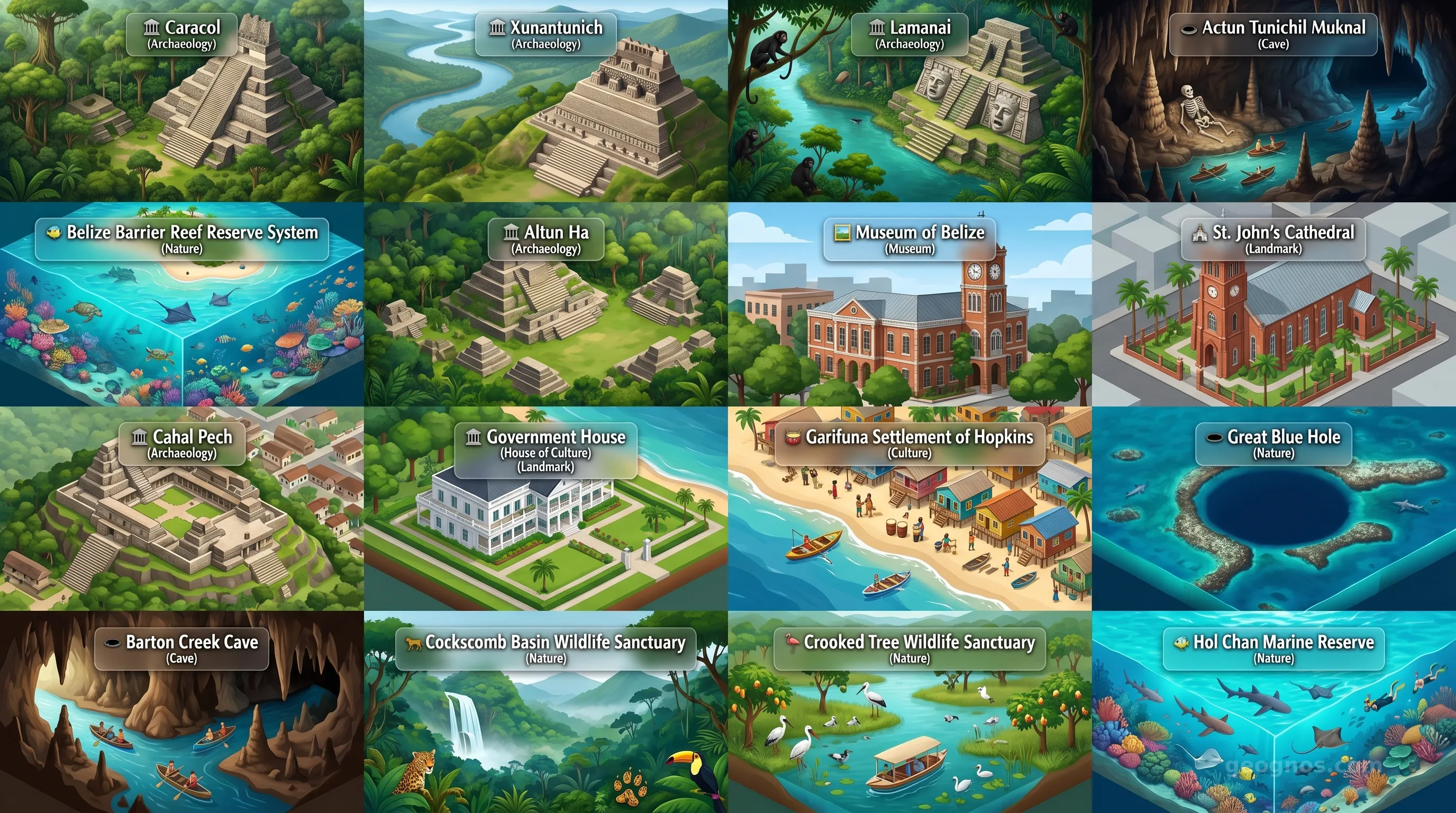
The layers of time in Belize are not merely historical records. They are alive. To step into the rainforest is to walk beside the phantom architects of the Classic Maya period, whose temple complexes at Caracol and Xunantunich continue to command the horizon. To walk the streets of Belize City or the villages of the south is to hear the linguistic echoes of a complex colonial history that brought together settlers, pirates, the British crown, and enslaved peoples who eventually forged the distinct Kriol identity.
For students and travelers who wish to grasp the complexities of this evolution, it is essential to delve into the past. We invite you to explore the comprehensive history of Belize, which details how shifting geopolitical tides shaped a territory distinct from the rest of the Central American isthmus. As you synthesize these eras, you may wish to test your temporal acumen by completing our interactive history puzzle, a chronological challenge that reveals the interconnected nature of regional and global events.
Visualizing the Passage of Time
History in the Caribbean is often obscured by the humidity and the reclaiming force of nature. To help bring these momentous eras to the surface, our digital archives provide a window into the past. You can immerse yourself in the history cinematic showcase, a carefully curated collection of illustrations and narratives that dramatize the key turning points of the nation, from the initial encounters between the British Baymen and the Spanish to the dawn of the modern independent era.
A Sovereign Sanctuary: Life in the Tropics
What truly sets Belize apart in the global imagination is its commitment to conservation. In an era where the natural world is under constant pressure, Belize has consistently chosen to protect its terrestrial and marine wealth. The Great Blue Hole, a monumental sinkhole visible from space, serves as a natural beacon for the country's dedication to its environment. This pride in stewardship extends to every village and town, where tourism and ecology are intertwined rather than opposed.
For the prospective traveler and the dedicated researcher alike, the physical beauty of the nation is matched by its structural complexity. We have synthesized the most breathtaking locations, from the misty peaks of the Cockscomb Basin Wildlife Sanctuary to the sun-drenched cays of the reef, into our POI cinematic showcase. This visual journey provides an orientation to the points of interest that define the soul of the country.
Geography and Culture: A Symbiotic Bond
The demographic landscape of Belize is as varied as its geography. From the coastal Kriol populations to the deep traditions of the Garifuna in the south, the mestizo communities in the north, and the indigenous Mopan and Kekchi Maya, the nation functions as a harmonious cultural mosaic. This diversity has fostered a unique approach to nationhood—one that values communal autonomy and environmental protection as essential pillars of development. While many countries struggle to balance economic modernization with the preservation of indigenous landscapes, Belize offers a masterclass in sustainability, utilizing its rich biodiversity as its greatest capital.
As you navigate through the additional chapters of this atlas, including our detailed analysis of the nation's government, economic performance, and energy infrastructure, consider how these pillars of statehood are specifically designed to serve such a sprawling and unique geography. Belize invites us not just to observe its borders, but to study how it harmonizes human enterprise with the natural environment. Whether through the lens of a school assignment or the planning of an educational expedition, understanding Belize is an exercise in appreciating the resilience and elegance of a truly unique Caribbean nation.