The Cradle of the New World: A Geography of Convergence
To set foot in the Dominican Republic is to stand at the epicenter of a tectonic and historical collision that forever altered the human story. Occupying the eastern five-eighths of Hispaniola, a name derived from the Spanish claim of being a "little Spain," the Dominican Republic is more than a tropical destination of white sand beaches and rhythmic merengue. It is a sentinel of the Caribbean, a rugged landscape of soaring mountain ranges, salt-crusted inland lakes, and verdant valleys that has acted as the stage for the first permanent European settlement in the Americas.
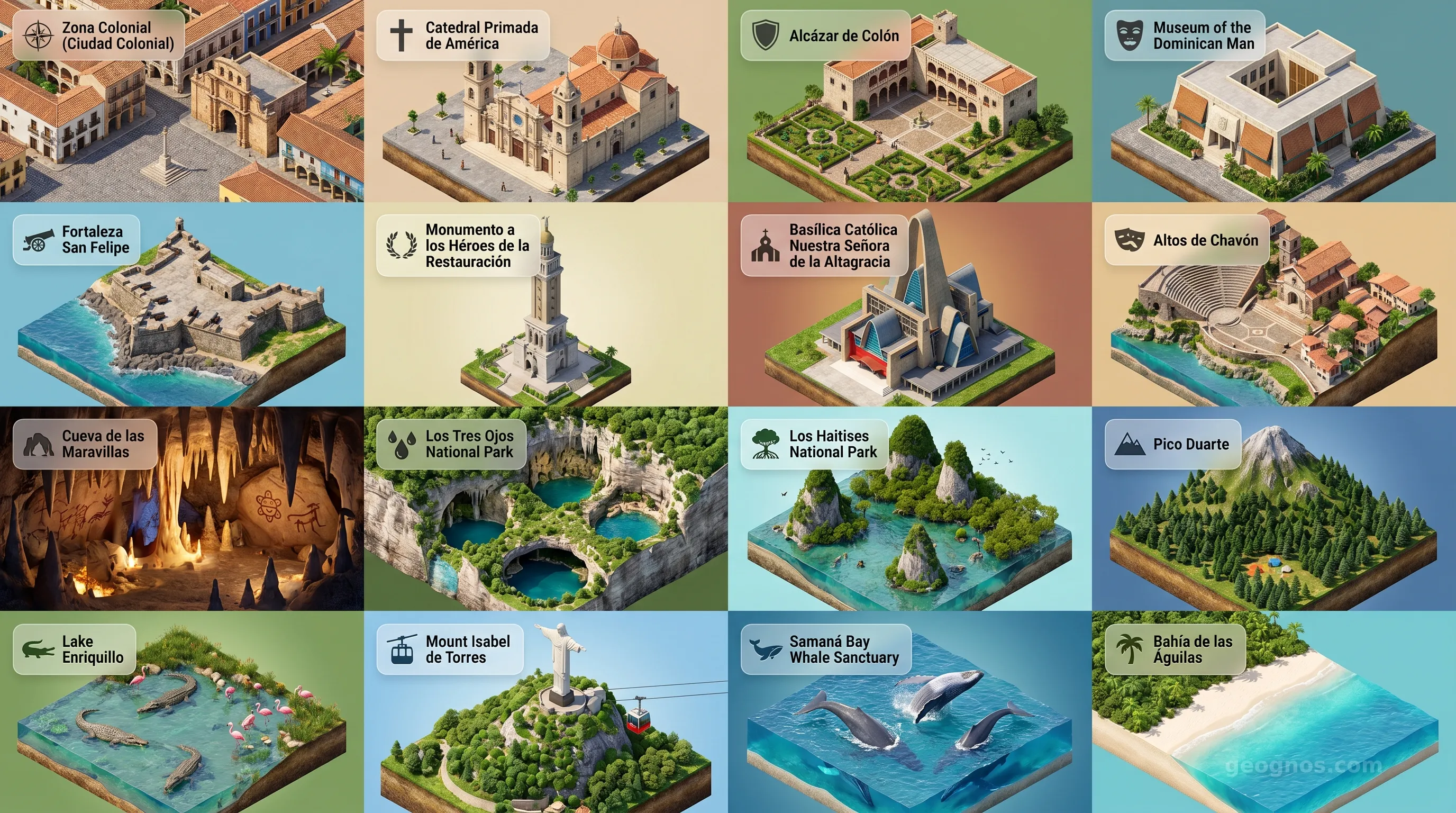
Geography here is destiny. From the shadow of Pico Duarte, the highest peak in the Caribbean, to the profound depth of Lake Enriquillo, the Dominican Republic possesses a dramatic topography that defies the typical flat-island narrative of the tropics. This is a land where the earth rises sharply from the cerulean embrace of the Atlantic and the Caribbean Sea, creating microclimates that range from semi-arid cactus scrublands to mist-shrouded cloud forests. For those seeking to understand the foundational currents of the Western Hemisphere, it is essential to explore the history of the Dominican Republic, where the arrival of two worlds created a complex, vibrant culture that is neither purely Spanish nor indigenous, but a dynamic synthesis all its own.
A Mosaic of Memories: The Living Archive
The Dominican spirit is forged in the resilient rhythms of a people who have absorbed influences from across the Atlantic, the African continent, and the local Taíno heritage. This is not a culture preserved behind glass, but one lived in the bustling streets of Santo Domingo, the oldest colonial city in the Americas. Walking through the Zona Colonial is an exercise in time travel, where 16th-century cathedrals cast long shadows over plazas filled with the life of a modern, bustling metropolis. To truly grasp how these eras intersect, one can engage with our interactive history puzzle, a challenging journey through time that rewards students and enthusiasts alike for their chronological mastery of the nation's significant milestones.
The sensory richness of the Dominican Republic is not merely anecdotal. It is a visual tapestry. For educators and curious travelers, the weight of the past is best observed through our history cinematic showcase. By pairing period-accurate illustrations with concise summaries, this resource illuminates the high-stakes navigation of early explorers and the transformative events that shaped the nation into a sovereign powerhouse. It is a testament to the endurance and creative adaptation of the Dominican people, whose cultural output—from bachata’s melancholic longing to the high-energy pulse of modern art—reflects the layers of experience etched into their soil.
From Highland Mist to Azure Coastlines
The ecological diversity of this nation provides a masterclass in geographical contrast. The Cordillera Central, acting as the spine of the nation, funnels moisture from the trade winds, feeding fertile river basins that have sustained human life for millennia. Yet, a short drive from these damp, lush highlands can land a traveler in the dramatic, low-lying saline environments of the south. This geographical versatility has fostered an incredibly rich biodiversity, much of which remains protected in national parks that showcase a side of the Dominican Republic few casual tourists ever encounter.
For the traveler, the landscape serves as an invitation to movement and discovery. Whether one is drawn to the whale-watching waters of Samaná Bay or the crystalline serenity of Saona Island, the points of interest across the country are as varied as its topography. We invite you to begin your journey through these natural and man-made wonders by visiting our POI cinematic showcase, a carefully curated collection that highlights the sheer majesty of the Dominican landscape through immersive photography and narrative depth.
The Dominican Soul: Resilience and Connection
Ultimately, the story of the Dominican Republic is a story of connection. It is the geographic gateway to the Caribbean, the place where European navigation first touched the soil of the "New World." Yet, it is also a place that has maintained a distinct, singular personality in the face of centuries of regional change. The Dominican people display a remarkable warmth, an openness that mirrors the inviting nature of their climate. They have built a society that embraces the festive intensity of the carnival, the profound religious devotion of their historical traditions, and a forward-looking economic spirit that is steadily increasing the nation’s prominence on the global stage.
For the student, the researcher, or the wandering traveler, the Dominican Republic provides an unparalleled field of study. It is a place where environmental science, cultural anthropology, and political history meet. Through our deep dives into the country's economic systems, military traditions, and legislative branches, GeoGnos seeks to provide a comprehensive lens through which this island nation can be viewed. We invite you to linger on these pages, to trace the coastline of this remarkable territory, and to find your own point of connection with the soul of the Dominican Republic.