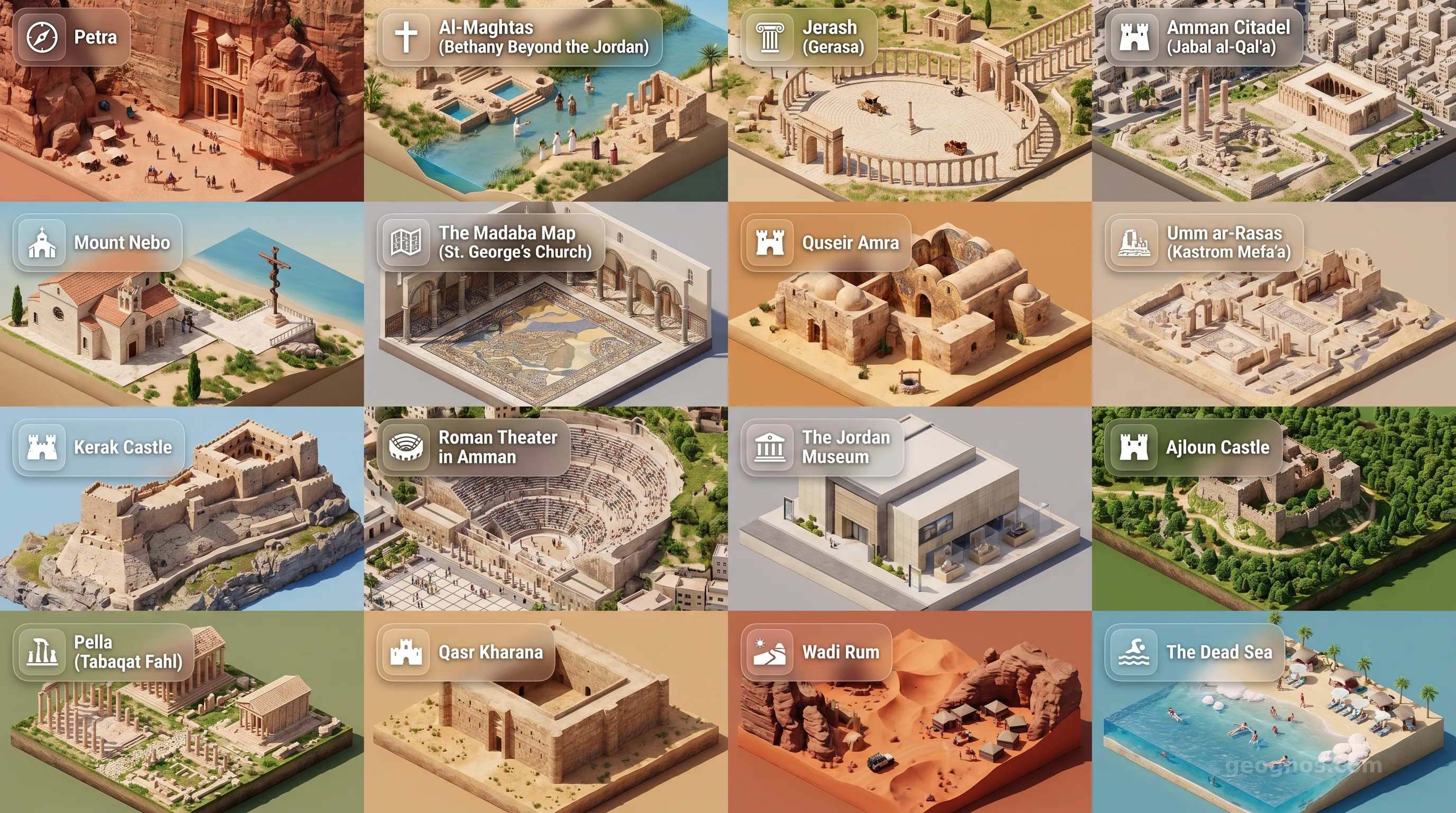
The Crossroads of Eternity: The Essence of Jordan
To set foot in Jordan is to step into the marrow of human history, a land where the whispers of the ancient past resonate with the rhythm of a vibrant modern state. Spanning a landscape that transitions from the rolling, fertile hills of the north to the otherworldly, rose-tinted silence of the southern deserts, Jordan is defined by its role as a bridge between worlds. It is the geographic and cultural pivot between the Levant and the Arabian Peninsula, a kingdom that has weathered the rise and fall of empires, yet has remained a bastion of stability and profound heritage in a shifting geopolitical climate.
Jordan is not merely a collection of coordinates on a map, but a testament to the endurance of the human spirit amidst unforgiving geography. From the salty, healing depths of the Dead Sea—the lowest point on the terrestrial globe—to the high-altitude breezes of the Ajloun highlands, the nation serves as a living museum. Here, travelers and scholars alike discover a tapestry woven with threads of Roman engineering, Nabataean ingenuity, and Islamic architectural mastery. To truly understand how these layers of identity converged over millennia, one must explore the comprehensive history of Jordan, which chronicles the epochal shifts that transformed the region from a nomadic thoroughfare into a sovereign kingdom of influence.
Petra and the Sculpted Horizon
If Jordan has a heartbeat, it echoes within the sandstone canyons of Petra. Known as the Rose City, it is perhaps the most iconic symbol of the nation's capacity for cultural synthesis. Built by the Nabataeans, who mastered the desert landscape by harvesting scarce rainfall, the city serves as a lesson in adaptation. It is a place where nature and artifice are indistinguishable, where architecture is carved directly into the living rock rather than imposed upon it. This ability to harmonize with the land is the Jordanian way.
For those looking to visualize the majesty of these landmarks, we invite you to view our curated Point of Interest Cinematic Showcase, which brings the grandeur of the Treasury, the ancient ruins of Jerash, and the Martian landscapes of Wadi Rum to life. These locations do more than invite tourism; they offer an educational glimpse into how prehistoric civilizations survived in arid environments and how they leveraged their position on the Incense Route to gain wealth and prominence on the global stage.
A Chronological Odyssey
Understanding Jordan requires the ability to see beyond the immediate visual impact and recognize the timeline of human endeavor that made these ruins possible. The story of the kingdom is a complex progression of nomadic life, Hellenistic influence, Byzantine grandeur, and Islamic golden ages. For students and lifelong learners, we provide a structured way to engage with these transitions through our interactive history puzzle, a challenging exercise that encourages you to synthesize dates, rulers, and milestones into a coherent narrative of development.
When you place events in their proper context, the history of the region becomes clear as a story of connectivity. Trade routes moved through these hills, bringing goods, ideas, philosophies, and religions. The synthesis of these elements gave Jordan a unique pluralistic identity. Educators often find that placing the events into their historical flow through our History Cinematic Showcase serves as a transformative teaching tool, allowing learners to witness the unfolding of centuries of conflict and cultural exchange in a rhythmic, digestible visual format.
The Geography of Survival
Jordan’s character is fundamentally shaped by the limitations and opportunities of its terrain. To the west, the Great Rift Valley creates a dramatic fissure that houses the Jordan River and the Dead Sea, while to the east, the vast basalt deserts offer a stark, introspective contrast. This extreme geographical variation necessitates a resilience that has permeated the culture. The Jordanian people, often characterized by their deep sense of hospitality and communal honor, treat the challenges of water scarcity and intense summer heat not as roadblocks, but as elements that demand unity and careful resource management.
This commitment to endurance and tradition does not suggest an insular nation. On the contrary, Jordan is famously a haven of moderation in the Middle East. It has maintained a trajectory of growth that respects its Bedouin heritage while embracing the demands of the modern era. As you move through the bustling streets of Amman, a city that rises over seven historic hills and balances hyper-modern architecture with the remnants of its Roman Citadel, you realize that Jordan is an ongoing project. It is a nation that remembers its ancestors with great pride while looking forward to a future of technological and social development.
A Kingdom Defined by Its Bridges
Ultimately, the story of Jordan is the story of a crossroads. Whether you are analyzing its intricate irrigation networks in the desert, its significant role as a regional educational hub, or its legacy as a destination for spiritual pilgrimage, Jordan remains essential to our collective global understanding. It reminds us that even in a landscape that seems harsh, civilizations can bloom through intellect, diplomacy, and the preservation of identity.
We welcome you to delve deeper into these sections to better comprehend the mechanics of the state. Through the subsequent sections of this page, you will find data regarding the government, which skillfully manages the balance between traditional authority and constitutional structure; the economy, which thrives on human capital, phosphate exports, and the global tourism industry; and the military and energy sectors, which together safeguard the kingdom's sovereignty. As a member of our GeoGnos community, you are now a part of the effort to document and honor this remarkable land. Let your study of Jordan begin here, at the junction where time itself seems to stand still while the world continues to evolve around it.