The Peninsula of Transformation: An Introduction to Qatar
To look upon Qatar is to witness a landscape where the ancient rhythm of the tides meets the unrelenting velocity of the twenty-first century. A slender thumb of land jutting into the turquoise embrace of the Persian Gulf, this nation serves as a living laboratory of transformation. Here, the stark, golden majesty of the Arabian Desert is no longer merely a frontier, but the foundation for an architectural skyline that shimmers like a mirage made solid. Qatar is a country defined by the courage of its transition, shifting from a quiet sanctuary of pearl divers and nomadic tribes to a globally connected hub of commerce, education, and artistic innovation.
Understanding Qatar requires more than a glance at its contemporary wealth. It demands a journey into its resilience. This is a land where the scarcity of water was once the primary governor of life, forcing a culture of deep hospitality and resourceful cooperation. Today, the same geographical necessity for survival has been replaced by a bold, visionary strategy to curate a global crossroads. Whether you are delving into the detailed history of Qatar to understand the foundations of the Al Thani dynasty or attempting to master the timeline of its rapid development via our interactive history puzzle, the story remains one of unwavering focus and rapid, purposeful adaptation.
The Geography of Resilience
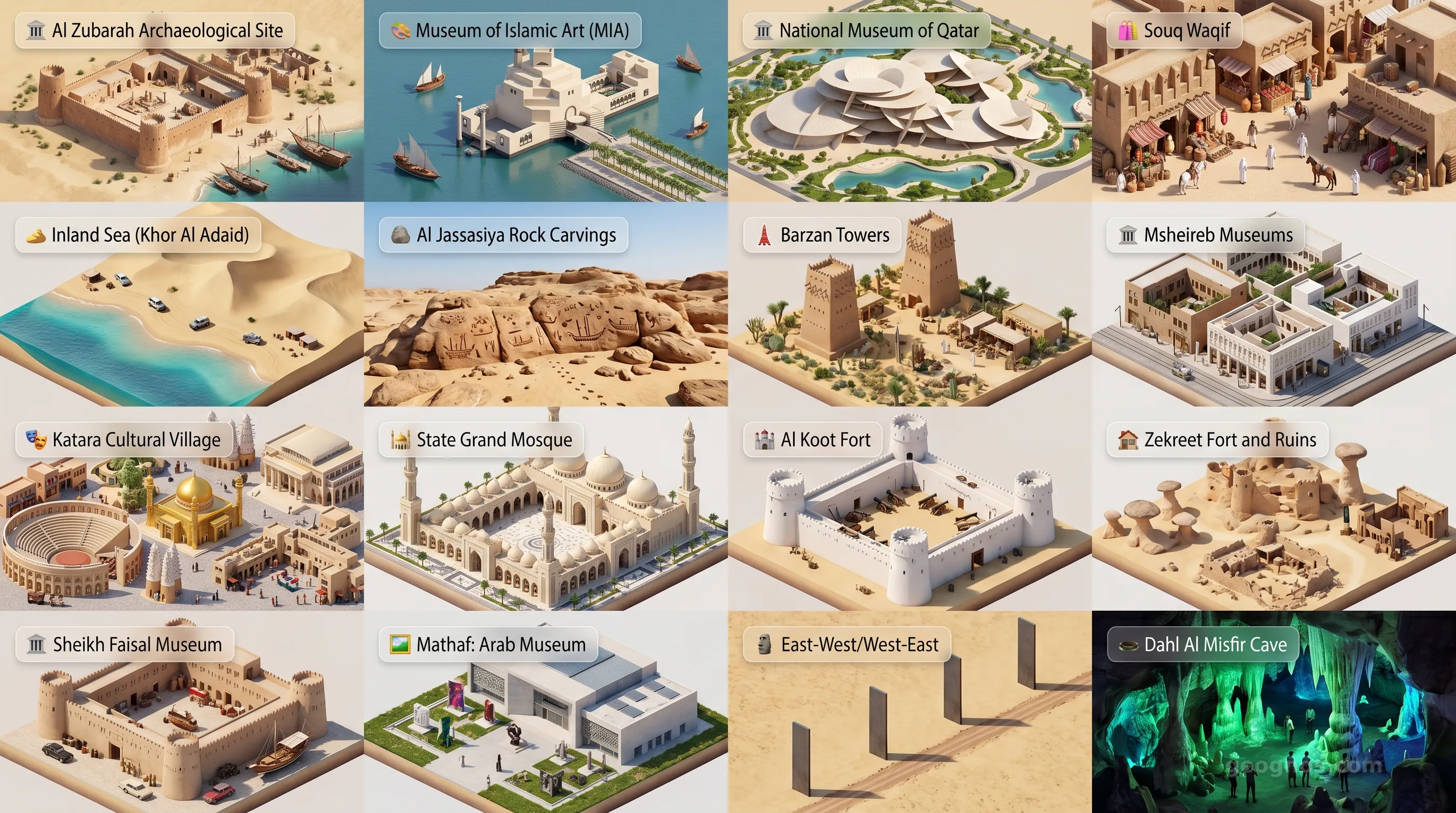
At its heart, Qatar is an island-like peninsula, an ecosystem defined by its surrounding sea. Unlike the sprawling continents of its neighbors, Qatar occupies a compact space that encourages density of thought and action. The land itself is predominantly a low-lying desert, featuring limestone plateaus and expansive salt flats known as sabkhas. Yet, it is the coastline that tells the true story of the Qatari spirit. The inland sea of Khor Al Adaid, where the dunes descend directly into the salt waters, offers a breathtaking reminder of the country's natural beauty, a stark contrast to the gleaming glass cathedrals of Doha.
To truly grasp the significance of these shifting sands and sparkling waters, one might engage with our history cinematic showcase, which illustrates the profound journey from the maritime struggles of the pearling era to the heights of modern global diplomacy. This visual medium bridges the gap for students and historians alike, offering a window into how the people of Qatar transformed a harsh environment into a cradle of modern Gulf prosperity.
A Modern Crossroads of Culture
Qatar has successfully carved a unique identity as a bridge between East and West. By investing heavily in cultural infrastructure, such as the Museum of Islamic Art and the National Library, the nation has invited the world to sit at its table. The soul of Qatar is not just in its oil and gas reserves, but in its appetite for knowledge. It is a place where university campuses from across the globe sit side by side in Education City, reflecting a deep, institutional commitment to the betterment of humanity through shared discovery.
For those interested in the physical landmarks of this transition, exploring the nation through our POI cinematic showcase allows for a curated tour of the landmarks that define the modern Qatari landscape. From the traditional wooden dhows bobbing in the harbor of Souq Waqif to the geometric marvels of Msheireb Downtown Doha, these sites provide a comprehensive view of how the country manages the delicate balance of preserving heritage while embracing a progressive future.
The Essence of Qatari Identity
The spirit of the Qatari people is anchored in the concept of permanence. Despite the rapid modernization, there is a profound reverence for the Bedouin roots that once defined the population. This heritage manifests in the contemporary Qatari value system, which emphasizes communal solidarity and the importance of family lineage. As students of culture, we recognize that the geography of a nation is always mirrored in the temperament of its people. The resilience required to live in a desert climate has translated into a societal model that prioritizes strategic planning and social cohesion.
As GeoGnos continues its mission to provide a definitive Atlas of our world, Qatar stands as a preeminent case study of intentional development. It is a nation that refuses to be static, preferring instead to occupy the leading edge of change. By viewing the intersection of environmental constraint and human ambition, we uncover a fascinating narrative that speaks to the power of vision. Whether you are conducting research for an academic paper or planning your first journey to the heart of the Arabian Gulf, Qatar offers a landscape that is both intellectually challenging and visually arresting, providing a comprehensive lesson in how a nation can define itself on its own terms.