Angola: The Crucible of the Atlantic and the Interior
To stand upon the red earth of Angola is to feel the heartbeat of a continent. Often described as a giant waiting to be discovered, Angola is a nation of immense contrasts and profound resonance. It is a land where the Atlantic Ocean crashes against the arid expanses of the Namib Desert, where the rugged peaks of the central highlands hold the secrets of ancient empires, and where the bustling energy of Luanda pulses with a modernity that feels both electric and deeply rooted in tradition. For those seeking to understand the synthesis of African vitality and historical complexity, Angola serves as a masterclass in resilience and transformation.
The geography of Angola acts as a grand theater for its history. From the coastal plains, once the primary interface for colonial contact, to the sprawling savannahs and river-streaked plateaus of the interior, the land has always dictated the movement of people, trade, and ideas. To truly grasp the narrative arc of this southwestern African titan, one must dive into the rich tapestry of its past, which you can explore the history of Angola through our comprehensive archival study, featuring illustrated milestones and teacher-led curricula designed to contextualize the growth of this sovereign state.
The Echoes of Time: A Legacy in Motion
History in Angola is not a static subject, but a living dialogue. The journey from the early kingdoms of the Mbundu and Ovimbundu to the shifting geopolitical sands of the twentieth century provides a compelling study for students and travelers alike. Education in this modern age benefits from interactive engagement, which is why we invite learners to test their grasp of the nation’s progression. You can sharpen your chronological understanding by participating in the history of Angola interactive chronology puzzle, where arranging key turning points allows you to earn digital badges while mastering the timeline of a nation.
Beyond the pages of books, the visual legacy of Angola speaks volumes. The interplay of cultural fusion, maritime exploration, and inland development has left behind a rich artistic and architectural heritage. We invite you to experience this narrative in a multi-sensory way through our history of Angola cinematic showcase. This carousel of illustrations brings major events to life, ensuring that the student or visitor appreciates not just the dates, but the texture and intensity of the experiences that have defined the Angolan spirit through the centuries.
Geographical Majesty: From the Coast to the Sky
Angola’s landscape is a masterwork of natural diversity. It is defined by the great escarpment that separates the humid, tropical coastal strip from the high inland plateaus. The nation hosts several major river systems, including the Cuanza, which carves its way through the landscape, providing both ecological nourishment and aesthetic wonder. The climate ranges from the semi-arid reaches of the south, where the desert meets the sea, to the lush, temperate highlands of the interior, creating habitats that support an incredible range of flora and fauna.
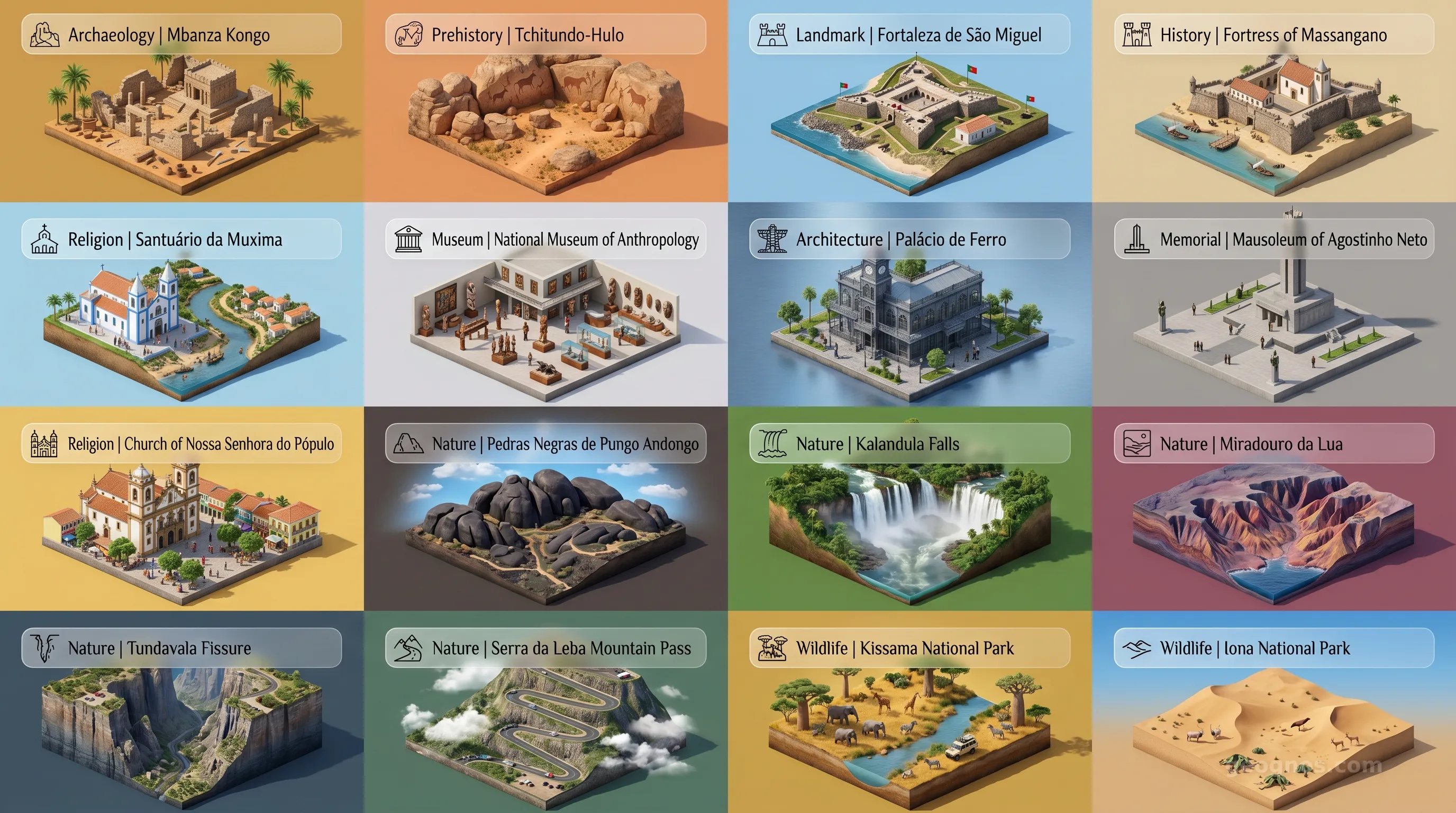
Travelers exploring this territory are greeted by vistas that range from the mist-covered falls of the interior to the serene, sun-drenched beaches of the Benguela province. There is a quiet majesty to the remote reaches of the Lunda regions, just as there is a magnetic pull to the urban landscape of Luanda, a city that sits at the vanguard of African economic expansion. To help visualize the varied topography and the most captivating sites across the provinces, we offer a curated cinematic tour of Angola’s points of interest, which provides a vivid look at the wonders that await the curious explorer.
A Future Defined by Stewardship and Growth
As Angola moves firmly into a new chapter of economic development and cultural affirmation, its focus remains fixed on the synergy between its abundant natural resources and the immense potential of its young, vibrant population. The spirit of the nation is reflected in its arts, its music, and the collaborative nature of its diverse ethnic groups, which coalesce to create a singular, unified identity. From the traditional music that serves as the heartbeat of community celebrations to the growing influence of its creative industries on the global stage, Angola is an optimistic contributor to the international community.
Whether you are a university researcher delving into the economic geography of sub-Saharan Africa, or a student beginning your first journey into the study of the Atlantic world, Angola represents an essential frontier. Its narrative is one of enduring strength, evolving from a nexus of traditional trade into a contemporary powerhouse with its eyes set on global integration. Through our collection of resources, we hope to provide a window into this magnificent nation, bridging the gap between the classroom and the physical reality of the Angolan experience, and encouraging a deeper appreciation for the complex beauty that defines its role on our planet.
As you delve deeper into the following sections—exploring the intricacies of its governance, the technical specifics of its economy, and the dynamic shifting of its social demographics—keep in mind the resilience of the Angolan people. They have carved a identity out of a challenging yet rewarding landscape, and in doing so, have secured a place for their nation as an indispensable part of the world atlas. Welcome to the GeoGnos comprehensive look at Angola.