The Vertical Horizon: Bolivia’s Resilient Soul
To set foot in Bolivia is to abandon the traditional terrestrial scale of the world. Here, the earth does not merely roll out as a landscape; it reaches upward with an intensity that challenges the lungs and stirs the spirit. Bolivia is a nation defined by its sheer, jagged geography. It is the roof of the Americas, a kingdom where the thinning air of the high Andes meets the humid, oxygen-rich breath of the Amazon basin. To understand this nation, one must recognize that its identity is not formed in spite of its terrain, but because of it. The Altiplano, a vast, desolate, and strikingly beautiful plateau, acts as the cultural cradle where centuries of tradition have been forged under a sky of piercing, crystalline blue.
Bolivia remains one of the last true frontiers of human experience. It is a place of profound dualities, where ancient Aymara and Quechua traditions pulse beneath the surface of modern urban centers, and where colonial architecture stands in perpetual dialogue with the enduring legacy of the Inca Empire. To journey through these territories is to witness a civilization that refuses to be sidelined, standing tall at the crossroads of time. If you wish to understand how this unique confluence of geography and cultural resilience manifested, I invite you to explore the comprehensive history of Bolivia, which details the profound saga of a nation that has balanced isolation with immense influence since long before the arrival of the Spanish crown.
A Mosaic of Heights and Depths
The topography of Bolivia is a vertical spectrum. From the salt-encrusted mirrors of the Salar de Uyuni, which turn the earth into a reflection of the cosmos during the rainy season, to the cloud forests that cling to the eastern slopes of the Andes, the country presents a visual diversity that defies categorization. It is a nation of high-altitude deserts, craterous volcanic peaks, and endless, untamed jungles. For the traveler, this variety is intoxicating, offering a perspective that feels primeval.
Because the physical landscape of Bolivia is so integral to its national narrative, students and researchers alike often find it beneficial to engage with history as a structured experience. You can test your understanding of how these landscapes witnessed the rise and fall of great cultures by challenging yourself with our interactive history puzzle. It is a pedagogical tool designed to transform abstract dates into a cohesive, rewarding timeline of discovery.
Echoes of the Past: Living Heritage
The soul of Bolivia is found in its continuity. It is a country where the past is not a museum piece but a living, breathing participant in daily life. Whether it is the vibrant textiles woven in patterns that carry ancestral meaning or the traditional festivities that fill the streets of La Paz and Potosi with sound and color, the heritage of Bolivia is its most enduring strength. The narrative of this land is often better told through the eyes of those who witnessed its transformation.
To grasp the weight of these historical shifts, consider the curated visual archives we have assembled. We offer a compelling history cinematic showcase, which weaves together the illustrations and narratives of major events into a seamless, educational experience. It is designed to bring the milestones of the Bolivian story to life, making the historical landscape accessible to learners at any level, from secondary school classrooms to university lecture halls.
The Architecture of Beauty and Nature
While history provides the bones of the nation, its geography provides the heartbeat. Bolivia’s points of interest are as dramatic as the people who reside there. The sight of Mount Illimani looming over the bustling basin of La Paz or the stillness of Lake Titicaca at dawn provides a sense of peace that is difficult to find anywhere else on the planet. These locations serve as reminders of our own insignificance in the face of nature, and our capacity to build extraordinary communities in the most challenging of climates.
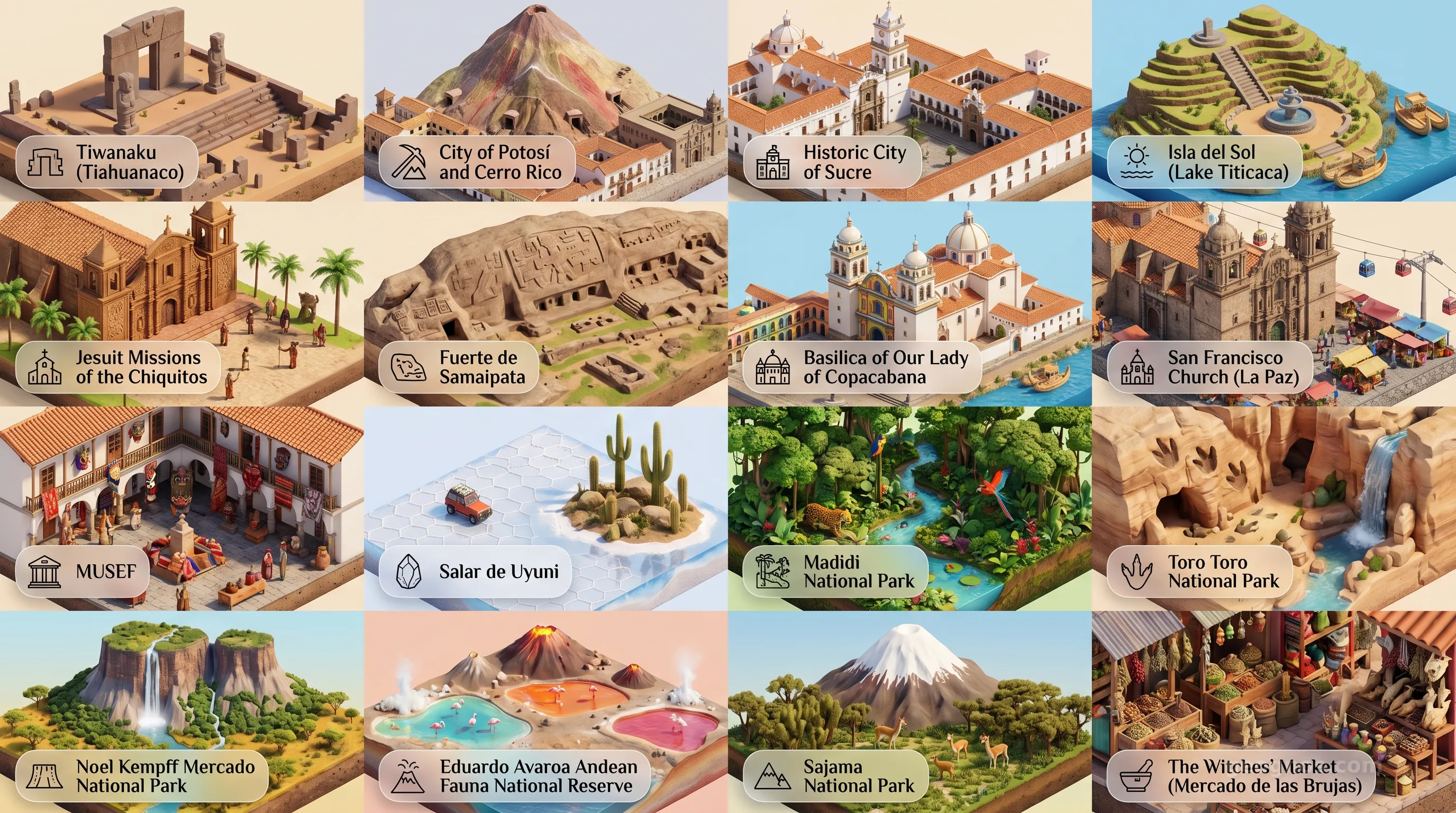
If you are planning an expedition or simply hoping to view these iconic vistas from afar, I recommend visiting our POI cinematic showcase. This carousel of imagery serves as both a roadmap for the intrepid traveler and an aesthetic journey for those captivated by the majesty of South America. It provides an immersive look at why Bolivia remains a cornerstone of continental wonder, holding onto its mysteries while welcoming those who seek to learn from its unique path.
Looking Ahead: The Eternal High Plateau
As we delve deeper into the specific sections of this web atlas, remember that Bolivia is more than the sum of its economic indicators, military strength, or governmental structures. It is a testament to the resilience of human spirit in high altitudes. It is a country that teaches us to value both the vast silence of the desert and the exuberant music of the Andean highlands. Whether you are a student exploring the intersection of ecology and policy, or a traveler looking for the authentic heart of the Andes, Bolivia stands ready to offer lessons that only this singular, sky-bound nation can provide. As we proceed through the pages of this atlas, keep in mind that the land itself is the primary teacher. It demands patience, rewards the curious, and forever leaves its mark on the soul of all who traverse its vertical horizon.