The Vertical Kingdom: Understanding the Soul of Peru
To set foot in Peru is to step onto a stage where the geography itself acts as the primary architect of civilization. It is a nation of dramatic verticality, a country that defies the flatness of traditional maps by stacking ecosystems like pages in an ancient, leather-bound book. From the parched, sun-drenched silence of the coastal deserts to the jagged, lung-testing heights of the Andes, and finally descending into the emerald labyrinth of the Amazon Basin, Peru does not merely exist; it breathes in three distinct climatic dimensions.
For the traveler, the student, and the historian, Peru represents the ultimate study in human adaptation. The landscape here is not a backdrop. It is the protagonist. Throughout the millennia, indigenous cultures, from the mysterious Norte Chico to the monumental Inca, learned to converse with the mountains, turning stone into fortresses and slopes into hanging gardens. To truly grasp the complexity of this nation, one must first look backward through time. You can deepen your academic appreciation for these ancient foundations as you explore the history of Peru, a narrative that moves from pre-Columbian innovation through the eras of colonial change and into modern independence.
An Architecture of Extremes
The geography of Peru is a testament to the power of tectonic persistence. The rise of the Andes, driven by the collision of the Nazca Plate and the South American Plate, created a wall that dictates every aspect of Peruvian life. This mountain range, often referred to as the backbone of the continent, acts as a filter for moisture, a barrier to travel, and a sacred entity for the people who call it home. Below the peaks, the thin strip of coastal desert provides the heartbeat of the nation’s modern economy, where fertile river valleys have nourished civilizations for thousands of years, long before the first Spanish ship appeared on the horizon.
It is in this interplay between the unforgiving desert, the frigid peaks, and the humid lungs of the rainforest that the true national character was forged. This history is not merely linear, it is a layering of worldviews. For those who enjoy putting the pieces of time together, you are invited to test your knowledge with our interactive history chronology puzzle, where arranging key turning points rewards you with insights into how the nation transitioned from regional chieftainships to the heights of the Tawantinsuyu empire.
A Living Museum of Time and Space
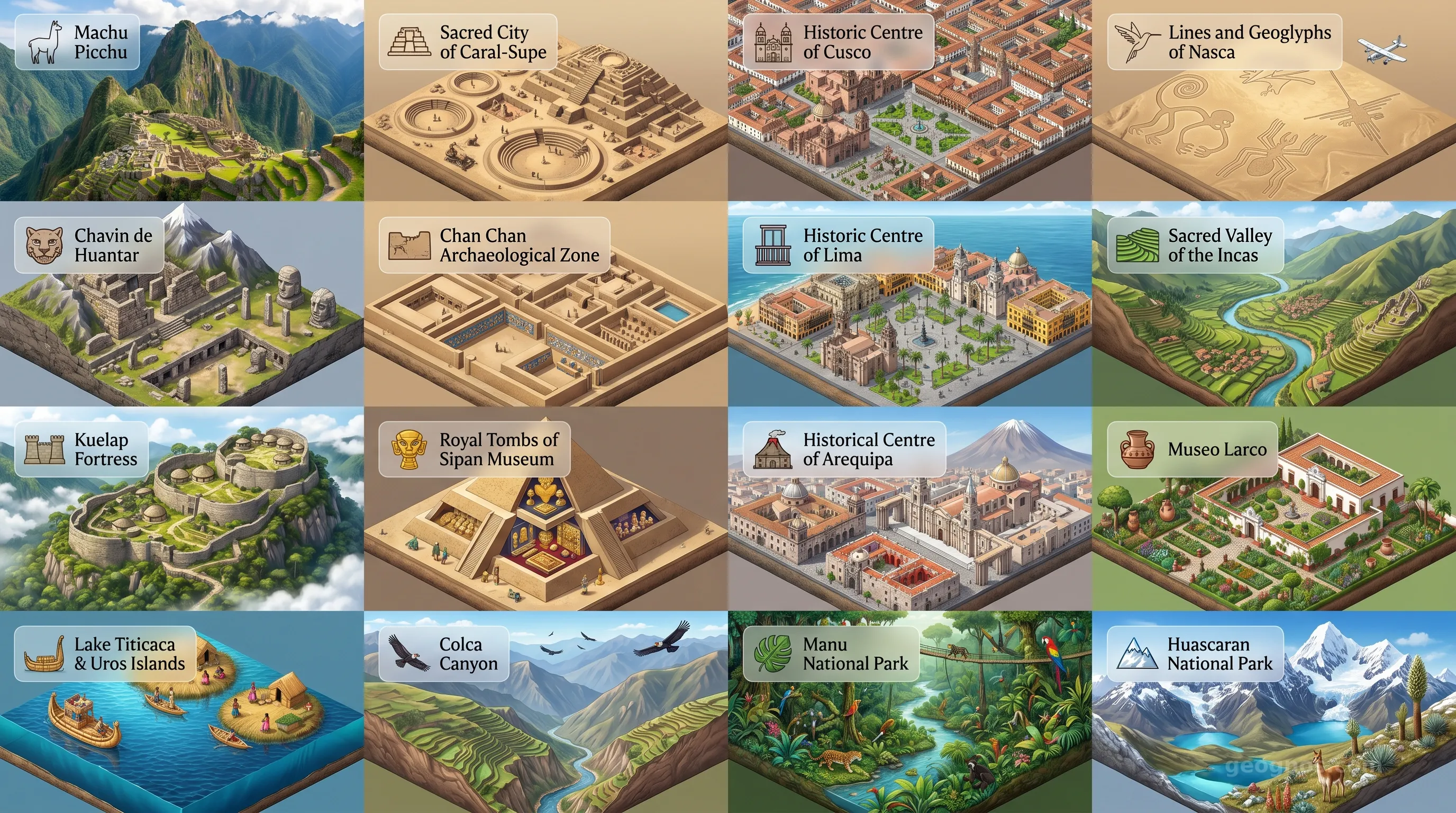
Peru offers a rare sensory density that few other nations can claim. You might stand in the morning at the edge of a cloud forest, surrounded by orchids and the ghosts of forgotten settlements, and by afternoon, wander the bustling, cosmopolitan plazas of Lima. This proximity of the prehistoric to the present is why visual exploration is essential to understanding the Peruvian landscape. To witness the splendor of these archaeological marvels and natural wonders from your screen, we suggest you engage with our curated cinematic showcase of Peruvian points of interest, which captures the majesty of sites ranging from the high-altitude citadel of Machu Picchu to the ancient carvings of Chavín de Huántar.
Furthermore, the stories of these landmarks are inextricably linked to the people who preserved them. If you wish to immerse yourself in the emotional resonance of the nation's past, our comprehensive history cinematic showcase brings the chronicles of the Incan expansion, the Spanish arrival, and the struggle for autonomy to life through a rich blend of traditional iconography and contemporary historical research.
The Synthesis of Heritage
Peru is essentially a laboratory of cultural hybridization. Its population—a tapestry of indigenous Andean, Amazonian, European, African, and Asian influences—reflects centuries of movement, trade, and exchange. This diversity manifests in the country's profound gastronomy, its music, and its enduring agricultural traditions, such as the thousands of varieties of potatoes that were first domesticated in these very mountains. This is a land where the modern student can learn as much from a street-side market as they can from a university archive.
As you progress through this digital atlas, consider the resilience required to thrive in such varied terrain. From the high-altitude farmers who manage irrigation canals that have functioned for centuries, to the urban visionaries rebuilding the infrastructure of a globalized economy, Peru remains a vibrant synthesis. It is a nation that honors its past not as a relic, but as an active, living force that dictates the rhythm of the future. Whether you are trekking the Inca Trail or studying the constitutional structure of the state, remember that in Peru, the earth does not just hold the history; it creates it.