The Pulsing Heart of the Kalahari
To stand upon the soil of Botswana is to experience a rare geological and biological paradox. It is a nation that defines itself not by what it possesses in abundance, such as vast coastal plains or jagged mountain ranges, but by the mysterious, rhythmic cycles of water that transform one of the world's harshest deserts into a thriving sanctuary of life. Often perceived from afar as a dry expanse of sand, the true soul of Botswana resides in the fluid transition between the thirst of the Kalahari and the miracle of the Okavango Delta. This is a landscape that demands adaptation, and in doing so, it has forged a national identity rooted in patience, stewardship, and a profound respect for the rhythms of the natural world.
Unlike many of its neighbors, Botswana’s modern narrative is defined by its ability to preserve its ancestral heritage while navigating the complexities of the twenty-first century. It is a land of wide horizons where the silence of the bush is rarely broken by anything other than the call of a fish eagle or the distant rustle of elephant herds. For those who seek to understand the trajectory of this nation, it is vital to explore the comprehensive history of Botswana, a tale of resilience that charts the path from traditional agro-pastoral communities to the stable, diamond-resourced democracy we recognize today.
A Crucible of Time and Terrain
Geography is destiny in Botswana. Occupying the center of the Southern African plateau, the country is almost entirely landlocked, yet it holds one of the most sophisticated hydrological puzzles on the planet. The Okavango River, refusing to reach the ocean, instead spills its contents into the sands of the northern basin, creating an inland delta that breathes life into the region. This geography has not only determined the migratory patterns of its wildlife but has also dictated the cultural history of its people.
The progression of time in this region is as fascinating as its shifting sands. Whether you are a student mapping out the evolution of a state or a curious traveler hoping to anchor your knowledge, we invite you to challenge your mind with our interactive history puzzle. By arranging the defining moments of the Batswana people, you will gain a deeper understanding of how political unity and traditional governance systems emerged to protect this unique enclave. For a more immersive experience, you may prefer to view our curated history cinematic showcase, where the visual retelling of major events brings the resilience of the nation to life through detailed artistic renderings.
The Ethics of Stewardship
What sets Botswana apart on the global stage is its commitment to high-value, low-impact tourism. It is a philosophy that views the landscape not merely as a resource to be exploited, but as an heirloom to be guarded. By prioritizing conservation, Botswana has ensured that vast tracts of land remain pristine, allowing the megafauna that have roamed these plains for millennia to continue their cycle without interruption. This dedication to environmental integrity serves as an academic case study for sustainable development, illustrating how a nation can effectively harmonize economic growth with ecological preservation.
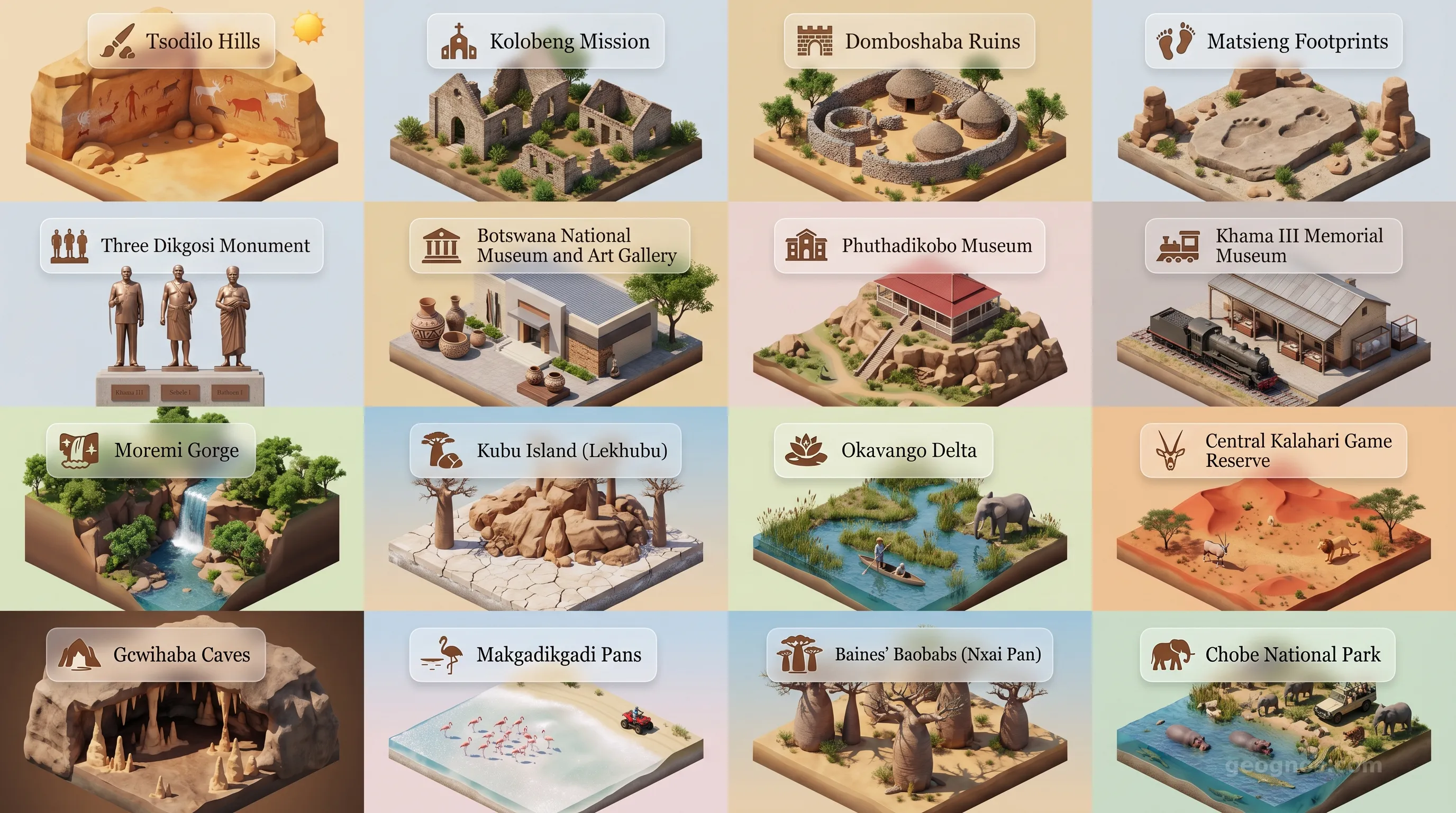
The beauty of this landscape is not restricted to the shifting waters of the north. From the haunting landscapes of the Makgadikgadi Salt Pans to the ancient stone formations of the Tswapong Hills, there is a diversity here that defies the typical expectations of an arid environment. We encourage you to explore the stunning POI cinematic showcase, which captures the distinct aesthetic and geographical character of Botswana’s most iconic locations.
The Spirit of "Botho"
Underpinning the governance, society, and daily interactions of the people of Botswana is the concept of "Botho." It is a cultural imperative that emphasizes mutual respect, self-discipline, and compassion. It is the belief that a person is only a person through other people. This communal ethos has acted as a stabilizing force, allowing the country to maintain a remarkable degree of social cohesion. As we observe the nation's political structure and its pragmatic approach to international relations, we see these traditional values woven into the modern fabric of a democratic, peaceful state.
As you delve into the remaining sections of this site, you will uncover the quantitative details of the nation: its demographics, its robust economic metrics centered on mineral wealth and tourism, and the vital communications infrastructure that bridges the vast distances between its settlements. Whether you are conducting research for a geography thesis, preparing for a journey into the wild heart of the Delta, or teaching a lesson on Southern African stability, you will find that Botswana offers a compelling blueprint for how to thrive in the face of environmental challenge while honoring the foundational values of the past.
We invite you to immerse yourself in this digital atlas. Every map, every demographic table, and every historical vignette provided here serves to illuminate the extraordinary journey of this diamond-studded land. Welcome to the study of a nation that remains, quite literally, one of the most grounded places on Earth.