The Heart of the Golden Peninsula
To enter Laos is to step away from the relentless pulse of the modern world and into a rhythm dictated by the steady, amber flow of the Mekong River. As the only landlocked nation in Southeast Asia, Laos has often been described as the crossroads of the region, yet it is far more than a mere passage. It is a sanctuary of mist-veiled limestone karsts, dense tropical canopies, and a deeply entrenched spirituality that binds its diverse ethnic groups to the land. In Laos, geography is not just a backdrop. It is the architect of a culture defined by patience, reflection, and an unhurried grace that travelers find impossible to leave behind.
The soul of the country is inseparable from the river that bisects it. For centuries, the Mekong has acted as the lifeblood of Lao civilization, facilitating trade, nurturing rice paddies, and providing a meditative boundary against the shifting tides of larger neighbors. While the borders of the modern state are fixed by colonial legacy and geographic boundaries, the interior remains a world of deep green forests and steep highlands where traditions are held with a tenacity found nowhere else in the peninsula.
A Tapestry Woven Through Time
Understanding the narrative of this nation requires more than a casual glance at a map. The Lao people possess a resilience forged through dynastic shifts, foreign oversight, and the quiet preservation of their Buddhist heritage. To appreciate how this unique identity formed, one must explore the comprehensive history of Laos, which charts the evolution from the ancient kingdom of Lan Xang, the Land of a Million Elephants, to the vibrant society of the present day.
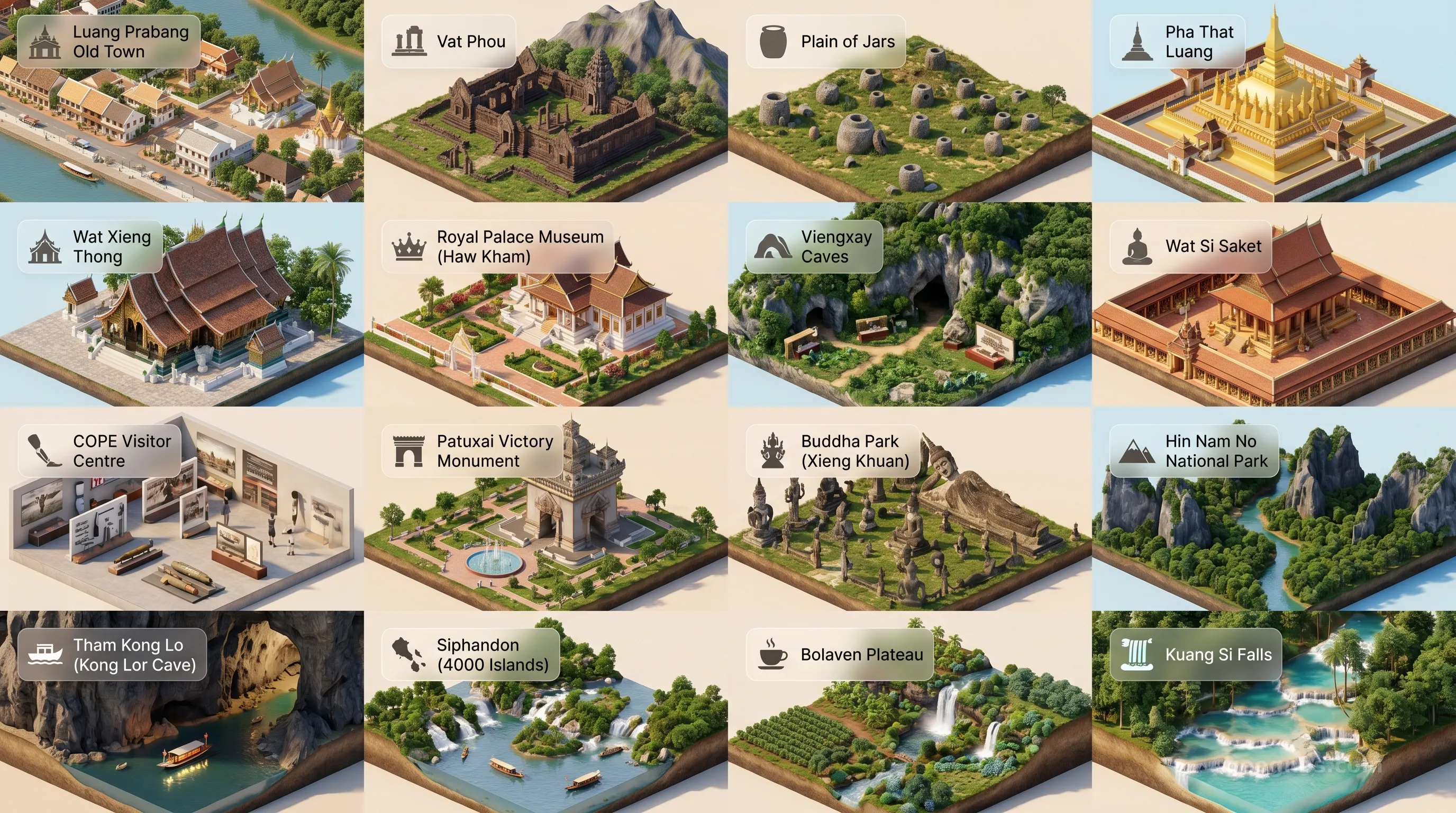
History here is not merely a record of dates, but a living tradition mirrored in the architecture of Luang Prabang and the silent mystery of the Plain of Jars. For students and history enthusiasts looking to sharpen their understanding of these pivotal moments, our interactive history chronology puzzle offers a dynamic way to master the sequence of these defining events. It serves as an essential companion for anyone seeking to engage deeply with the legacy of the Lao people.
If you find yourself captured by the sheer weight of these events, you may wish to immerse yourself in our history cinematic showcase, a collection of digital illustrations and narratives that bring the tales of kings, scholars, and colonial transitions into sharp, vivid relief. Each entry is curated to provide the context required for K12 learners and scholars alike, ensuring that the legacy of this nation is seen through the eyes of those who shaped it.
The Geographical Sanctuary
The terrain of Laos is dominated by a rugged, verticality that separates it from the flat plains of neighboring Thailand or the bustling coastlines of Vietnam. The Annamite Range, forming a jagged spine along the eastern border, protects the country’s inner valleys and fosters a microclimate of temperate highlands and humid, lush riverbanks. This environment has shielded many indigenous customs from external homogenization, allowing the Lao, Hmong, and Khmu communities to maintain distinct linguistic and cultural traditions.
This geographic isolation is precisely what makes the country a treasure for modern discovery. The lack of access to the open sea forced the Lao to develop a culture defined by inland connectivity, turning toward the mountains and the river rather than outward toward distant shores. The result is an atmosphere that invites contemplation. It is an invitation to witness, firsthand, how a nation defines its sovereignty through the preservation of natural beauty and human kindness.
Witnessing the Living Landscape
Travel in Laos is not a checklist of destinations but an immersion in landscapes. From the turquoise cascades of Kuang Si to the silent caves of Viengxay, the country offers visual beauty that feels suspended in time. We encourage all who plan to experience this nation to browse our points of interest cinematic showcase. This visual journey captures the majesty of the landscapes and the architectural wonders that define the Lao aesthetic, providing a detailed guide for prospective travelers and geography students.
The country represents a fascinating paradox. It is a nation of intense natural stillness, yet it is currently modernizing, integrating into regional economies through high-speed rail and improved connectivity. This bridge between the ancestral and the contemporary is where the future of Laos lies. By balancing its duty to preserve its serene interior with the demands of an interconnected world, Laos stands as a testament to the idea that true progress does not necessitate the abandonment of one's cultural core.
As you move through this site to explore the specialized sections regarding its economy, demographics, and environmental governance, keep in mind the singular spirit of this country. It is a place that rewards curiosity with warmth, and one that requires a gentle, respectful hand to truly uncover. Whether you are a student tracing the Mekong on a map or a traveler preparing to touch its waters, the story of Laos remains one of the world's most evocative narratives of geography and human resilience.