The Serene Fortress: San Marino’s Ascent to Liberty
High above the shimmering plains of Emilia-Romagna, carved into the jagged limestone spurs of Monte Titano, lies the Most Serene Republic of San Marino. It is a place that defies the conventional metrics of global power, standing not by the strength of vast armies or expansive borders, but by the immovable force of its own tenacity. To enter San Marino is to step into a living archive of medieval autonomy, where the mist clinging to the sheer cliffs of the Apennine Mountains seems to hold the ghosts of those who carved a sanctuary of freedom out of rock and resolve. It is a nation that remains small in geography but immense in the history of human sovereignty.
The soul of San Marino is inseparable from the gray crags of its namesake mountain. The geography here is not merely a background; it is the architect of the state. Because the mountaintop offered natural fortifications that proved nearly impossible to besiege, a small community of stonecutters and pilgrims could sustain an independent way of life for over 1,700 years. This mountain sanctuary allowed the Sammarinese to negotiate with popes, Napoleon, and Italian unifiers, always preserving a sliver of land that serves as the world’s oldest surviving constitutional republic.
A Legacy Etched in Stone and Spirit
The story of San Marino is a testament to the idea that liberty is a craft, maintained through careful stewardship rather than inherited through conquest. The nation's identity is anchored in the legendary arrival of Saint Marinus, a mason fleeing persecution in the 4th century, who climbed the mountain to seek spiritual refuge. This act of founding through migration and peace, rather than war, provides a profound foundation for its national character. To fully grasp how this singular enclave maintained its independence through centuries of European turbulence, one should delve deeper into the comprehensive history essay of San Marino, which examines the strategic marriages, alliances, and the sheer grit that defined its survival.
History here is not just something read in textbooks, but a tangible presence. The fortifications that crown the Three Towers—Guaita, Cesta, and Montale—serve as the iconic skyline of the republic. Each tower represents a different epoch of watchfulness and defensive ingenuity. For those who wish to experience the narrative progression of these eras in an immersive format, our history cinematic showcase provides a breathtaking visual journey through the pivotal moments that solidified the republic's enduring status.
Learning the Rhythm of Resilience
Teaching the history of a microstate offers a unique pedagogical opportunity to explore the concepts of diplomatic neutrality and civic persistence. San Marino serves as a prime case study for students interested in how geopolitical stability can be fostered through regional cooperation. If you are preparing to teach this lesson or studying it for personal enrichment, engaging with our interactive history puzzle is an excellent way to synthesize the timeline of events. By arranging these milestones in their correct sequence, learners gain a clearer appreciation for the deliberate choices the Sammarinese made to maintain their identity as an independent political entity amidst the swirling tides of larger Italian history.
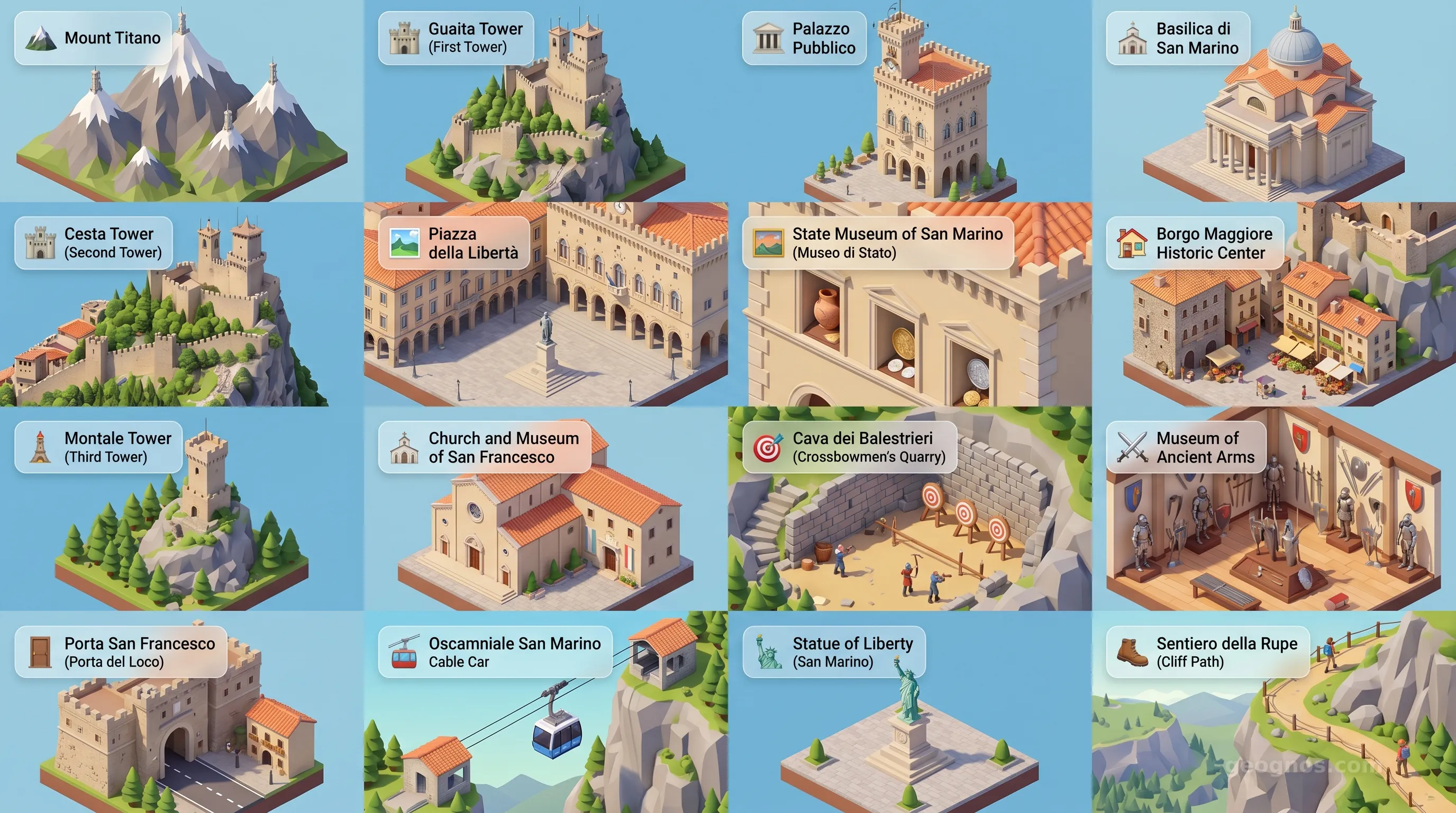
Beyond the historic fortifications, the land of San Marino offers a tranquil beauty that has beckoned travelers for generations. The journey through the winding streets of the City of San Marino reveals hidden squares, terracotta rooftops, and sweeping panoramas that look out over the sun-drenched Italian peninsula. To prepare for a journey to this mountain haven or to witness its beauty from afar, be sure to explore our curated points of interest cinematic showcase. This visual guide maps the most iconic landmarks, from the grand Palazzo Pubblico to the serene landscapes hidden along the mountain trails.
The Architecture of the "Most Serene"
What defines the "soul" of San Marino is the balance between tradition and adaptation. It is a country that embraces its antiquity while functioning within a modern, hyper-connected European landscape. The title "Most Serene," traditionally held by a few republics in history, is more than a formality here. It reflects a societal dedication to internal harmony, where the political structure is governed by two Captains Regent who hold office for only six months, a safeguard intended to prevent the accumulation of power and ensure that the government remains a servant to the public interest. This cycle of rotation ensures that every generation is involved in the act of governing, keeping the spirit of their ancient statutes alive in a contemporary context.
The economy of the state, once reliant on stone and agricultural output, has evolved into a sophisticated blend of tourism, banking, and high-value manufacturing. Despite this modern progression, the national landscape remains fiercely protected. Strict environmental codes ensure that Monte Titano remains an oasis, shielding it from the sprawling development that might compromise its vertical character. It is this refusal to sacrifice landscape for excess that keeps the San Marino of the 21st century aligned with the humble masonry and monastic simplicity of its early roots. As we explore the facets of this country, we see a nation that invites visitors to look upward, to ponder the value of endurance, and to recognize that even the smallest sovereign spark can ignite a beacon of liberty for the rest of the world.
In the following sections, we will map out the precise mechanics of this state, from its administrative regions known as "Castelli" to its commitment to ecological preservation and sustainable economic practices. Each detail is a stitch in the tapestry of a nation that, in its defiance of the ordinary, remains one of the most remarkable human achievements on the map of Europe.