The Sentinel of the Carpathians
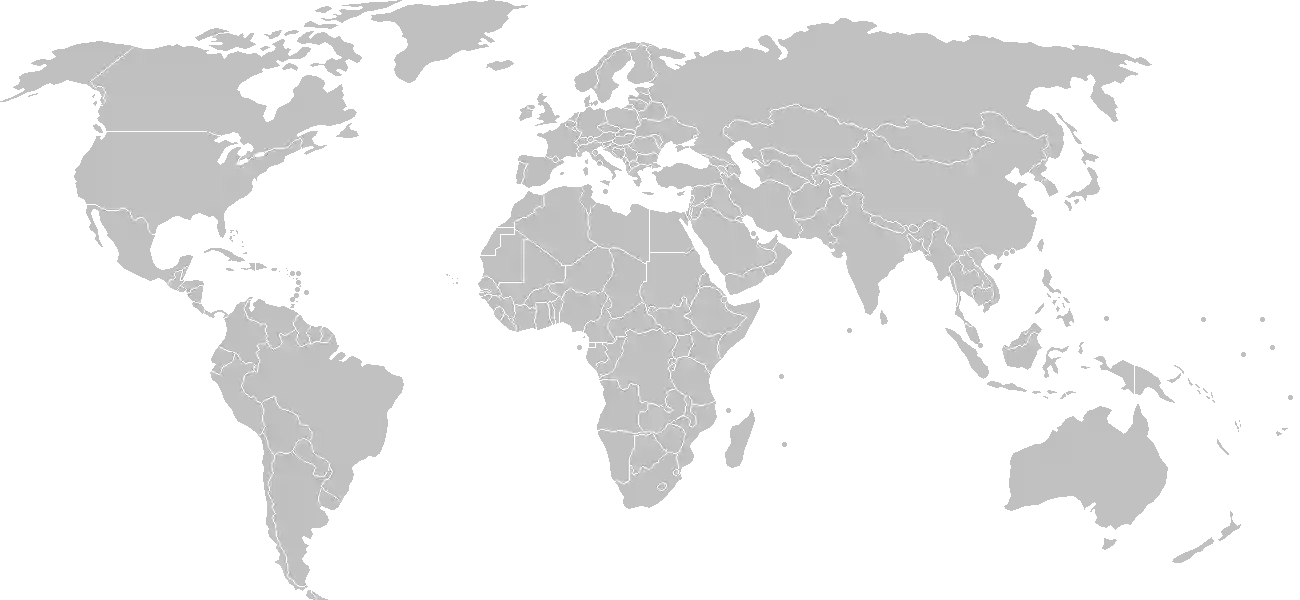
To stand upon the spine of the Carpathian Mountains is to look upon a land where time functions not as a straight line, but as a dense, overlapping forest of myth, grit, and endurance. Romania sits at the intersection of European tides, a Latin-speaking island in a sea of Slavic and Uralic cultures. Its geographical identity is defined by this rugged, jagged mountain arc that snakes through the center of the territory, acting as both a defensive fortress and a bridge between the high plains of the Hungarian Pannonian Basin and the vast, wind-swept expanses of the Black Sea coast. Here, the landscape dictates the story of its people: resilient, adaptable, and deeply tethered to the rhythmic cycles of the earth.
For those looking to understand how this unique topography forged a distinct national identity, we invite you to explore the history of Romania. Through this journey, you will discover a narrative of survival, spanning the Roman occupation that gave the nation its name, through the medieval struggle of the voivodes, to its modern democratic resurgence. It is a chronicle of a people who have thrived in the shadow of empires by holding fast to their distinct language and enduring traditions.
A Crossroads of Empires and Ideas
Romania’s soul is undeniably European, yet it wears the ornamentation of the East. Its architecture whispers of Byzantine influence in the painted monasteries of Bucovina, while the Germanic spires of Transylvanian fortified churches recall the medieval colonists who once secured these borders. This cultural complexity is not merely an accumulation of influences, but a transformation. The Romanians took the tools and religions of their neighbors and infused them with their own Latinate sensibility.
To truly grasp the rapid evolution of this region, you might challenge yourself with the interactive history puzzle. By arranging the defining moments of Romanian history in the correct order, you gain more than just a badge; you gain a chronological intuition of how the nation rose to become a sovereign power in Southeast Europe. Every event, from the unification of the principalities to the industrial age, is a puzzle piece that builds the vibrant mosaic of the Romania we see today.
Visualizing the Grandeur of the Balkans
If the written word maps the history, the image captures the spirit. Romania possesses a landscape of profound contrast, shifting from the dense, primeval forests of the Carpathians, home to the largest brown bear population in Europe, to the shimmering biodiversity of the Danube Delta. The delta is a sprawling kingdom of reeds and water channels, a sanctuary for millions of migratory birds that bridges the inland river systems to the open salt water of the Black Sea.
We encourage you to witness the sweeping vistas and intricate stone carvings of this nation through our history cinematic showcase. These curated illustrations bring to life the transformative moments that carved the borders of the nation. For the traveler or the educator, seeing the transition from archaic fortresses to the elegant, art-nouveau facades of Bucharest offers a visceral connection to the past that text alone cannot replicate.
The Living Heritage
Modern Romania is a country in dialogue with its ancient self. While it embraces the digital era, with its high-speed fiber-optic networks and vibrant tech scene, it does so without shedding the deep-seated customs that define its villages. In Maramureș, the timbered churches still stand as monuments to master woodcraft, and the cycle of the seasons dictates a lifestyle that is fundamentally connected to the earth. The rhythm of the landscape is a constant companion for its population of nearly 20 million.
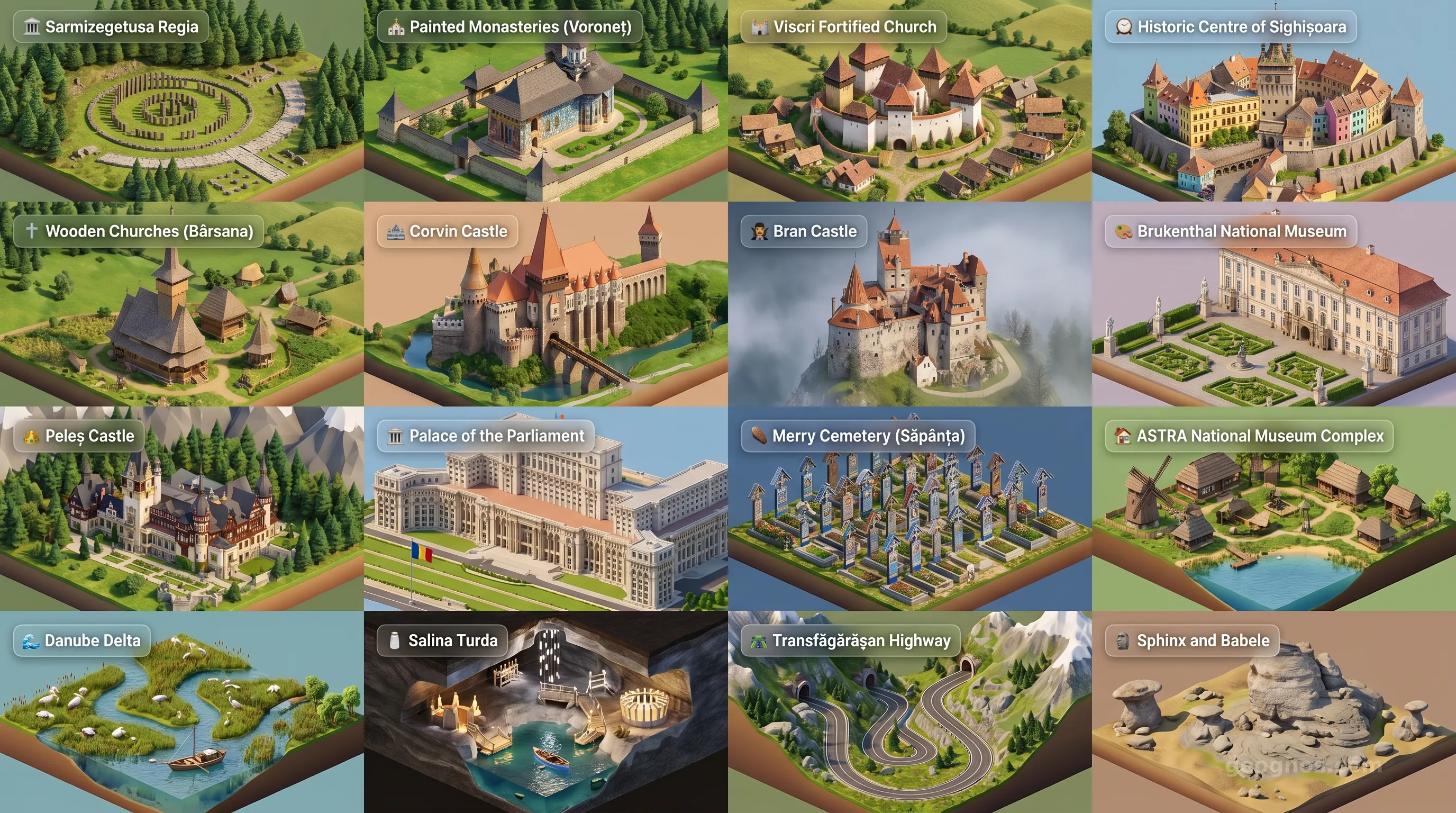
To prepare for your own exploration or your next lecture on this diverse nation, immerse yourself in our POI cinematic showcase. Here, you will be transported from the mysterious ruins of Sarmizegetusa Regia, the ancient capital of the Dacians, to the modern urban charm of Brașov and Cluj-Napoca. Through these digital lenses, the physical terrain and man-made structures merge, painting a vivid picture of a country that remains a hidden gem for the discerning wanderer.
The Geographical Promise
At the heart of the GeoGnos mission is the belief that geography is the foundation of all human endeavor. Romania is a quintessential example of this truth. The river Danube serves as a living artery for trade and agriculture, while the natural barricade of the Carpathian range provided the necessary isolation for a distinct language to flourish against the pressure of global homogeny. As you navigate the resources within this atlas, we hope you see Romania not as a static coordinate, but as a living, breathing landscape where the geology, the climate, and the people have locked arms to create something entirely and beautifully unique.
Whether you are researching the geopolitical nuances of Eastern Europe, seeking to understand the legacy of the Latin influence, or simply dreaming of hiking the craggy trails of the Făgăraș Mountains, you are engaging with one of the most culturally and environmentally rich corridors of the modern world. Welcome to the portal of Romania.