The Teardrop of the Indian Ocean: An Introduction to Sri Lanka
Often poetically described as the teardrop falling from the Indian subcontinent, Sri Lanka is a destination that defies simple categorization. It is a world where geography functions as destiny, a compact island that encompasses the immense biodiversity of a continent. From the misty, verdant peaks of the central highlands to the sun-drenched, palm-fringed coastlines of the Indian Ocean, Sri Lanka is not merely a place one visits. It is a sensory experience, a historical archive written in stone and script, and a spiritual beacon that has served as a crossroads for travelers, monks, and merchants for millennia.
The island’s location has dictated its rhythm for eons. Positioned at the heart of the maritime Silk Road, Sri Lanka was the essential mid-point for vessels traveling between the East and the West. This strategic centrality fostered a melting pot of cultures, resulting in a society that is rich, syncretic, and remarkably resilient. To understand this nation is to engage with layers of humanity, where ancient hydraulic engineering meets colonial architectural vestiges and modern, vibrant city life.
A Chronicle Written in Stone
To grasp the depth of this civilization, one must look toward its past. The chronicles of Sri Lanka are some of the oldest in the world, documenting a narrative of kingdoms that mastered the art of water management in a tropical climate. This complex saga is laid out for those who wish to explore the history of Sri Lanka, a journey that unveils how these early societies built monumental stupas and expansive reservoirs that remain wonders of architectural endurance to this day.
The storytelling here is as important as the facts themselves. The resilience of the Sri Lankan spirit is woven into a narrative of profound transformation and cultural continuity. For those who find joy in learning through engagement, you can test your knowledge and hone your sense of time by completing the interactive historical chronology puzzle, where you arrange key national milestones to unlock new insights into the island's rise as a jewel of the Indian Ocean.
Landscapes of Contrast and Clarity
The physical geography of Sri Lanka provides a dramatic backdrop for its historical developments. The central highlands, with their rolling tea estates and cloud forests, stand in stark contrast to the vast, dry plains of the north and the jagged, reef-heavy southern coast. It is a landscape that encourages exploration, inviting the curious to move beyond the well-trodden paths of major hubs. The sheer variety of ecosystems in such a contained area makes it a living classroom for environmental science, geology, and biology students alike.
Witnessing these diverse zones through a wider lens reveals why the country remains one of the most biodiverse regions in South Asia. You can experience the visual grandeur of these diverse topographies by viewing the historical event cinematic showcase, which illustrates the profound interplay between the terrain and the people who have called this island home across the centuries. It provides an evocative overview of how events, both natural and man-made, have etched themselves into the geography of the land.
The Living Tapestry: Art, Spirit, and Society
Beyond the peaks and the ruins, the true identity of Sri Lanka resides in its people and their enduring traditions. Festivals explode with light, color, and rhythmic drumming, celebrating a blend of heritage that draws from Buddhist, Hindu, Muslim, and Christian influences. It is a nation of immense hospitality, where a simple conversation over a cup of Ceylon tea can reveal generations of wisdom.
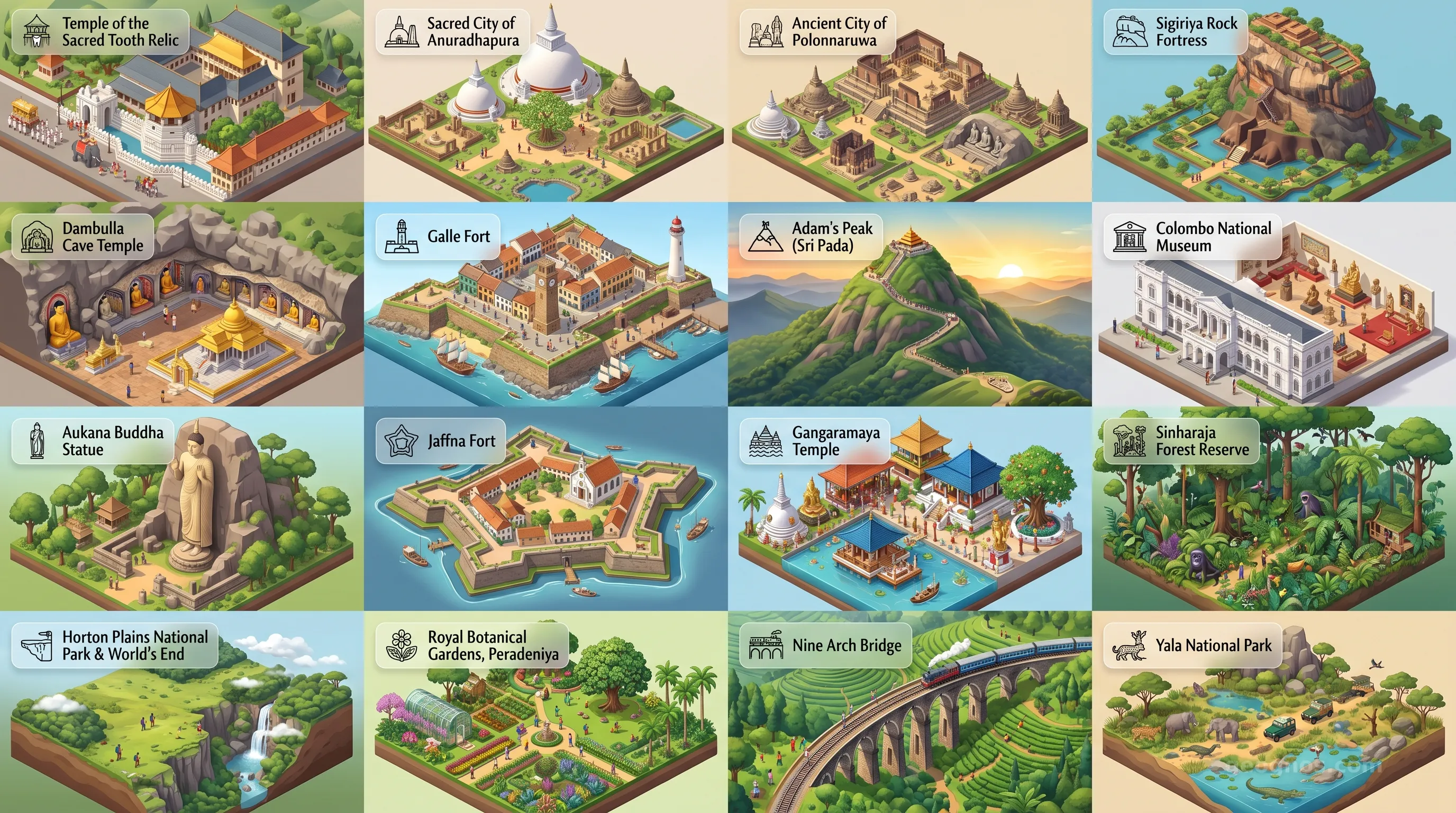
For the traveler, the scholar, or the student, the island offers an endless array of landmarks that narrate this cultural richness. From the rock fortress of Sigiriya to the sacred temples of Kandy, the points of interest are as diverse as the country's wildlife. We invite you to experience the breathtaking beauty of these sites through our curated points of interest cinematic tour, which brings the island's most iconic landscapes and structures into focus, highlighting their significance in the global cultural dialogue.
Why Sri Lanka Matters in the Modern Era
As we navigate the complexities of the twenty-first century, Sri Lanka stands as a unique case study in transition and growth. It is a nation that honors its past while leaning eagerly into the future. Whether it is through sustainable eco-tourism, the advancement of its education system, or its vital role in regional trade, the island is finding new ways to assert its influence on the global stage. Education remains the heartbeat of the national development agenda, ensuring that the younger generation is equipped to preserve their history while innovating for a modern, globalized world.
For visitors and scholars, Sri Lanka offers more than just beauty; it offers perspective. It is a reminder of the fragility of the natural world and the immense capacity of human society to adapt. Whether you are mapping out an academic research project or simply planning your next grand journey to understand the cultural pillars of South Asia, the story of Sri Lanka is one that rewards every ounce of attention it is given. Join us as we further dissect the systems, the land, and the people that make this nation a truly essential chapter in the world atlas.