The Land of the Eagle: Unveiling Albania's Soul
In the rugged corner of the Balkan Peninsula, where the crystal-clear currents of the Adriatic and Ionian seas lap against limestone cliffs, lies a nation that has spent centuries perfecting the art of endurance. Albania is more than a geographic waypoint between the Mediterranean and the mountains. It is a mosaic of contrasts, where ancient Illyrian roots entwine with Ottoman whispers and a resilient spirit of modern optimism. To step onto Albanian soil is to witness a living laboratory of human adaptation, a place where history is not merely read in books but etched into the jagged peaks of the Accursed Mountains and the sun-drenched cobblestones of Gjirokastër.
The geography of this nation acts as both a fortress and a bridge. Shielded by a spine of towering peaks that once kept invading empires at arm's length, the country protected the unique traditions, language, and social codes that define the Albanian identity today. Visitors often find that the true magic of the country resides in this intersection of geography and heritage, where the "Besa"—a sacred code of honor and hospitality—governs the daily interactions of the people. To truly understand how these mountain barriers and fertile coastal plains shaped a nation, you must explore the history of Albania through our detailed academic overview.
Chronicles of a Resilient Identity
The Albanian narrative is one of remarkable continuity amidst dramatic change. Long before the nation emerged on modern maps, these lands were the cradle of the Illyrians, whose culture predates the Roman expansion. This deep timeline, filled with shifts of power, architectural marvels, and cultural syntheses, can be a complex puzzle to navigate. For students and history enthusiasts looking to test their knowledge, we invite you to arrange major historical events in chronological order to receive badges. Mastering this chronology reveals a society that has consistently emerged from the shadows of imperial transitions with its cultural heartbeat intact.
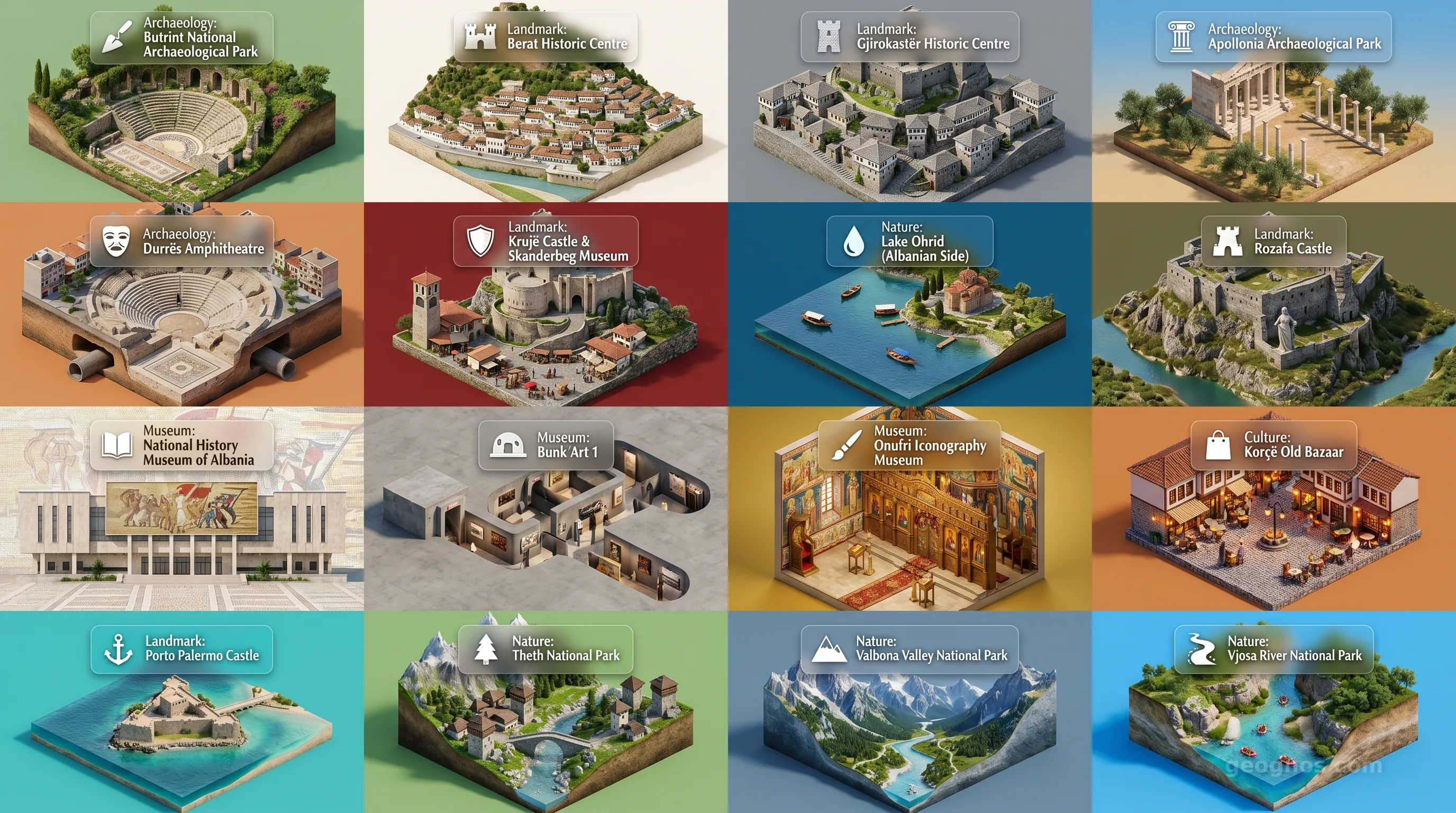
Beyond the classroom, history becomes a visceral experience. Throughout the land, the scars and triumphs of centuries are preserved in sites that span from the amphitheater of Durrës to the silent, ghostly remains of mountain citadels. By viewing our cinematic showcase of top historical events, you can witness the visual evolution of this society as if flipping through the pages of a grand, sweeping manuscript. These digital renditions provide the context necessary to appreciate why Albania remains one of the most culturally enigmatic nations in all of Europe.
From Sun-Drenched Shores to Granite Heights
The beauty of Albania lies in its topographical diversity. One day, you might find yourself exploring the ruins of Butrint, where the air is scented with Mediterranean pine and salt. The next, you might be traversing the Ceraunian Mountains, where the terrain shifts toward something far more alpine and formidable. This land was shaped by the slow grinding of tectonic plates and the relentless patience of glacial rivers. The Result is a landscape that encourages exploration at every turn.
For those preparing for their first visit or looking to map out a journey through the country, our curated cinematic showcase of Points of Interest offers a visual pilgrimage through the best the nation has to offer. Whether it is the sapphire hues of the Blue Eye spring, the white-walled historical quarters of Berat, or the remote northern villages tucked away in the clouds, the imagery speaks to a land that is only just beginning to reveal its full splendor to the wider world.
A Nation in the Midst of a Renaissance
Albania is currently experiencing a quiet renaissance. There is an infectious energy in its urban centers, particularly in Tirana, where colorful architecture and a vibrant café culture suggest a forward-looking society deeply proud of its past. The country serves as a reminder that history is never static. It is a dialogue between the terrain and the people, and here, the dialogue is vibrant, multilingual, and profoundly welcoming. By balancing the preservation of traditional pastoral life with an evolving economic landscape, Albania offers a case study in how a small nation can maintain a distinct soul in an increasingly globalized world.
As we examine the geography, the legislative frameworks of its government, and the rhythmic beat of its growing economy, keep in mind that the numbers only tell half the story. The rest is found in the smiles of the local shopkeepers, the intricate patterns of traditional Albanian textiles, and the enduring strength of a people who have named their land Shqipëria, the Land of the Eagle. Whether you are a scholar researching the intricacies of the Balkans or a traveler seeking a landscape untouched by the mass tourism that has claimed so much of the Mediterranean, Albania offers a perspective that is as deep as its canyons and as clear as its coastal tides.