The Black Mountain: Where the Adriatic Kisses the Clouds
There is a singular alchemy at work in Montenegro. It is found in the jarring, breathtaking proximity of the jagged limestone peaks to the crystalline stillness of the Adriatic Sea. To stand upon the slopes of Lovćen is to understand why this land has been christened the Black Mountain. From the dark, brooding slopes, the landscape cascades toward a turquoise horizon, creating a geographical paradox that defies the standard definition of a coastal nation. Montenegro is a place where time slows, where the stone chronicles centuries of defiance, and where the natural world asserts its dominance over the modern pace of life.
For the traveler, the historian, or the student, Montenegro acts as a gateway to the soul of the Balkans. It is not merely a country, but an open-air archive where Mediterranean grace meets Balkan resilience. Understanding how these dramatic mountains forged a singular cultural identity is the first step in our journey, and for those who wish to dig deeper into the foundations of this defiant spirit, we invite you to explore the rich and storied history of Montenegro, where we map the events that shaped this sovereign Balkan nation.
A Crossroads of Empires and Ideas
Montenegro has never been a land of easy passage. Its labyrinthine canyons and towering ranges served as a natural fortification, protecting those who sought refuge from the tides of imperial expansion that defined much of Southeastern Europe. While empires like Rome, Byzantium, Venice, and the Ottomans vied for control of the Mediterranean, the Montenegrin people cultivated a life carved directly into the karst. This struggle for sovereignty is not just found in textbooks; it is embedded in the architecture of the fortified towns and the songs passed down through generations.
To truly grasp the timeline of these epoch-defining struggles, one must visualize the shifting borders and the rise of noble houses that stood against the odds. We encourage students to challenge their own comprehension of these events through our interactive history puzzle, which tasks you with chronologically ordering the major milestones of the Montenegrin narrative. Mastering this timeline provides a roadmap for understanding the sophisticated interplay of alliances and local pride that characterize the nation today.
Visualizing the Montenegrin Spirit
The beauty of Montenegro is sensory, visual, and immense. From the medieval maze of Kotor’s walled city to the surreal glassiness of the Tara River Canyon, the nation presents a tapestry of sights that seem painted by an old master. There is a weight of history in the stone of every church tower and a sense of infinite peace in the depths of Lake Skadar. This aesthetic diversity is what draws the curious traveler to our shores, and the best way to witness this geographic majesty before visiting is through our comprehensive history cinematic showcase, which utilizes detailed illustrations to bring the most pivotal moments of the Montenegrin past to life in a dynamic, narrative-driven format.
From High Peaks to Azure Depths
The geography of Montenegro is a vertical journey. In a relatively small area, the terrain shifts from alpine meadows covered in snow-dusted forests to sun-drenched coves that rival any coastline in Europe. The mountains act as a dramatic backdrop to the daily lives of Montenegrins, serving as both protectors and providers. The interplay between the highlands, the deep valleys, and the coastal settlements has historically dictated everything from economic trade routes to local culinary traditions.
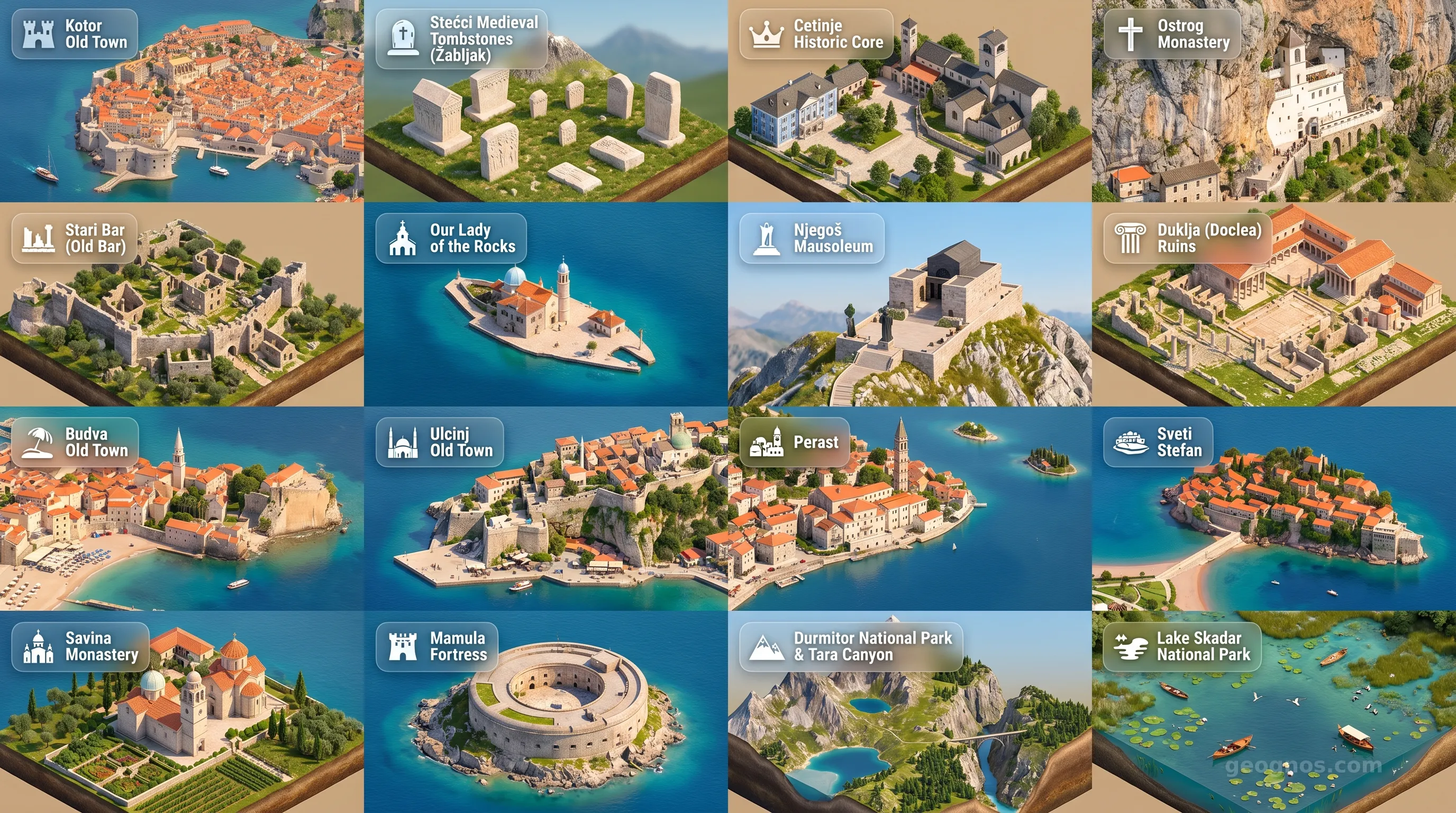
Whether you are captivated by the historic limestone battlements of the inland fortresses or the pristine shores of the Bay of Kotor, the scale of this landscape is best understood through a visual inventory. We invite all users to navigate our curated point of interest cinematic showcase, an expansive carousel gallery that brings the most significant landmarks of Montenegro into your classroom or home. This showcase offers a glimpse into the natural and man-made wonders that make Montenegro a focal point of European heritage, illustrating how the nation manages the balance between preservation and the modern world.
A Living Legacy
What makes Montenegro truly remarkable is the intimacy of the experience it offers. Despite its turbulent history, it has emerged as a tranquil bastion of culture. It is a nation that asks you to look up at the mountain and then out at the sea, and in doing so, reflect on the resilience of the human spirit. The education of a visitor in Montenegro is never complete, for there is always a hidden monastery to find or a new perspective to be gained from a mountain pass. As a hub for intellectual growth and exploration, our site aims to provide the foundational tools to navigate this complexity, turning every trip or study session into a profound journey of discovery.