The Heart of the Continent: Unveiling the Soul of the Central African Republic
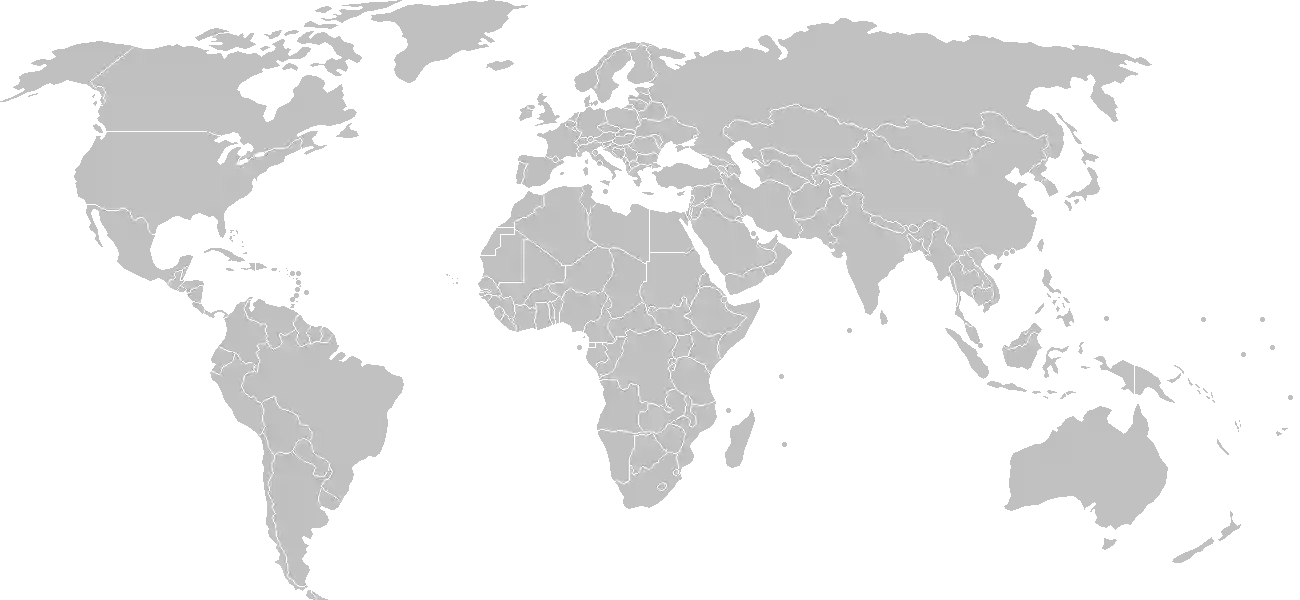
To look at a map of Africa is to observe a vast continent stretching from the Mediterranean to the Cape, yet if you gaze precisely into the center of this great landmass, you find a nation that serves as the literal and symbolic pivot point of the African experience. The Central African Republic is a land of profound geographic symmetry, situated exactly where the dry, golden expanses of the Sahel transition into the emerald, dense mysteries of the Congo Basin. It is a country defined by its terrestrial solitude, a nation landlocked and nestled in the bosom of the continent, holding the keys to ancient trade routes and ecological frontiers that have shaped the flow of civilization for millennia.
For the traveler, the scholar, and the curious student, the Central African Republic offers an invitation to see the world from a vantage point rarely occupied. It is a place where the rhythmic pulsing of the Oubangui and Sangha rivers provides the steady heartbeat for millions, a land where humanity's earliest transitions from nomadic life to settled societies took root among the fertile savannas and woodland galleries. This is not merely a geographic location. It is a repository of deep cultural memory, where the traditions of the Sangho and Gbaya peoples intertwine with a history that spans the majesty of ancient empires and the transformative currents of the modern age. To understand this nation, one must first look at how the rhythm of its rivers and the canopy of its forests have sculpted a unique identity in the heart of Africa.
A Tapestry Woven by Time
The history of the Central African Republic is a narrative of resilience, innovation, and interconnectedness. It is a saga of how various ethnic groups adapted to the shifting climate of Central Africa, establishing social structures that prioritize community, kinship, and stewardship of the land. As you prepare to dive deeper into these narratives, you might choose to explore the comprehensive history of Central African Republic, where each chapter unveils how indigenous governance and regional trade shaped the modern boundaries and cultural vibrancy we witness today.
For those who wish to test their understanding of this epic timeline, we invite you to engage with our interactive history puzzle. By arranging the defining moments of the nation’s growth in chronological order, learners of all ages can gain a mastery over the events that built the state. It is an immersive way to internalize the complex lineage of a nation that sits at the crossroads of Northern and Southern African influences.
If you prefer a more sensory immersion into the legacy of the nation, the history cinematic showcase provides a breathtaking visual journey. Through carefully curated illustrations and concise historical summaries, this digital carousel brings to life the legendary figures, the societal shifts, and the grand milestones that define the Central African Republic's heritage. Each frame is a bridge back to a formative era, designed to help educators and students visualize the unfolding story of the heart of Africa.
The Ecological Frontier and Geographic Majesty
Beyond the corridors of history lies a physical landscape of incomparable beauty. The geography of the Central African Republic is characterized by its dramatic transitions. In the north, the terrain begins to rise toward the rocky plateaus, a rugged frontier that leads into the fringes of the Sahara. In the south and southwest, the world shifts dramatically into one of the most critical ecological zones on the planet: the dense, biodiverse rainforests of the Congo Basin. These forests serve as the lungs of the continent, harboring species found nowhere else on earth and protecting ecosystems that have stood as silent sentinels for ages.
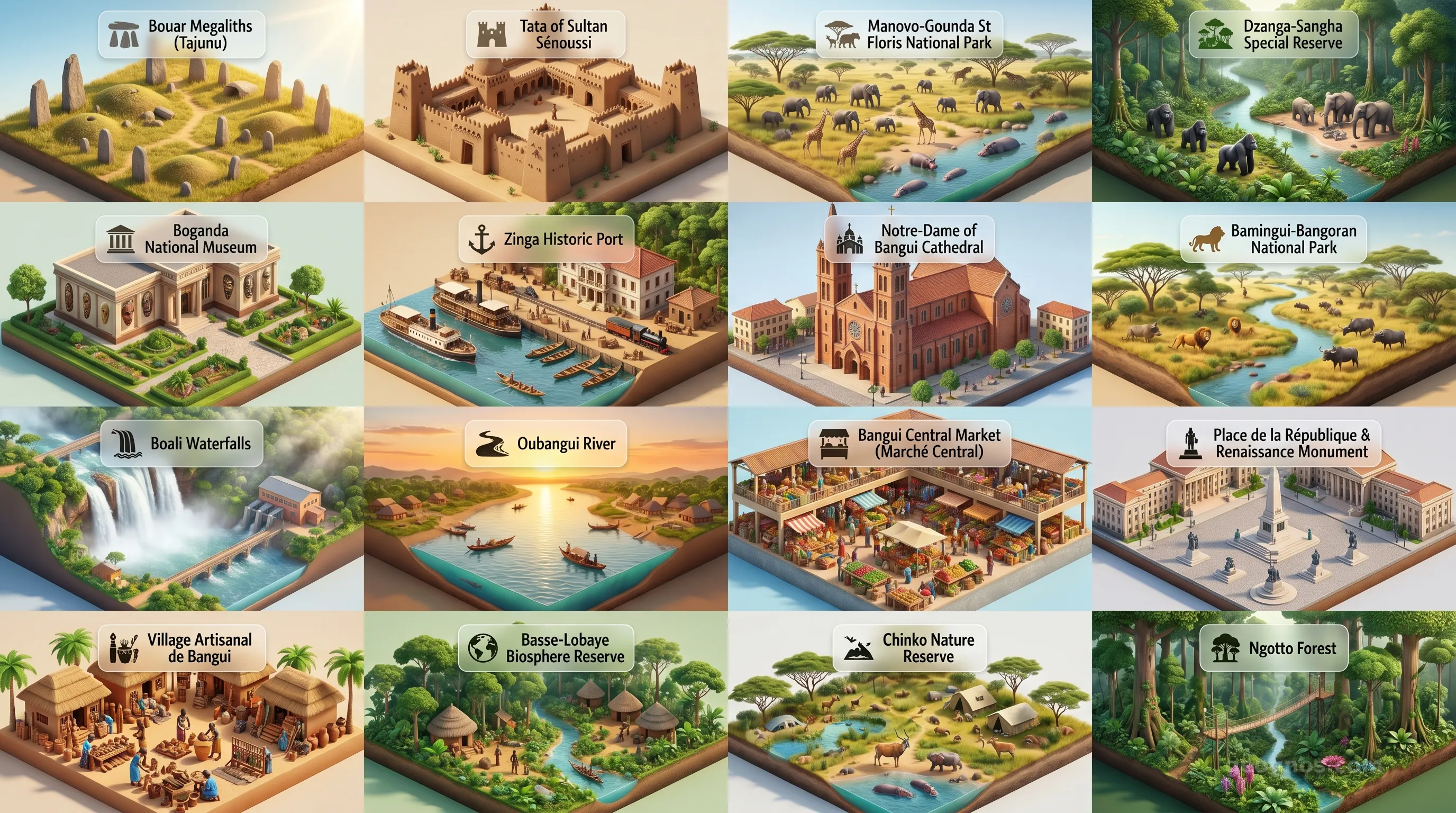
The waterways serve as the nation's primary arteries. The Oubangui River, winding its way through the lush landscape, has historically acted as a life-giving vein for commerce and transport. The diversity of the Central African Republic is best expressed in its varied topography, where cascading waterfalls break the quiet of the jungle and endless savanna horizons invite the eye to roam across millions of acres of unspoiled wild. To appreciate the splendor of these natural treasures, visitors and students are encouraged to browse our POI cinematic showcase. This visual tour highlights the iconic landscapes, from the mystical forest sanctuaries where lowland gorillas find refuge to the bustling spirit of the capital, Bangui, resting gracefully along the riverbanks.
A Crossroads of Culture and Humanity
The true essence of the Central African Republic is found in its people. With a demographic mosaic that includes the Sangho, Gbaya, Banda, and M'Baka, among many others, the country is a vibrant testament to social cohesion. The nation’s linguistic diversity, anchored by the widespread use of the Sango language, illustrates a culture that prioritizes dialogue and communication across diverse ethnic lines. This linguistic harmony acts as a unifying thread, allowing the traditions of forest-dwelling hunters, river-based traders, and savanna agriculturalists to find common ground.
In the academic sense, the Central African Republic stands as a living laboratory for the study of anthropology, geography, and sustainable development. Whether examining the unique resilience of rural farming communities or the innovative approaches to regional trade, the nation offers endless insights into how geography dictates human behavior. Education serves as the primary tool for navigating this complex story. By integrating the study of the Central African Republic into your curricula, you are choosing to focus on a vital piece of the global puzzle. As we document the vast geography and historical depths of this nation, we invite you to use GeoGnos as your definitive guide to uncovering the richness of the heart of Africa, a place that is as much a part of the world’s future as it is a pillar of its ancient past.
We believe that understanding the Central African Republic requires looking beyond the superficial and embracing the totality of its natural beauty, its historical courage, and its cultural depth. As we continue to update this page with the latest data, maps, and insights, we welcome you to join our community of learners in celebrating the unique soul of this magnificent nation.