The Great River and the Sands of Time
To stand upon the banks of the Nile in Sudan is to witness the pulse of the ancient world. Here, the river does not merely flow; it narrates. As it winds through the heart of the Sahara, the White Nile and the Blue Nile converge at Khartoum in a majestic embrace, forming the lifeblood of a nation that has served as an eternal crossroads between the Mediterranean world, sub-Saharan Africa, and the Red Sea. Sudan is a land of vast, cinematic horizons, where the relentless amber of the desert meets the verdant, life-giving ribbon of the river, creating a landscape that is both harsh in its beauty and incredibly resilient in its character.
For the traveler or the scholar, Sudan is not simply a location on a map but a palimpsest of civilizations. To truly appreciate the gravity of this geography, one must look deeper into the stories written in the stones and the river silt. You can explore the comprehensive history of Sudan to understand how the successive empires, from the kingdom of Kush to the medieval Christian kingdoms, carved their legacies into this landscape, forever intertwining the human spirit with the arid, formidable topography of North Africa.
The Architectural Echoes of Kush
While the pyramids of Egypt are world-renowned, the pyramids of Sudan stand as silent, enigmatic guardians of a different history. In Meroë, hundreds of steeper, narrower pyramids rise out of the dunes, marking the burial sites of the Kushite monarchs. These structures are the defining symbols of a culture that commanded vast trade networks and commanded the respect of neighbors across the continent. They serve as a testament to an independent power that thrived under the African sun for over a thousand years.
Engaging with this past requires more than reading dates. To truly internalize the sequence of power and innovation that blossomed here, you may want to challenge yourself with our interactive history puzzle. It is a rewarding way to see the timeline of human endeavor in the region, where every correctly placed piece grants you a deeper understanding of the milestones that forged the national identity.
A Journey Through Visual Memory
The geography of Sudan has always encouraged a culture of storytelling. From the oral traditions passed down through generations to the architectural ingenuity found in the remote outposts of the desert, Sudan is visually profound. If you wish to witness these tales firsthand, we invite you to view our history cinematic showcase. Through a curated collection of illustrations and summaries, this interactive experience brings the rise and fall of historical eras to life, allowing the viewer to grasp the scale and grandeur of events that transformed the regional landscape across millennia.
The Human Tapestry and the Rhythm of the Land
Sudan is a country defined by the warmth of its people and their incredible capacity for hospitality. The cultural richness here is vast, reflected in the blend of languages, music, and social customs that thrive along the Nile corridors and within the vibrant city markets. The geography acts as a theater for this interaction, with the river towns bustling with trade and the nomadic traditions of the north offering a different, quieter perspective on the cycle of life. It is a nation where the architecture of the natural world, from the rugged mountains in the east to the expansive plains, has cultivated a society deeply attuned to the cycles of the environment.
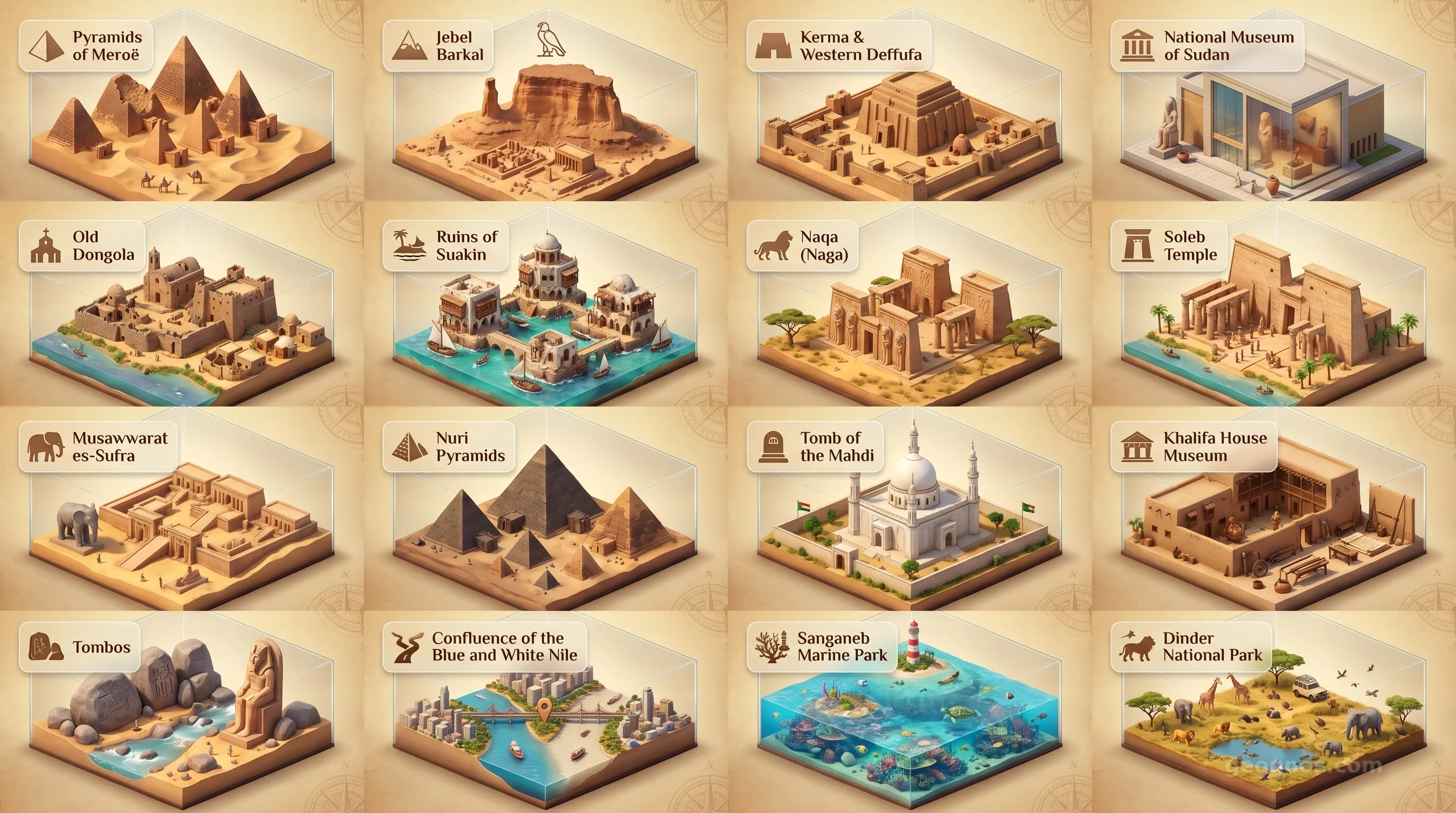
To understand the breadth of what this country has to offer, one must move beyond the capital and look toward the horizons. By examining our points of interest cinematic showcase, you will discover the remarkable variety that awaits the visitor, from the turquoise waters of the Red Sea coast to the archaeological majesty of the ancient sites dotting the desert landscape. These sites are not merely tourist destinations, but anchors of identity that connect modern Sudanese people to their ancestors.
Living in the Heart of the Nile
The contemporary Sudanese identity is a reflection of this deep, historical resilience. Life is framed by the river, which remains the central pivot point for the nation's economy and social organization. Throughout the country, the fusion of tradition and aspiration defines the experience of every student, laborer, and visionary. Education here is held in high esteem, as the youth look toward both the historical wisdom of their past and the emerging opportunities in technology and sustainable development.
As we explore the facets of this remarkable country—from its intricate geography and robust economy to its unique environmental diversity—we encourage you to see Sudan as a vital center of gravity. It is a land that requires patience to understand, and in return, offers a perspective on history and humanity that is unmatched anywhere else on the globe. Whether through the study of its ancient ruins, its evolving urban hubs, or the enduring lifestyle along the Nile, Sudan stands as a proud, multifaceted testament to the potential of human civilization to thrive within the most challenging and magnificent of landscapes.