The Crucible of Tectonic Poetry
In the quiet, shimmering expanse of the Horn of Africa, where the earth physically peels away to reveal its fiery core, lies the Republic of Djibouti. To understand Djibouti is to understand the raw, unscripted ambition of geology. This is not merely a nation but a rift, a place where three of the planet’s great tectonic plates are pulling apart to birth a new ocean. It is here that the concept of the "crossroads" finds its most visceral expression. Djibouti is the bridge between the arid, windswept highlands of Ethiopia and the ancient, seafaring corridors of the Red Sea and the Gulf of Aden.
The landscape is a theater of extreme aesthetics. One moment, you are traversing lunar-like salt pans that bleach the horizon in blinding white; the next, you are standing atop obsidian crags, peering into steam-venting calderas. It is a land defined by scarcity of rain but an abundance of soul, where the pastoral traditions of the Afar and Issa peoples harmonize with the frantic, modern rhythm of one of the world's most critical maritime gateways. For those who seek to understand how the foundational chapters of a civilization are written in shifting sand and cooling basalt, we invite you to explore the comprehensive history of Djibouti, where the narratives of early trade empires and nomadic resilience are meticulously chronicled.
A Nexus of Ancient Trade and Modern Currents
Djibouti’s significance in the global story has always been dictated by its shoreline. Since antiquity, these waters have served as the silent conduits for frankincense, gold, and spice. The nation occupies a singular geopolitical position, functioning as a vital window to the sea for the vast, landlocked Ethiopian interior. This functional reality has shaped the nation's culture into a mosaic of influences. Whether it is the rhythmic chanting of oral histories that carry the memories of generations or the sensory-rich marketplace interactions that blend Arabic, Somali, and Afar tongues, Djibouti breathes through its exchange with the world.
Understanding this chronology—from the legendary lands of Punt to the bustling container ports of the twenty-first century—is a challenge of both intellect and intuition. We encourage students and history enthusiasts to test their grasp of the region's development. You can engage with our interactive history puzzle, a curated chronology challenge designed to test your knowledge and award recognition as you align the defining moments of this nation's path through time.
The Architecture of a Scorched Paradise
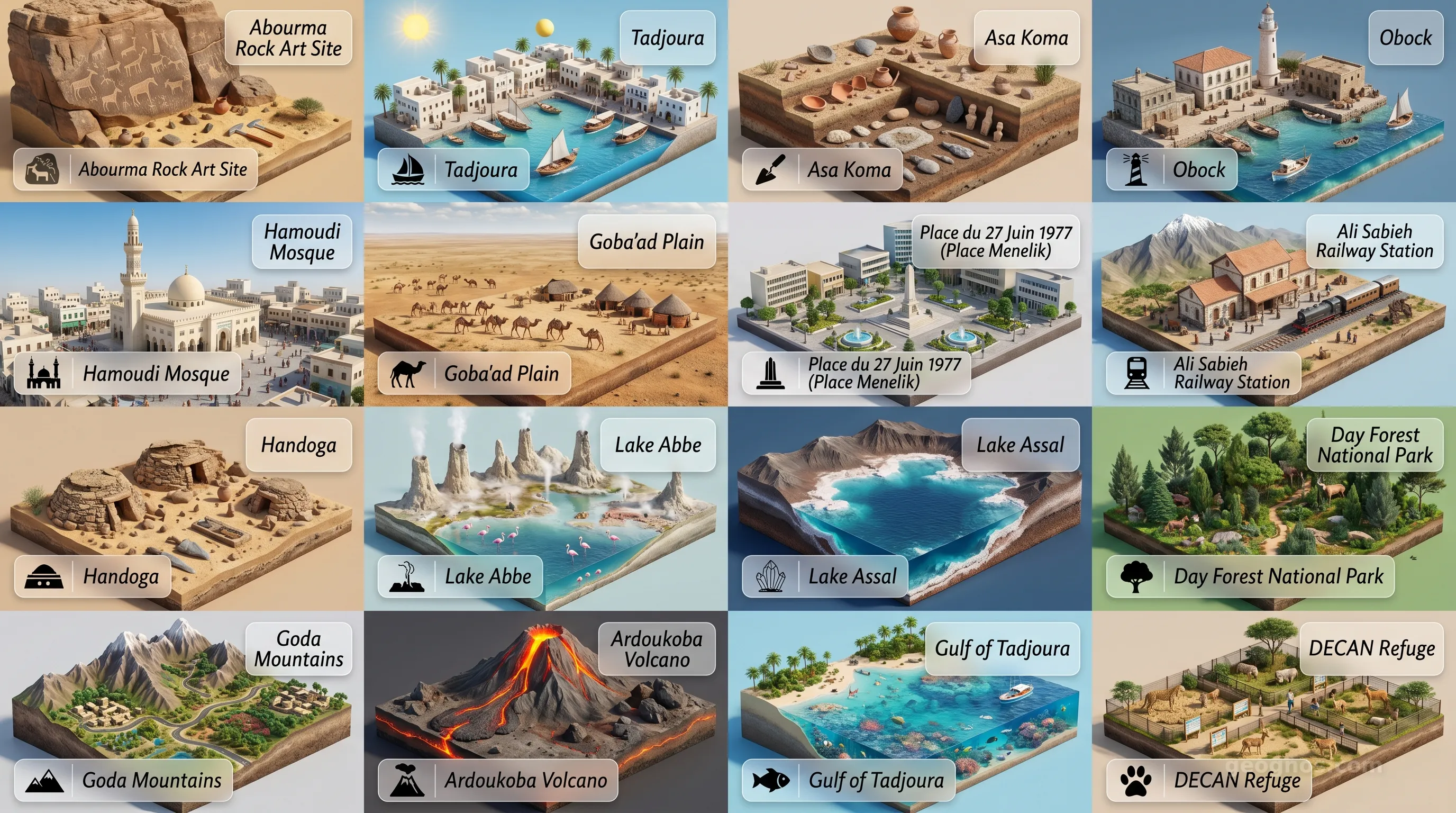
The beauty of Djibouti is unapologetically rugged. It is an environment that commands respect. Within the borders of this nation, the horizon is dominated by the volcanic towers of Ardoukôba and the serene, mineral-rich surface of Lake Assal, which lies at the lowest point on the African continent. The visual majesty of this country cannot be fully conveyed through words alone, for its essence is caught in the play of light over salt-crusted landscapes and the vibrant textiles of its bustling capital city.
To witness the aesthetic progression of Djibouti’s historical narrative, including the pivotal diplomatic encounters and natural shifts that have defined its legacy, please visit our history cinematic showcase. Here, a series of curated illustrations and syntheses animate the timeline of this resilient crossroads, bringing to life the people and events that have forged the nation’s distinct identity.
Encounters at the Edge of the World
For the traveler, the teacher, and the lifelong learner, Djibouti offers an education in resilience. It is a place that reminds us how closely our human activities are tied to the earth beneath our feet. From the nomadic camps of the north to the vibrant, cosmopolitan life of Djibouti City, the nation is an invitation to witness the earth in motion. As you prepare to dive deeper into the geographical and sociological data of the country, remember that every rock and every sea-breeze here has a story of transformation attached to it.
If you are planning an educational expedition or simply seeking the visual inspiration to understand what makes this landscape so magnetic, you should browse our POI cinematic showcase. This visual journey traverses the breathtaking geological wonders, architectural landmarks, and coastal sanctuaries that make Djibouti a highlight of the African continent. Here, the raw power of the rift valley meets the elegance of human persistence.
As you move forward to examine the specifics of Djibouti’s geography, its demographic make-up, and its strategic place in the modern global economy, let the context of the tectonic shift—this constant, slow-motion movement—serve as your lens. It is the fundamental reality of the region, driving both the harsh conditions that demand ingenuity and the proximity that has made this territory a beacon for international commerce and cultural dialogue for centuries.