The Mozambique Paradox: Where the Swahili Coast Embraces the African Hinterland
Mozambique is a landscape defined by its dialogue with the Indian Ocean. Stretching over 2,400 kilometers along the southeastern coast of Africa, it exists as a nation that has been sculpted by maritime currents, monsoon winds, and the deep, rhythmic pulse of the African interior. It is not merely a country but a sensory experience where the turquoise clarity of the Bazaruto Archipelago meets the rugged, high-plateau majesty of the Great Rift Valley. To understand Mozambique is to understand the interplay between the world of the Swahili traders who historically sailed these waters and the resilient, vibrant cultures that have thrived along the banks of the Zambezi River for millennia.
The soul of Mozambique is anchored in its geography, a vast territory that defies simple categorization. It is a land of wide river plains, dense miombo woodlands, and coastline fringes that seem to shimmer with the heritage of explorers, merchant princes, and empires. While many travelers know it for its sun-drenched beaches and marine life, the intellectual traveler finds a richer tapestry in the synthesis of Bantu, Arab, Indian, and Portuguese influences that compose its contemporary identity. Whether you are a student of cultural shifts or a visitor mapping the horizon, to begin your journey, one must explore the history of Mozambique to comprehend the layers of tradition and transition that have culminated in this proud nation.
A Chronology Written in Stone and Sea
The historical trajectory of Mozambique is an intricate map of global movement. From the ancient sites of Great Zimbabwe influence that extend into its western provinces, to the sprawling trading posts established during the golden age of the dhow trade, every epoch has left a fingerprint. The rise and fall of coastal settlements like Ilha de Moçambique were not just commercial events but conduits for language, culinary tradition, and art. These transformations were often swift and consequential, altering the demography of the coastline while the deep interior maintained traditional systems of governance and social cohesion.
For the classroom and the curious mind, engaging with this history is far more than an academic exercise. It is a sequence of human ingenuity and struggle that demands careful study. If you feel confident in your grasp of these shifting tides, we invite you to challenge your perception and test your knowledge with our history chronology puzzle, which tasks you with arranging the landmark events that transformed this region from a collection of decentralized states into a unified, sovereign nation. This activity is designed for learners to visualize the timeline of societal development in real-time, rewarding those who can identify the turning points of regional progress.
The Visual Echoes of Heritage
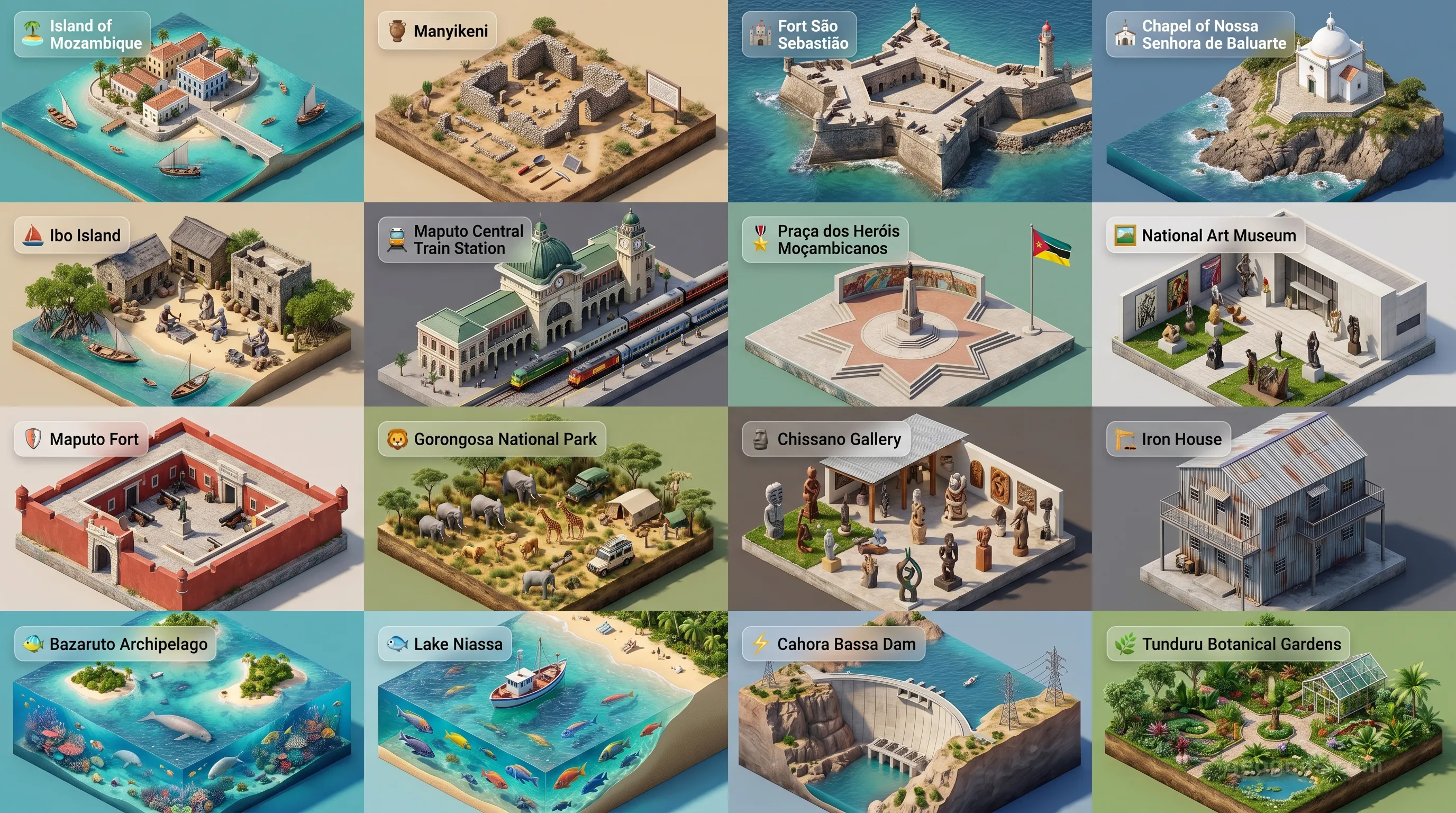
It is difficult to translate the sheer aesthetic power of Mozambique into words alone. The country is a living gallery, from the architectural echoes of Stone Town on the Mozambique Island to the imposing mountain ranges like the Chimanimani. The sensory wealth of this nation—the taste of coconut-infused matapa, the sound of traditional timbila music, and the visual grandeur of the coast—is captured for our global audience in our curated media collections. We have assembled a collection that honors the depth of the nation's past. Through our history cinematic showcase, users can witness a dynamic carousel of illustrations that bring long-past centuries into the digital age, effectively bridging the gap between historical record and modern education.
Beyond the pages of history, the physical beauty of Mozambique acts as a magnet for global curiosity. The biodiversity found in the Gorongosa National Park is a testament to the resilience of nature, serving as a cradle for environmental restoration in the southern hemisphere. Meanwhile, the marine life inhabiting the northern coral reefs creates an underwater theatre of unparalleled color. To see the sheer scope of these treasures, you can browse through our POI cinematic showcase, which offers an immersive view into the geography, culture, and architecture that define the nation today. These visuals serve as the definitive introduction for those planning their first expedition or for students preparing to write their next cultural report.
A Land in Continuous Motion
The spirit of Mozambique is essentially progressive. It is a nation that has harnessed its unique geographical placement—wedged between the thriving economies of Southern Africa and the immense maritime gateways of the Indian Ocean—to look forward toward the 21st century. It is a place where urbanization happens in tandem with environmental conservation, where the challenges of modern infrastructure are met with a population known for its legendary hospitality and capacity for adaptation.
As you traverse our pages dedicated to its modern sectors, you will find that Mozambique is more than the sum of its parts. It is a crossroads of energy and potential. Whether you are examining its expanding energy sector, its logistical significance to its landlocked neighbors, or its burgeoning educational initiatives, the story remains the same: a country standing firmly at the intersection of history and innovation. By utilizing the geographic and political data provided on this platform, scholars and citizens alike can gain a deeper appreciation for the complex mechanisms that keep this diverse nation in constant, vibrant motion.