The Gate of the Kara Kum: Turkmenistan’s Golden Horizon
In the vast expanse of Central Asia, where the shifting sands of the Karakum Desert meet the emerald traces of the Kopet Dag Mountains, lies Turkmenistan. It is a land defined by its extremes: the unrelenting heat of the sun, the freezing nights of the desert, and the resilient grace of the Akhal-Teke horses that gallop across its open plains. To visit or study Turkmenistan is to engage with the silence of ancient empires and the rapid evolution of a modern nation finding its place on the global stage. For centuries, this geography was the central knot of the Silk Road, a conduit for ideas, faith, and commerce that tethered the East to the West.
The essence of the Turkmen soul is perhaps best understood through its relationship with the land. Historically, the Turkmen people were nomads, masters of a harsh, arid environment, living in harmony with the rhythms of seasonal migration. Today, the nation stands as a unique repository of cultural heritage, where tradition and architectural ambition collide. Whether you are a student tracing the footsteps of merchants through Merv or a curious traveler drawn to the mesmerizing landscapes, the depth of this country reveals itself in layers. We invite you to begin your deep dive by immersing yourself in the narrative of the past as you explore the history of Turkmenistan, which offers a comprehensive view of how this desert heart became the cradle of civilization for regional dynasties.
The Desert as a Canvas of Time
The geography of Turkmenistan is not merely a setting, but the primary actor in its story. Over eighty percent of the nation is covered by the Karakum, or "Black Sand," a desert that has historically served as both a barrier to conquerors and a sanctuary for those who knew how to navigate its secret oases. In these hidden spaces, cities like Merv once stood as the "Queen of the World," competing with Baghdad and Cairo in intellectual and artistic sophistication. The weight of this legacy remains present today, casting a long, beautiful shadow over the modern infrastructure of Ashgabat.
For those looking to engage with the timeline of these monumental shifts, we offer a unique way to test your mastery of the region's milestones. By participating in our interactive history puzzle, you can challenge your knowledge of chronological events, arranging the rise and fall of dynasties while unlocking digital badges that signify your commitment to learning about this profound nation.
Whispers of the Past, Visions of the Present
Turkmenistan is a land of sensory contradictions. To walk through the Marble City of Ashgabat is to witness an aesthetic vision defined by clean lines and stark, white materials, while a journey to the borderlands offers vistas of rugged mountain passes and the Caspian coast. Understanding this country requires seeing it through the eyes of its builders and the spirits of those who occupied its dunes thousands of years ago. To aid in your visual journey, we encourage you to access our history cinematic showcase, a carefully curated collection of illustrations and narratives that bring key historical events to life in a way that words alone cannot capture.
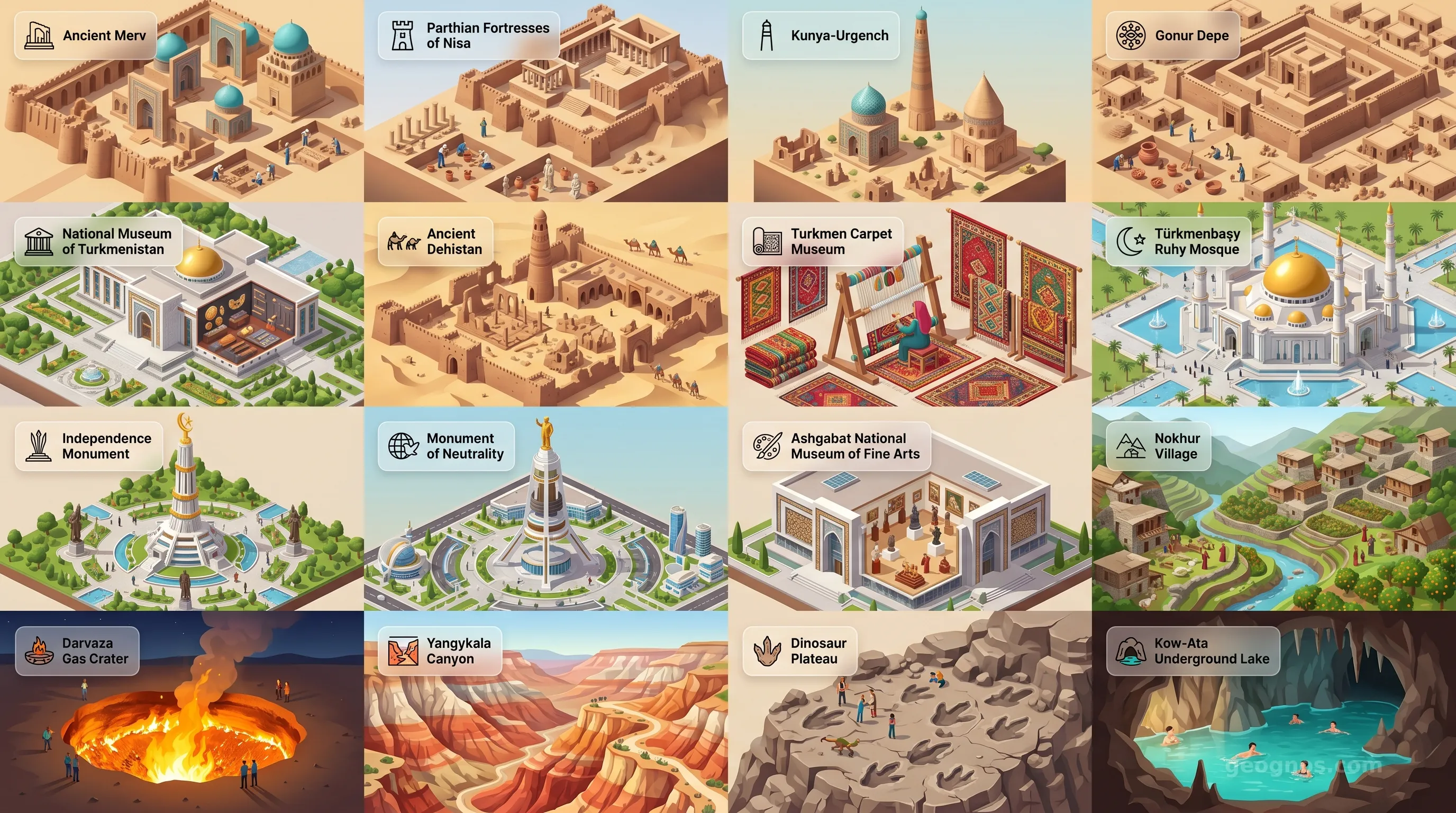
The visual culture of Turkmenistan extends beyond the pages of textbooks and deep into the landscapes that have captured the imagination of poets and explorers alike. From the glowing craters of Darvaza that burn in the night to the ancient terracotta walls of Nisa, the nation’s points of interest are as diverse as its climate. If you are planning an educational or personal excursion, or simply wish to transport yourself to the high plateaus and ancient citadels of the region, our POI cinematic showcase provides a breathtaking window into the architectural and natural wonders that define the geography of the nation.
A Legacy Bound by the Silk Road
The importance of Turkmenistan in the global narrative cannot be overstated. By acting as the bridge between Persia, India, China, and Europe, the region fostered a climate of diplomatic and economic exchange that sustained global trade for centuries. The Turkmen spirit, characterized by endurance, hospitality, and a fierce independence, has been forged in this crucible of cross-continental movement. Today, that legacy lives on in the intricate patterns of their renowned hand-woven carpets and the dedication to craftsmanship that permeates every sector of society.
As we navigate through the subsequent sections of this site, including the detailed geography, demographics, and modern energy landscape, we keep the spirit of discovery at the forefront. Turkmenistan is a country that rewards the curious mind and the observant eye. Its mountains still hold the remnants of caravanserai walls, and its deserts still ripple with the stories of travelers long gone, reminding us that though borders change, the land—and the cultural identity rooted within it—remains an eternal, evolving testimony to human resilience. We hope that the resources provided here serve as a robust foundation for your appreciation of one of Central Asia’s most captivating nations.