The Heart of the High Plateau: Understanding Iran
To speak of Iran is to speak of a landscape that demands resilience and rewards curiosity. Nestled between the Caspian Sea to the north and the Persian Gulf to the south, the nation is defined by its massive central plateau, a soaring expanse of arid plains and jagged mountain ranges that have served as the silent witness to millennia of human ambition. Unlike nations shaped by temperate river valleys, Iran was carved by the challenges of altitude, the scarcity of water, and the necessity of ingenuity. It is here that the concept of the civilization has been refined, debated, and preserved for thousands of years.
For those seeking to understand how this land functioned as the true crossroads of the ancient world, it is essential to delve into the deep roots of the region. We invite you to explore the history of Iran to discover how nomadic tribes evolved into imperial dynasties, shaping the architecture, law, and philosophy of Western Asia. This story is not merely one of kings and conquests, but a vibrant tapestry of artistic achievement and scientific discovery.
An Enduring Architectural Symphony
Walking through the cities of Iran today is akin to stepping through a living gallery. The transition from the stark, wind-swept deserts to the intricate geometric complexity of Persian tilework remains one of the most jarring and beautiful contrasts a traveler can experience. Whether it is the cobalt domes of Isfahan or the wind towers of Yazd designed to harness desert breezes, the architecture tells a story of adaptation. Humanity here did not merely inhabit the landscape; they sculpted it to mirror the heavens.
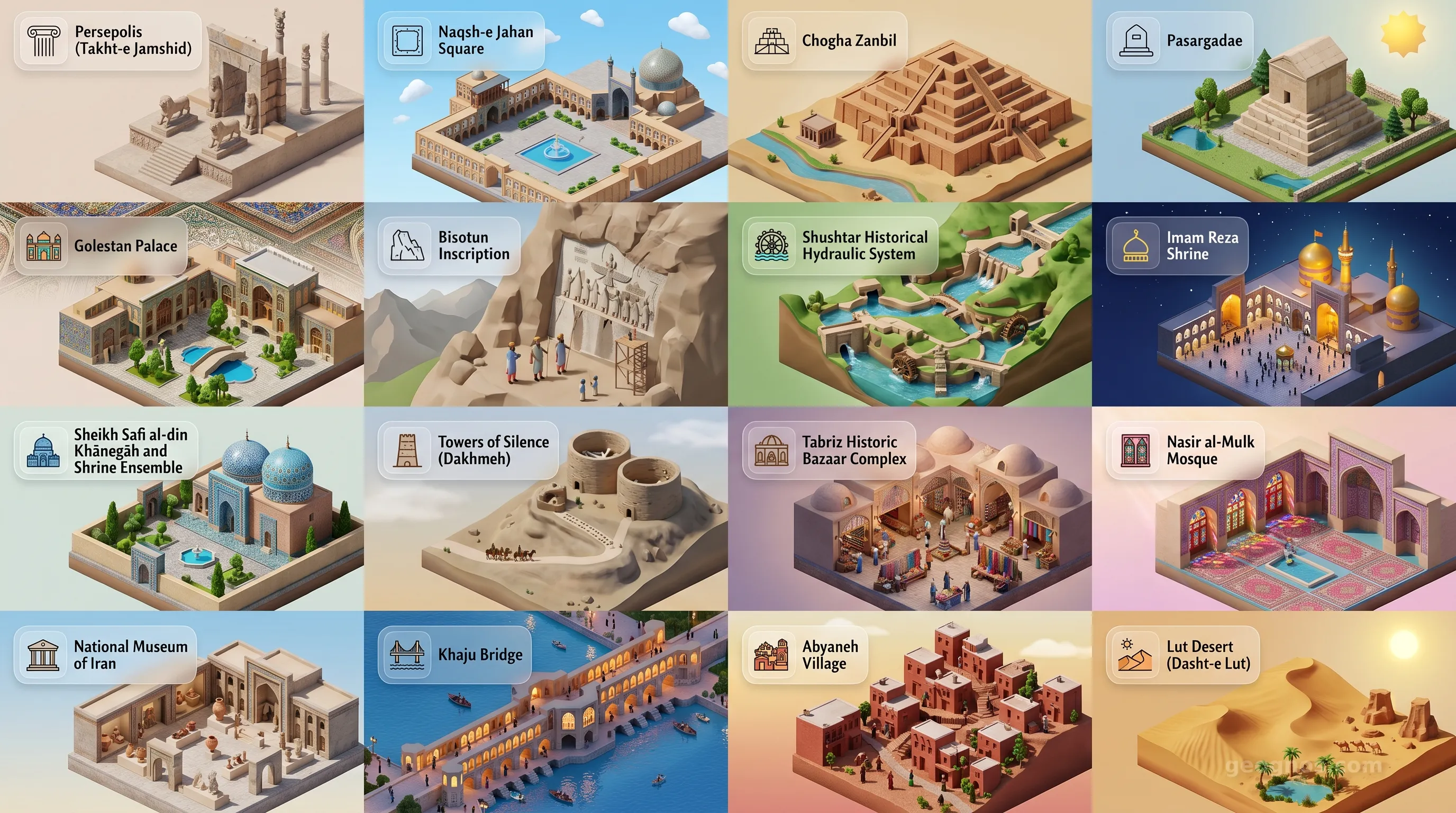
Visualizing these structures provides a necessary context for the scale of Persian cultural influence. You can witness these wonders in our POI Cinematic Showcase, which captures the play of light and shadow across the monumental ruins of Persepolis and the vibrant interior sanctuaries of Shiraz. The visual legacy of Iran is characterized by a commitment to symmetry and harmony, principles that have defined the Persian aesthetic long before the modern era.
The Chronology of a Crossroads
If you consider the timeline of human development, few places offer as complex a narrative as the Iranian Plateau. It served as a bridge between the Hellenistic West, the Indic East, and the nomadic corridors of Central Asia. The constant ebb and flow of peoples through the Zagros and Alborz mountains ensured that Iran was never static. It was a crucible of ideas where the Zoroastrian foundations of ethics, the intellectual expansion of the Islamic Golden Age, and the poetic traditions of Hafez and Rumi intersected to create a singular national identity.
For students and history enthusiasts eager to master the sequence of these transformational periods, we offer a unique learning experience. Use our History Puzzle to challenge your knowledge, where you will arrange major events into their proper chronological order to earn your scholar badges. Understanding the flow of time here helps one appreciate why the Iran of the twenty-first century remains so deeply tethered to its ancient predecessor.
Legacy and the Global Consciousness
The soul of Iran is often found in its contradictions. It is a nation of intense urban sophistication and deep rural simplicity, where the cold, snow-capped peaks of the mountains loom over parched, scorching valleys. Yet, regardless of the terrain, there is a consistent theme of hospitality and intellectual fervor that has survived the turning of centuries. To see the sweep of time is to understand that the country is currently writing its next chapter with the same persistence that once built the Silk Road caravanserais.
As you reflect on the vast cultural wealth of this nation, take a moment to experience the intersection of record and art. By watching our History Cinematic Showcase, you will see a beautifully curated narrative of how historical milestones shaped the soul of the country. This presentation serves as an ideal introduction for teachers and students alike, offering a compelling visual guide that complements the written record of this majestic nation. Through the lens of the high plateau, we invite you to view Iran not as a place to be traveled, but as a masterpiece to be studied, appreciated, and remembered.