The Land of Eternal Flow: Understanding the Pulse of Bangladesh
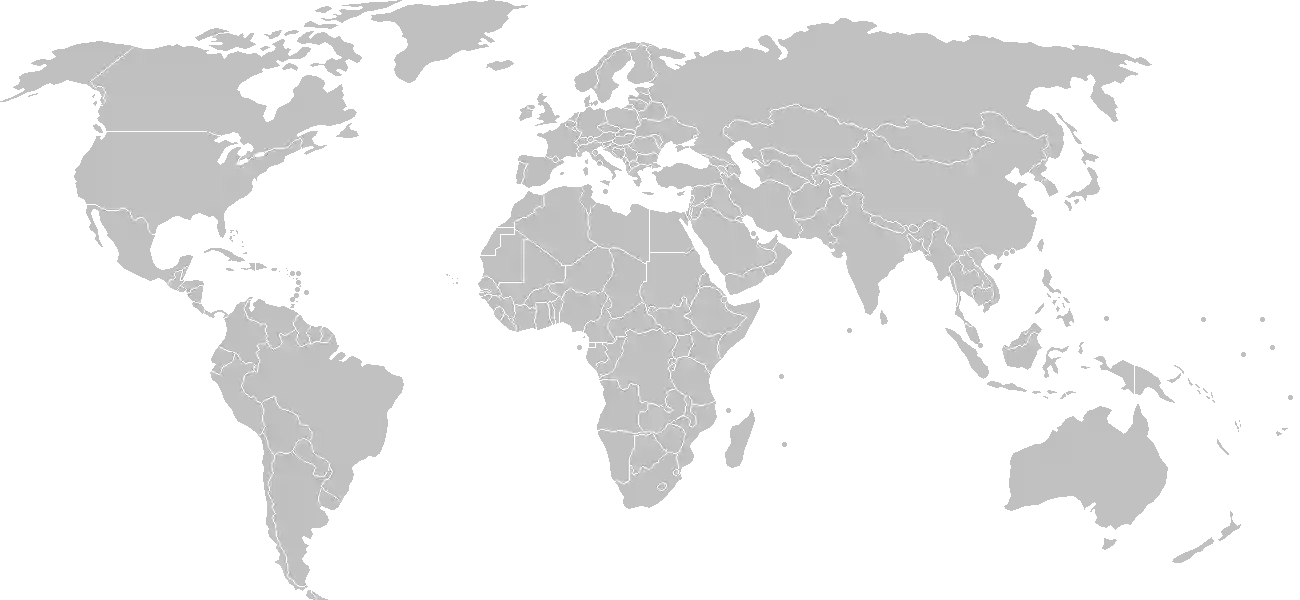
To understand Bangladesh, one must first look at a map not as a static collection of borders, but as a living organism sculpted by the tireless work of water. Here, the landscape is not merely a stage for human activity, but the principal protagonist of the national narrative. Defined by the grand convergence of the Ganges, the Brahmaputra, and the Meghna rivers, Bangladesh is the world's greatest delta. It is a land where the boundary between earth and water is perpetually blurred, and where life adapts, thrives, and innovates in harmony with the rhythm of the tides and seasons.
This is a nation that embodies the concept of "fluidity." From the emerald-green paddy fields that transform into shimmering inland seas during the monsoon to the intricate web of waterways that serve as the country’s primary arteries of commerce and communication, the environment dictates the character of the people. Visitors arriving on the soil of Bangladesh often describe a sensation of being in a place where history is being constantly rewritten by the very silt carried down from the Himalayas, creating a nation that is both ancient in its cultural roots and remarkably youthful in its demographic energy.
A Tapestry Woven from Deltaic Soil
The geography of Bangladesh is unique on the global stage. It is a low-lying, flat terrain where millions of people coexist with one of the most dynamic hydraulic systems on Earth. Yet, to see it only as a collection of rivers is to miss the human spirit that resides here. This is a region that has served as a crucible of civilization for millennia, witnessing the rise and fall of empires, the influence of great religions, and the enduring resilience of agrarian traditions. To appreciate the layers of time that have shaped this nation, one can explore the comprehensive history of Bangladesh, which chronicles the transitions from ancient regional kingdoms to the modern identity that stands today.
The nation's architectural and cultural landscape reflects this storied past. Whether it is the terracotta ornamentation of medieval temples or the stark, impressive brutalism of modern public buildings in Dhaka, the visual identity of the country is as complex as its geography. For those who wish to experience this visual chronology, we recommend viewing our history cinematic showcase, which brings pivotal moments in the nation's timeline to life through meticulously curated illustrations and expert summaries.
The Living Rhythm of Resilience
If you ask a resident of the rural riverine districts how they perceive their home, they might point toward the seasonal floods not as disasters, but as the heartbeat of the land. The alluvial soil, replenished every year, makes this region one of the most fertile areas on the planet. This agricultural bounty has supported a dense and vibrant population for centuries, fostering a culture of community and interdependence that remains strong to this day. The social fabric of Bangladesh is a masterpiece of hospitality, defined by an openness that welcomes travelers into a world of vibrant music, colorful festivals, and deep-seated literary traditions.
Education is at the core of our mission at GeoGnos, and we believe that interacting with the past is the best way to prepare for the future. We encourage students and curious travelers to challenge their understanding of the region by attempting our interactive history puzzle, a chronological brain-teaser designed to reward users as they correctly order the seminal events that carved the path for the modern state. It is an engaging way to internalize the narrative flow of a country that refuses to stand still.
From Sundarbans to Bustling Dhaka
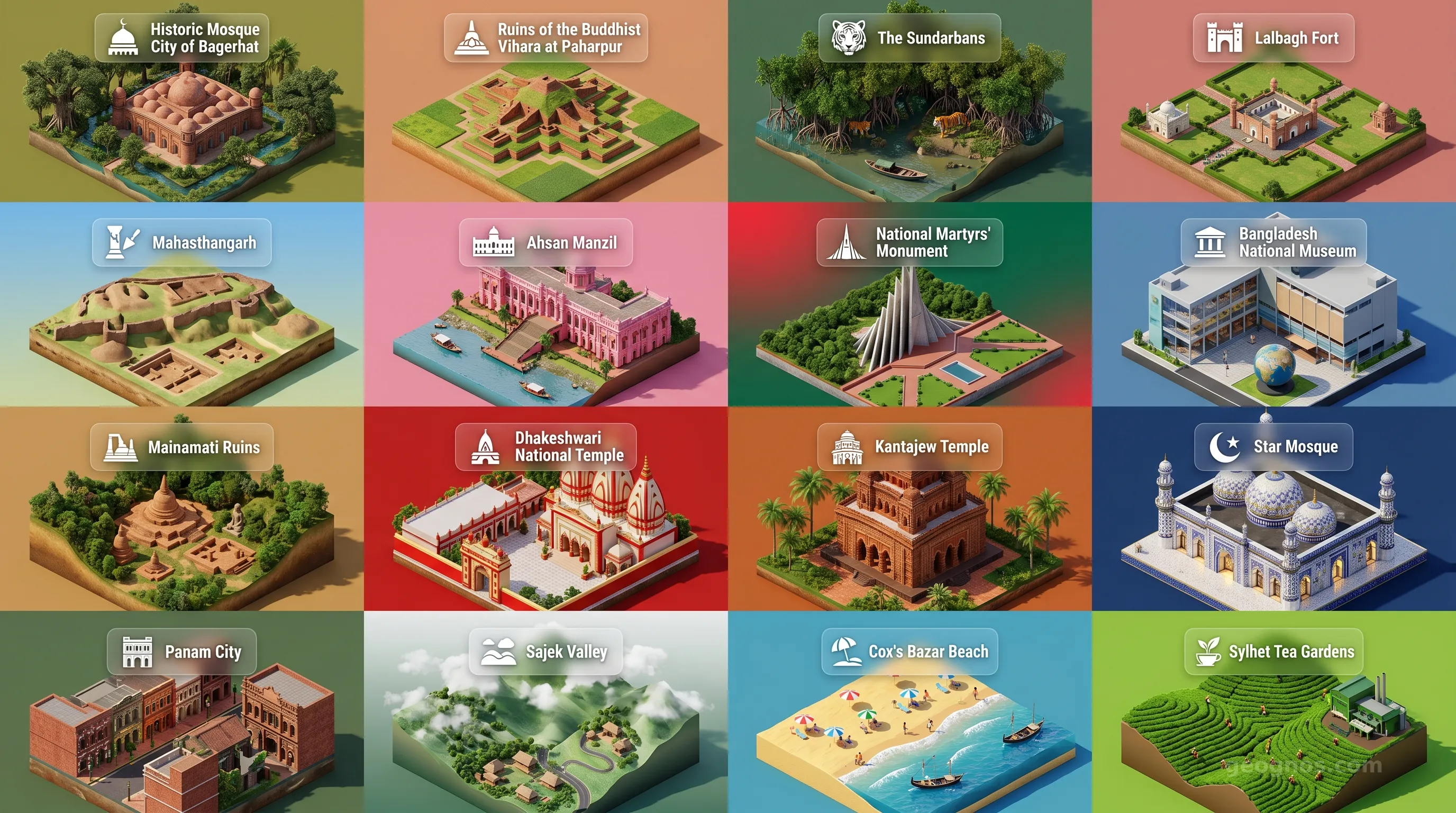
While the internal river systems define the country, the periphery offers a landscape of staggering diversity. In the southwest lies the Sundarbans, the world's largest contiguous mangrove forest and a UNESCO World Heritage site. It is a mystical place where the royal Bengal tiger prowls through the tangle of sundari trees, and where the saline winds meet the freshwater currents in a delicate, protected ecosystem. To the northeast, the terrain shifts into the rolling tea gardens of Sylhet, draped over hills that offer a serene contrast to the plains below.
Bangladesh is an essential stop for the global explorer precisely because of this variety. Whether one is trekking through the verdant heights of the Chittagong Hill Tracts or navigating the bustling, color-drenched river ports of the capital, the sensory input is intense and life-affirming. To help prospective travelers and armchair explorers alike visualize these distinct destinations, we have compiled an immersive POI cinematic showcase. This carousel player highlights the geographic and cultural landmarks that define the essence of the country, offering a guided view into the hidden gems of this deltaic nation.
A Future Written in Water and Light
As Bangladesh moves through the twenty-first century, it stands as a testament to the power of human ingenuity. Facing the challenges of a changing environment with characteristic grit, the nation has become a global leader in innovative adaptation strategies, community-based climate initiatives, and small-scale entrepreneurship. The story of Bangladesh is, ultimately, the story of humanity's ability to innovate when living in the closest proximity to the elements. It is a nation that moves with the currents of history rather than against them, always finding new ways to harvest the sun, the soil, and the water.
We invite you to delve deeper into these sections—to study the demographics of its population, the intricacies of its governance, and the vital stats of its growing economy—to get a holistic view of a country that is clearly destined to play an increasingly significant role on the global stage. Bangladesh is not just a destination. It is a profound lesson in geography, history, and the relentless endurance of the human spirit. Welcome to our deep dive into the soul of the delta.