The Vertigo of History: Lebanon as a Mediterranean Threshold
To stand upon the soil of Lebanon is to stand at the intersection of the world. Tucked into a sliver of land along the eastern Mediterranean, this nation is far more than its modest geographical footprint suggests. It is a palimpsest, a territory where every layer of human civilization has written its own chapter, leaving behind a richness of heritage that feels compressed and kinetic. For the traveler and the student alike, Lebanon does not merely offer a destination. It offers an experience of verticality, where the sudden transition from the azure salt of the sea to the snow-dusted majesty of the Mount Lebanon range mimics the rapid, layered nature of its own epic narrative.
Lebanon has functioned for millennia as a natural bridge between the East and the West. Phoenician mariners, the early architects of this coastal domain, launched their cedar-timbered ships from cities like Byblos, Sidon, and Tyre to link the distant shores of the Mediterranean with the spice-heavy markets of the Levant. Because of this unique position as a cultural gateway, the Lebanese identity is inherently cosmopolitan. It is a tapestry woven from the threads of countless civilizations, from the Roman builders of Baalbek to the medieval architects of the Crusader castles. To fully grasp how these influences coalesced into the modern Lebanese soul, one should explore the comprehensive history of Lebanon, which catalogs the resilience and artistic contributions of its people through the ages.
A Geography Defined by Contrast and Endurance
The geography of Lebanon is characterized by a series of parallel zones that climb abruptly from the coast. A narrow, fertile plain borders the sea, which quickly gives way to the Lebanon Mountains. This mountain range, once synonymous with the legendary cedars that have served as the country’s emblem since ancient times, serves as the cooling heart of the nation. Beyond these peaks lies the Bekaa Valley, an agricultural treasure trove fed by the Orontes and Litani rivers. This geological diversity creates a series of microclimates, allowing a traveler to navigate from temperate orange groves to alpine snows within the span of an hour.
This terrain has acted as both a sanctuary and a corridor. Mountain peaks provided natural fortifications for communities seeking refuge, while the valleys facilitated trade and agricultural innovation. As you learn about the rhythmic evolution of this landscape, you might find your own knowledge put to the test. We invite you to engage with our interactive history puzzle, where you can arrange these pivotal events in chronological order, challenging yourself to master the timeline that shaped this resilient nation.
The Living Archive of Antiquity
In Lebanon, history is not buried beneath layers of dry dust. It breathes in the open air. Walk through the monumental temple complex of Baalbek and you encounter some of the largest stone blocks ever quarried by human hands. Wander through the seaside ruins of Byblos, often cited as one of the oldest continuously inhabited cities in the world, and you trace the evolution of the Phoenician alphabet, the very foundation of modern written communication. These places are not just ruins. They are witnesses to the human spirit of ingenuity.
We understand that visual engagement is paramount to understanding these silent, stones-and-mortar legacies. Through the lens of our history cinematic showcase, users can experience a high-definition journey through the top historical events that defined the nation. This multimedia experience pairs precise documentation with evocative imagery to illustrate why this corner of the Mediterranean has remained central to world affairs for thousands of years.
Modernity Meets Timeless Hospitality
Beyond the marble pillars of the ancient world, Lebanon continues to exert a profound cultural gravity today. Its modern cities, led by Beirut, function as centers of education, literature, and art. The Lebanese tradition of hospitality, known locally as "karam," is a foundational value that greets every visitor. This spirit is rooted in a culture that cherishes conversation, culinary complexity, and the endurance of family and community networks.
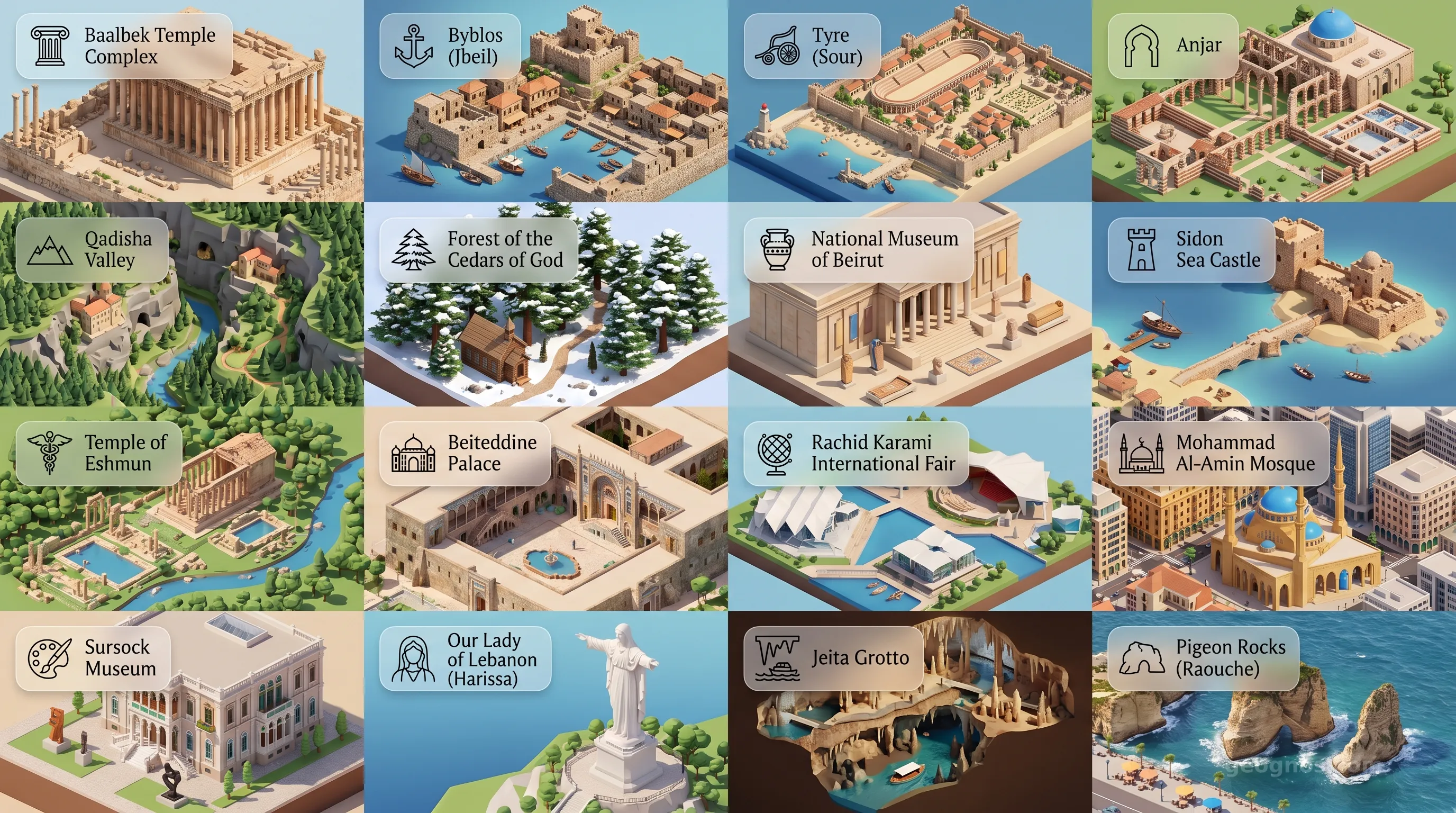
When you prepare your itinerary for this diverse and welcoming landscape, you should prioritize the hidden treasures that dot the terrain from north to south. By visiting our POI cinematic showcase, you will get a curated, panoramic view of the most striking locations across the country. Whether it is the soaring vistas of the Kadisha Valley or the intricate mosaics of Beit ed-Dine, these visuals highlight the vibrant contrasts that make Lebanon an essential study for the global citizen.
The Enduring Legacy of the Cedar
Ultimately, Lebanon serves as an essential laboratory for the study of cultural synthesis. Its history is a testament to the fact that diverse traditions can occupy the same space and, over time, evolve into something new and distinct. As we move forward to examine the administrative, demographic, and environmental sections of this Atlas entry, it is important to remember that Lebanon’s true strength has always been its ability to bridge worlds. It remains a place where the echo of the past is never far from the innovations of the present, inviting students and travelers alike to explore a history that is as vast, vertical, and beautiful as the mountain peaks for which the country is known.