The Gateway of the Atlantic: An Introduction to Senegal
To stand upon the Pointe des Almadies, the westernmost edge of the African continent, is to feel the weight of the Atlantic Ocean pressing against the resilient bedrock of a nation. Senegal is not merely a geographic location at the end of a landmass. It is a profound, shimmering crossroads where the ancient echoes of the Sahara meet the endless rhythms of the sea. For centuries, this territory has acted as a fulcrum for intellectual exchange, spiritual migration, and the meeting of civilizations. Here, the red dust of the Sahel softens into the lush, emerald mangroves of the Casamance, painting a portrait of a country defined by its diversity and its relentless forward momentum.
The soul of Senegal resides in its people, the Teranga. This concept, far deeper than the simple hospitality implied by the translation, dictates the rhythm of daily life. It is an invitation to share, a social contract that prioritizes the stranger as a guest of honor. When one travels from the bustling, cosmopolitan streets of Dakar to the serene, historic corridors of Saint-Louis, the overarching theme of Teranga serves as a constant companion. It is a nation that has mastered the art of balancing its deep traditional heritage with a forward-looking embrace of global modernity.
A Chronology Written in Sand and Salt
The story of Senegal is one of endurance and transformation. To truly appreciate how the nation evolved from the medieval empires of the Sahel to the vibrant democracy of today, you are encouraged to explore the comprehensive history of Senegal. This journey reveals how internal kingdoms, colonial encounters, and a fierce drive for self-determination carved out the borders we see today. The land has been a silent witness to the trans-Saharan trade, the movement of scholars and mystics, and the complex currents of the maritime world.
For students and enthusiasts who wish to test their understanding of this transformative timeline, we offer an interactive way to engage with the past. You can challenge your knowledge and master the sequence of centuries by engaging with our history puzzle. Arranging the major events of Senegalese history requires both an analytical mind and a deep curiosity for how yesterday influences the challenges of tomorrow.
The Visual Echoes of Time
Because the history of Senegal is as vivid as it is complex, it deserves to be seen in full color and motion. Our digital archives are designed to bridge the gap between static text and immersive learning. Teachers and students alike will benefit from the history cinematic showcase. This tool presents a curated sequence of illustrations and summaries that encapsulate the critical turning points of the nation, from the founding of the Jolof Empire to the symbolic architecture of independence. It is an essential resource for classrooms seeking to bring African history to life.
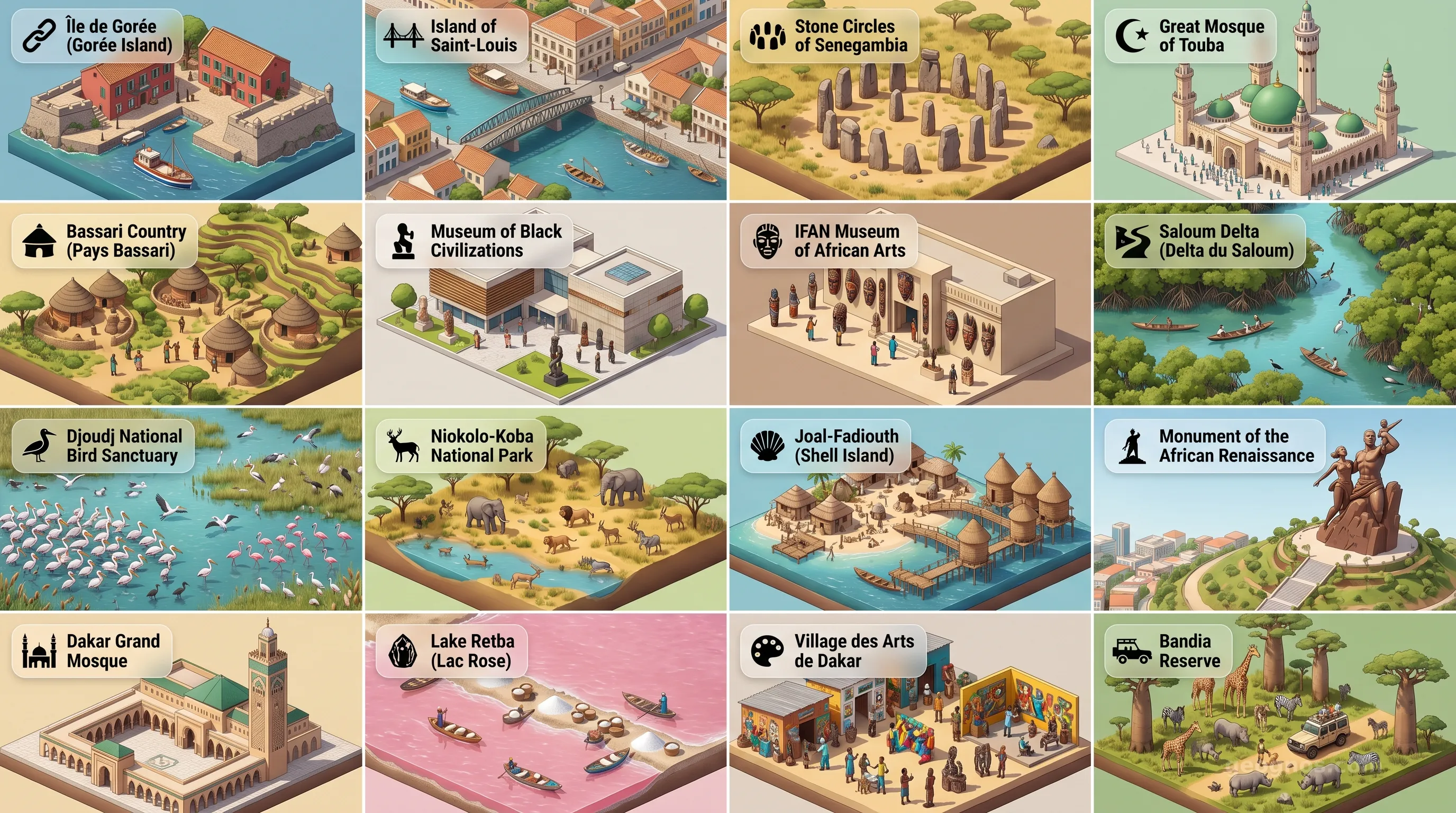
Beyond the monuments of the past lie the breathtaking natural and cultural treasures of the present. Whether you are mesmerized by the pink waters of Lake Retba or the colonial charm of the Saint-Louis archipelago, there is no shortage of wonders to document. We invite you to view the POI cinematic showcase to see why travelers from every corner of the globe find themselves drawn to this unique West African landscape. This visual gallery highlights the key geographical features and human-made landmarks that serve as the heartbeat of modern Senegalese life.
Geographical Foundations of a Nation
Senegal's identity is inextricably linked to the mighty river that gives the country its name. The Senegal River creates a verdant, fertile border to the north, separating the arid heat of the Sahel from the lush agricultural potential of the interior. To the west, the Atlantic coastline serves as a vital economic engine, anchoring the nation in international maritime commerce while providing the cooling breezes that define the climate of Dakar and the surrounding peninsula.
The landscape of Senegal is a fascinating transition zone. As you move from north to south, the scrubland gives way to dense forests. This diversity is reflected in the wildlife and human settlement patterns across the country. In the interior, the vast plains invite agriculture, while the sprawling, mysterious labyrinths of the Casamance River delta offer a sanctuary for unique flora and fauna that remain largely undisturbed by the pace of the modern world.
The Pulse of Modern Senegal
Today, Senegal stands as a testament to stability and cultural creativity in West Africa. Its intellectual capital, centered in the bustling markets and world-class universities of Dakar, serves as a beacon for scholars across the continent. Music, film, and fashion emanate from this hub, proving that a country can cherish its ancestral traditions while simultaneously defining the future of global pop culture.
The governance, economy, and social fabric of the country continue to evolve. With a strong commitment to education and sustainable development, the nation is actively working to utilize its energy potential and improve its transport infrastructure, ensuring that the legacy of Teranga reaches every citizen. As we look at the contemporary nation, we see a bridge builder, a nation that respects its neighbors and continues to play a significant role on the international stage as a voice for peace, artistic expression, and intellectual rigor.
We welcome you to dig deeper into these pages. Whether you are researching for a class project, preparing for an upcoming visit, or simply learning about the global family of nations, you will find that Senegal is a land of endless discovery. Enjoy your journey through this land of history, geography, and vibrant human connection.