The Giant of Africa: A Continent in Miniature
To understand Nigeria is to encounter a nation of relentless motion, a demographic titan that pulsates with an energy found nowhere else on Earth. Stretching from the shimmering, saltwater labyrinths of the Gulf of Guinea to the arid, golden horizons of the Sahel, Nigeria is not merely a country. It is a vast, complex mosaic of over 250 ethnic groups, languages, and cultural traditions that have woven themselves into the vibrant fabric of the modern African experience. To look at the map is to see borders, but to walk the soil is to understand a civilization that acts as the very heart of the continent.
At the center of this narrative is a geography defined by two great life-giving arteries: the Niger and the Benue rivers. They converge in the center of the country like a mighty Y, creating a fertile nexus that has supported human flourishing for millennia. Whether one is navigating the bustling, neon-lit arteries of Lagos, where the pulse of global Afrobeats echoes against the Atlantic, or wandering the ancient, sun-baked city walls of Kano in the north, the identity of Nigeria remains singular. It is a place of profound synthesis, where historical legacy meets a future-facing ambition that continues to redefine Africa's role on the global stage.
A Deep Tapestry of Time
The history of this land is not a linear tale, but rather a chorus of voices rising from the terra-cotta sculptures of the Nok civilization to the majestic empires of Kanem-Bornu and the Oyo Kingdom. The threads of these regional powers are woven into the collective identity of modern Nigerians. For those eager to understand the foundational currents that formed this nation, we invite you to explore the comprehensive history of Nigeria. This collection offers a curated view into the defining moments that shaped its borders, its cultures, and its resilience.
If you find yourself intrigued by the sequence of eras that define the country, why not challenge your understanding with our interactive history puzzle? By arranging major events in their proper chronological order, you can earn digital badges and deepen your grasp of the milestones that brought Nigeria into the present day. For those who prefer a more visual immersion, the history cinematic showcase brings the chronicles of antiquity and transition to life through art, narration, and vivid illustration, turning abstract dates into a living narrative experience.
Landscapes of Paradox and Splendor
Nigeria’s topography is a lesson in diversity. To the south, the mangrove swamps of the Niger Delta hold a secret, liquid world of incredible biodiversity and complex ecosystems. Moving inland, the transition from the lush, tropical rainforests to the savannah parklands demonstrates a natural shift that has dictated trade, agriculture, and settlement patterns for generations. This geographical variation is mirrored in the urban and natural wonders scattered across the territory.
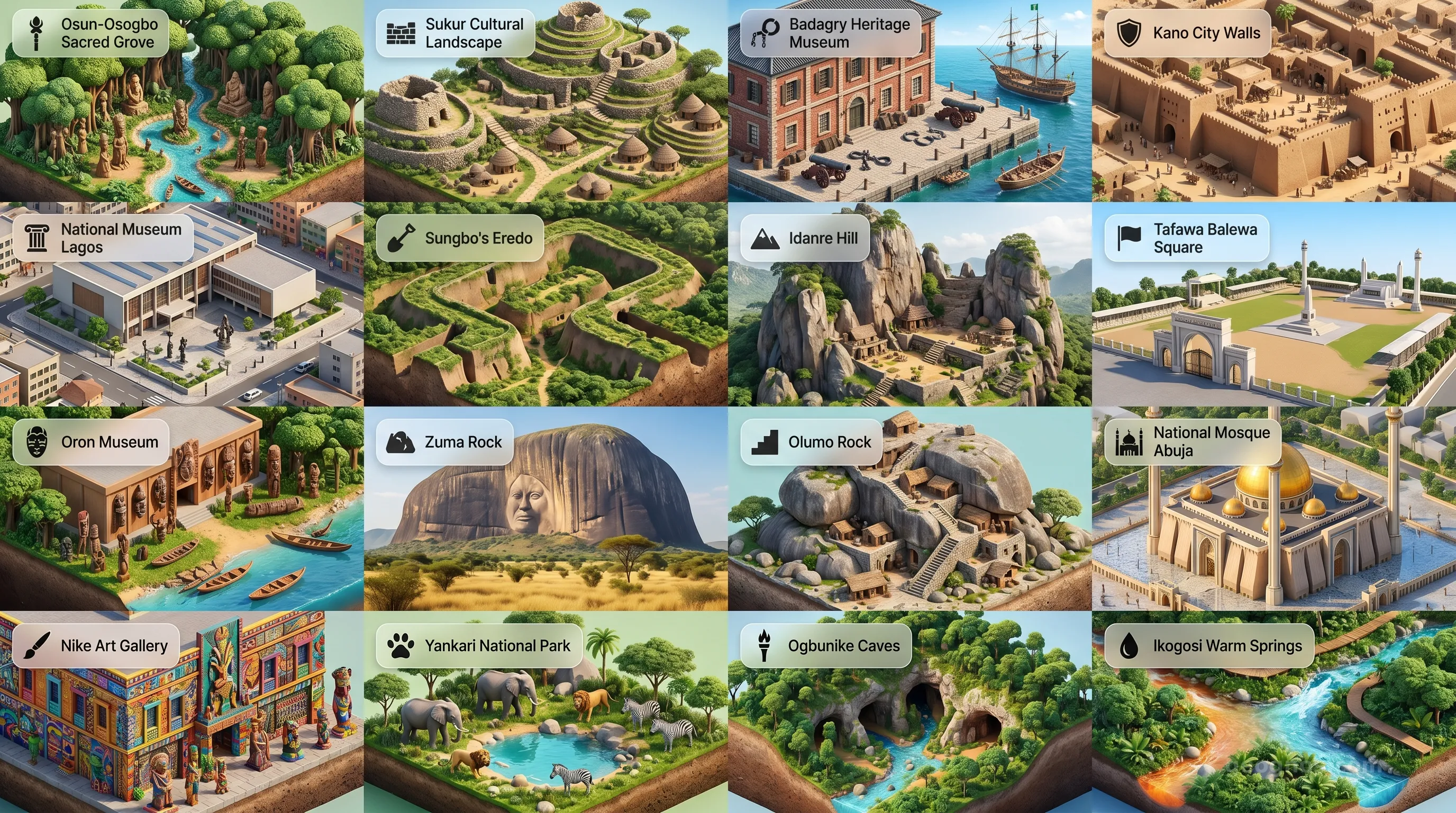
From the towering granite inselbergs of the Jos Plateau to the pristine, windswept beaches along the Atlantic coast, the scenery offers a stark contrast between the quiet permanence of the earth and the feverish velocity of the cities. To capture the full scope of these varied horizons, take a moment to experience our POI cinematic showcase. This visual tour highlights the most iconic destinations, providing a virtual passport to the landmarks that define the visual spirit of the nation.
A Nation in Perpetual Evolution
What truly sets Nigeria apart is its people. There is an unmistakable ethos of entrepreneurship and resilience here, often referred to in local parlance as the "can-do" spirit. With a population that is famously youthful, creative, and globally connected, Nigeria exerts a cultural influence that transcends its geographic borders. From the intricate beadwork of the Edo people to the soaring architectural ingenuity of its contemporary urban centers, the aesthetic of Nigeria is one of perpetual, joyful evolution.
This demographic power acts as a catalyst for economic, artistic, and intellectual exchange. Whether it is through the global explosion of Nollywood, the immense success of Nigerian fashion designers, or the rigorous contributions of its scientists and scholars, Nigeria has transitioned from being a colonial successor state to a central node in the twenty-first-century global village. The country does not merely participate in the world economy or global culture; it actively creates the trends and ideas that ripple outwards, proving that geography, while central to identity, is only the stage upon which a much more dynamic human story is played out.
Embracing the GeoGnos Journey
As you progress through our atlas, consider this introductory reflection as an invitation to look closer. Nigeria is not a monolith to be studied at a distance, but a rich text to be read and understood through its layers. Our goal at GeoGnos is to facilitate that discovery by balancing the weight of historical academic study with the excitement of travel exploration. Each page, map, and resource in our Nigeria dossier is designed to provide you with the tools to become a lifelong learner of this incredible, evolving nation.
Whether you are a student mapping the complexities of the Niger Delta, an educator developing a curriculum on West African cultural diffusion, or a traveler preparing to experience the legendary hospitality of Lagos, we are honored to walk this path with you. The "Giant of Africa" has much to teach us about endurance, cultural harmony, and the infinite possibilities of a young nation reaching toward its peak. Let the journey continue, from the depth of its archives to the vibrancy of its modern streets.