The Architects of the Horizon
To stand upon the northern coastline of Algeria, watching the turquoise embrace of the Mediterranean lick against the shores of Algiers, is to feel the heartbeat of the Maghreb. Yet, to turn your back to that sea and look southward is to gaze into an ocean of a different kind. Algeria is, by landmass, the largest nation in Africa, a gargantuan canvas where the geological dramas of the Atlas Mountains transition into the infinite, shifting silence of the Sahara. This is not merely a country of borders and statistics, but a physical testament to the enduring human spirit, a land that has functioned as a crossroads for empires, nomadic cultures, and revolutionary thought for millennia.
The soul of Algeria lies in this radical duality. It is the juxtaposition of lush, fertile coastal valleys, which provided the bounty for Punic and Roman granaries, and the vast, golden dunes that stretch deep into the heart of the continent. Understanding this nation requires more than a casual glance; it demands an appreciation for how geography has dictated the rhythm of life for the Berbers, the Arabs, the French, and the many peoples who have shaped the local mosaic. To begin your journey through the layers of time that define this landscape, you might first want to explore the history of Algeria, which chronicles the epic passage of civilizations through these territories, from the ancient Numidian kingdoms to the era of global exploration and the birth of a modern sovereign state.
A Mosaic of Antiquity and Resilience
The historical tapestry of Algeria is woven with threads of extraordinary resilience. It is a land where the whispers of ancient history are still audible in the wind. From the majestic ruins of Timgad, often called the Pompeii of North Africa, to the intricate rock art galleries of the Tassili n’Ajjer, the nation offers a tangible dialogue with the past. These sites are not merely static monuments. They are portals that bridge the gap between ancient stone-carvers and our contemporary world.
Engaging with this history offers more than just knowledge. For those who enjoy testing their grasp of the timeline that turned tribes into nations, you are encouraged to solve our history puzzle. By arranging the defining moments of this great land in their proper sequence, you will gain a deeper insight into the cause and effect of regional evolution and earn badges to commemorate your mastery of the subject. The narrative is vast, often cinematic, and deeply rewarding for those who seek to understand how a civilization persists across ages of change.
Visualizing the Grandeur of the Maghreb
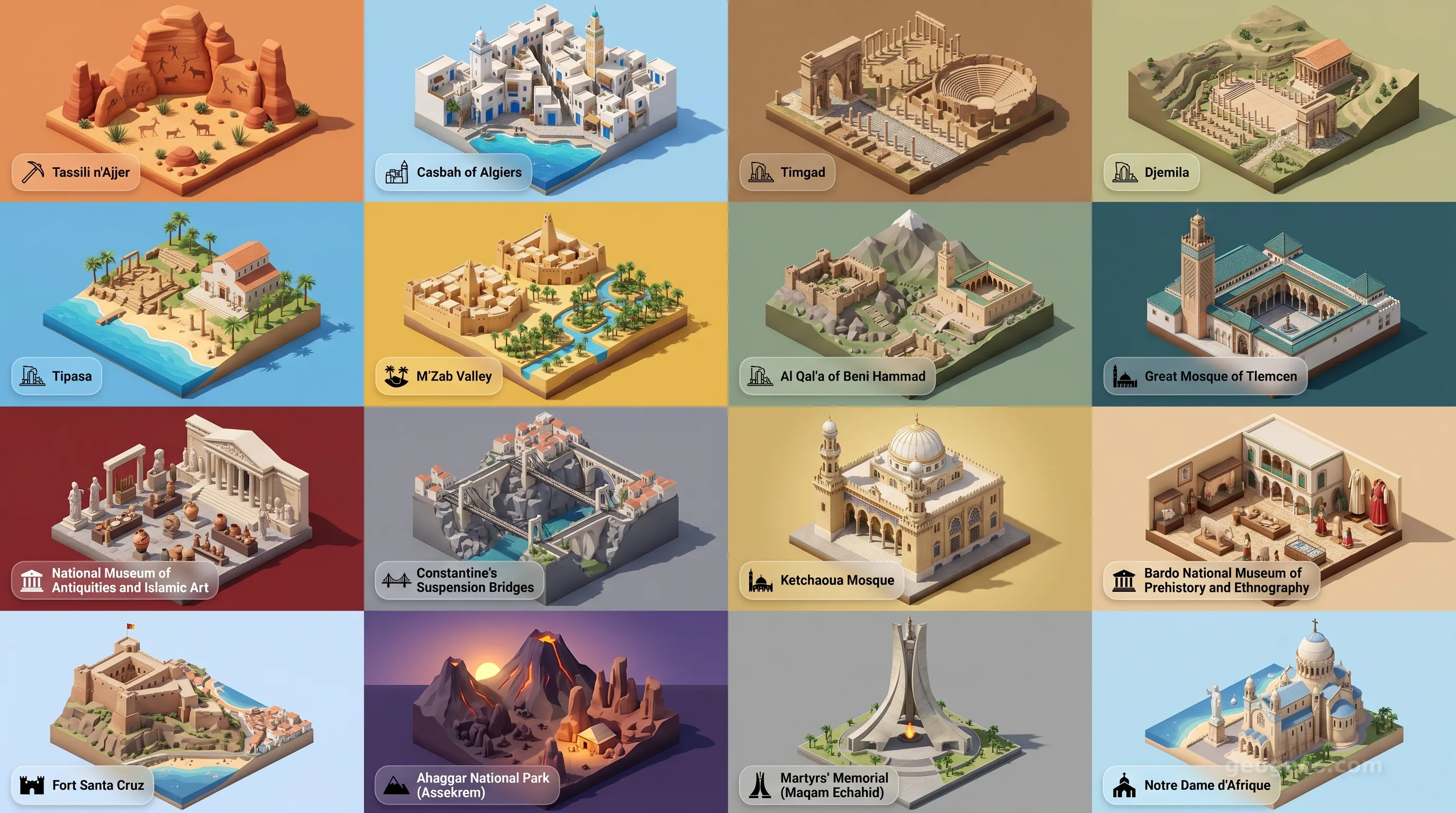
Because Algeria remains one of the most enigmatic destinations in the world, visual storytelling becomes an essential tool for the traveler and the student alike. The country’s geography has curated a spectacular list of landmarks that defy description through text alone. From the white-washed streets of the Casbah of Algiers, a UNESCO World Heritage treasure, to the surreal, martian landscapes of the Hoggar Mountains in the deep south, there is a visual language here that speaks of raw beauty and geological history.
We invite you to immerse yourself in our history cinematic showcase, a carefully curated sequence that brings the nation's pivotal historical turning points to life through evocative imagery. Furthermore, for those dreaming of where to venture or simply wishing to study the wonders of the terrain, our POI cinematic showcase provides a rhythmic tour of the country's most significant monuments and natural landmarks. These digital windows into Algeria are designed to provide both teachers and students with a vivid, comprehensive view of the sights that define the national identity.
A Future Forged in Sand and Sea
Today, Algeria represents a bridge between the vibrant cultural output of the Mediterranean and the deep, enduring traditions of the Saharan interior. The modern Algerian experience is defined by its youth, its urban energy, and its profound connection to its ancestral roots. As the nation steps into an era of renewed focus on its potential as a global partner, its unique environmental and cultural landscape remains its greatest asset. The Sahara, far from being an empty space, is a corridor of history, energy, and mystery that continues to challenge our perceptions of environmental limits.
As you progress through the pages of this atlas, consider how the environment influences the people. Observe how the coastal cities thrive on trade, literature, and the Mediterranean breeze, while the southern oases remain anchors of tranquility and tradition. Algeria is not a monolith but a spectrum. It is a nation that asks for patience and rewards curiosity. By examining its history, appreciating its geographical majesty, and engaging with the complex layers of its social fabric, you will discover why Algeria stands as a sentinel of progress in North Africa. Whether you are a scholar researching the antiquity of the Atlas mountains or a traveler yearning to stand beneath the stars of the Tassili, the Algerian experience is one of profound, lasting enrichment.